Summer of Thirst and Anger Scorches Tunisians
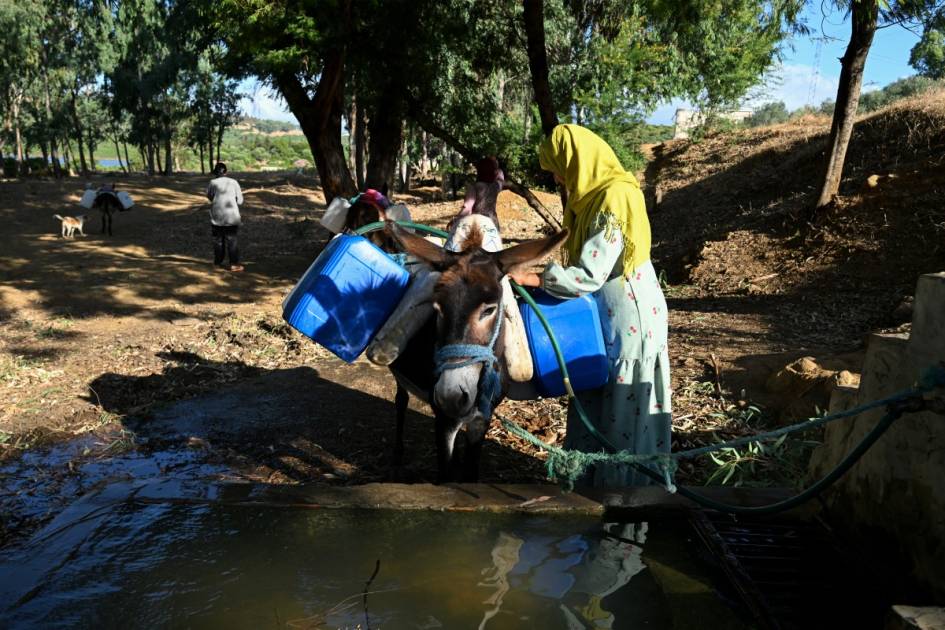
Summary: The statements of the National Company for Water Exploitation and Distribution confirm the expansion of the crisis in most regions of the republic, as the company announced disturbances and cutoffs in water in the governorates of Ariana, Ben Arous, and the delegations of Bir Mcharga and Jebel El Oust belonging to Zaghouan governorate, in addition to parallel disturbances in distribution covering the governorates of Sousse, Monastir, Mahdia, Nabeul, Kairouan, and also other areas in the south, including cutoffs in most regions of the republic.
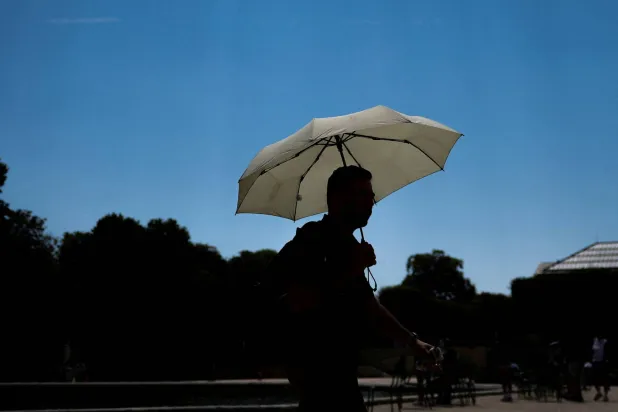
Amid the intense heat wave sweeping Tunisia, with temperatures reaching nearly 47 degrees Celsius, several regions of the country are experiencing a severe water supply crisis, prompting citizens to protest in a number of areas, even blocking roads to express their anger.
The statements of the National Company for Water Exploitation and Distribution confirm the expansion of the crisis in most regions of the republic, as the company announced disturbances and cutoffs in water in the governorates of Ariana, Ben Arous, and the delegations of Bir Mcharga and Jebel El Oust belonging to Zaghouan governorate, in addition to parallel disturbances in distribution covering the governorates of Sousse, Monastir, Mahdia, Nabeul, Kairouan, and also other areas in the south, including cutoffs in most regions of the republic.
The Marginalization Series
The Tunisian Water Observatory reported a notable increase in reports related to drinking water supply services during June 2026, with 423 reports, coinciding with the start of summer and the rise in water demand. Most of the notifications were unannounced cuts and disturbances in distribution, in addition to protest movements, water leaks, and reports on water quality.
Sousse governorate topped the list of provinces with the most reports, followed by Jendouba and then Ben Arous. The observatory attributed this increase to the heat wave and the growing pressure on the supply system, stressing the continued challenges related to the deterioration of water distribution networks and their maintenance.
Read more
Fears in Tunisia of return of violent 2013 scenario
Letter demanding resignation of imprisoned Abir Mousi shakes her party in Tunisia
Electoral apathy looms over political deadlines in Tunisia
Playing under another banner... Tunisia and the flight of champions
The Tunisian Water Observatory considered that "this prolonged outage cannot be considered an incidental or circumstantial incident, but rather a new episode in the series of marginalization and mismanagement of the public water utility, especially in the cities of the mining basin that have been experiencing repeated disturbances in the supply of drinking water for years."
The observatory stresses that ensuring the continuity of drinking water supply is a direct responsibility of the public authorities, and that citizens should not remain hostages to recurring breakdowns or the absence of radical solutions, especially during periods of extreme heat.
It called for urgent intervention to restore regular water supply in some areas without delay, demanding that the real causes of the crisis be disclosed to the public, and that a clear plan with specific deadlines be published to permanently resolve the problem.
The observatory reiterated its call for adopting fair water policies that ensure the priority of the right to water for the population, especially in areas that have borne the burdens of mining exploitation for decades, such as the city of Metlaoui, which has been experiencing water cuts for days.
A Fair National Policy
In this context, the Environmental and Climate Justice Department of the Tunisian Forum for Economic and Social Rights condemned what it considered silence and inaction in dealing with the thirst crisis that recurs annually without radical solutions, calling for immediate and urgent intervention to ensure regular supply of drinking water, and stressing that "the continuation of this situation is a real threat to social peace."
The forum expressed its solidarity with the people of the affected areas in all governorates and its support for their "peaceful and legitimate movements in defense of their right to life and dignity," calling for the adoption of a fair and sustainable national policy in managing water resources based on transparency, accountability, and justice among regions, and obliging the National Company for Water Exploitation and Distribution to immediately and transparently announce all cuts, both scheduled and unscheduled.
The irony is that this severe weakness in supply occurs despite the fact that the fill rate of dams nationwide remains, according to the Ministry of Agriculture, at around 60 percent, a rate officially described as "very reassuring." In this regard, the Tunisian Forum for Economic and Social Rights believes that "this contradiction between the availability of resources on one hand and the continuation of the wave of thirst on the other exposes the reality of the crisis: it is not just a shortage of natural resources, but a crisis of management and administration, dilapidated networks unable to cope with peak summer consumption and high evaporation rates, in addition to the absence of a fair proactive strategy that distributes available resources equitably among regions."
The forum added that "what is happening today is no longer just a temporary crisis, but a direct assault on human dignity and a flagrant violation of the right to water and health, and clear evidence of systematic marginalization and the absence of social and environmental justice. It is also an inevitable result of years of mismanagement, lack of political will, and failure of public policies to guarantee one of the most basic human rights."
Water as a Constitutional Right
On the other hand, a number of deputies from the Tunisian coastal region protested the continued interruption of drinking water in several areas coinciding with the peak of the summer and tourist season, considering that the reality exceeded what the National Company for Water Exploitation and Distribution had announced regarding the scheduling of cuts only during the night period.
Deputy for the third district, Salwa Latif, said in a post on her official page that the water company had announced scheduling water supply cuts from midnight to 5 a.m., but the reality was different, noting that cuts were recorded starting at 10 p.m. in some areas of Sousse, and from 5 p.m. in other areas.
For his part, deputy Moaz Youssef criticized the timing of the cuts, stressing that water is cut off in several areas of Sousse governorate since 2 p.m., contrary to what was stated in the statement of the National Company for Water Exploitation and Distribution, considering that cutting off water to citizens is 'unacceptable,' and stressing that water is a 'constitutional right.'
It is noteworthy that President Kais Saied affirmed in statements during July 2024, and reiterated part of them in June 2025, that the repeated water and electricity cuts in a number of areas are 'abnormal,' considering that they cannot be explained solely by drought factors or network deterioration.
During a field visit to several dams and official meetings, Saied accused entities within the administration of being behind the water cuts, speaking of the existence of an 'operations room' aimed at 'thirsting the citizen' and fueling social conditions.
In a Cabinet meeting in June 2025, the president reiterated that some cuts are deliberate, indicating the need to pursue those responsible and take the necessary legal measures against them. However, despite these statements, reality has not changed, and water cuts remain a feature of Tunisia's summer.
Original source: Independent Arabia





Comments (0)
Be the first to comment.