Maine Scandal Confuses Democrats Months Before Midterm Elections
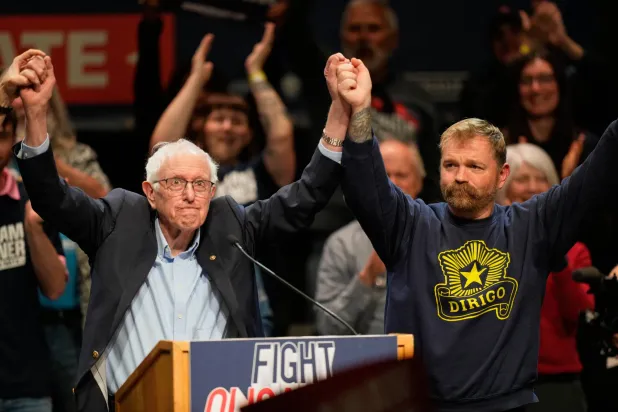
Months before the midterm elections, Democrats face increasing challenges in their efforts to win the Senate majority.
Republican candidates contesting the midterm elections expressed fears that the war President Donald Trump promised to avoid with Iran could become the biggest political challenge facing the Republican Party before the November elections.
With renewed mutual strikes and dozens of sites targeted, concerns within Republican circles are growing that the party may be forced to defend a war that was not part of its election promises, at a time when voters continue to show greater interest in rising prices and living costs compared to foreign policy files.
Trump's conflicting statements about the future of the military campaign against Iran have heightened levels of anxiety. In response to a question about whether the United States would return to large-scale military operations, Trump said: 'I don't know, they (the Iranians) are very keen on reaching a deal. But I don't know if they are trustworthy enough to make a deal, and I don't know if they will abide by it. That is the problem.'
In response to a question about returning to all-out military conflict, Trump said: 'I don't know. We will achieve victory very quickly... We have many ways we can win.' He stressed that any Iranian strike would be met with American strikes 'twenty times' stronger. In remarks on the sidelines of the NATO summit in Ankara, on Wednesday evening, Trump said: 'In one day, we can destroy every bridge in Iran. They won't be able to do anything about that... And if we have to, we will eliminate them. They have desalination plants, and we will eliminate them if necessary. And perhaps we will seize Kharg Island.'
A report by Axios, citing senior administration officials, indicated expectations that the military strikes would continue for several days, and possibly weeks. Navigation through the strait has come to a near halt again, with Iran's chief negotiator stating that the waterway will not be reopened except on orders from Tehran, and the renewed hostilities have driven US diesel futures to their fastest pace in four years, adding to the political burdens on Trump ahead of the November midterm elections.
A Complex Political Equation
While the White House praises the success of US strikes against Iran and asserts that they have cemented US deterrence and forced Iran to reconsider, its officials acknowledge that any Iranian attack on US bases or disruption of international navigation would prompt Washington to respond more forcefully. This could increase the risks of a gradual slide into a war that was not part of the original calculations, but comes amid polls showing a majority of Americans oppose this conflict.
A screenshot from a video released by US Central Command of strikes against Iran on July 9 (AFP)
White House spokesperson Olivia Wells defended these US strikes against Iran. In an email responding to questions from Asharq Al-Awsat, she said: 'President Trump does not make these decisions based on fluctuating polls, but based on the highest interests of the American people.'
Despite the White House's confirmation that the US strikes achieved their military objectives, the continuation of operations and the lack of a clear horizon for ending the crisis place the Trump administration before a complex political equation: how to maintain the image of a strong president capable of deterring Iran, without sliding into a long war that could drain popular support and revive the military experiences that Trump built a large part of his political rhetoric on rejecting?
Republican Concerns
Within the Republican Party, the debate is not focused on the success of the military strikes so much as on their political cost. The longer the confrontation lasts, the more fears grow that it will turn into a war of attrition that causes President Trump's popularity among his electoral base to decline, puts Republican candidates in a defensive position during election campaigns, and gives Democrats a weapon to blame Trump and Republicans for the deteriorating economic conditions and suffering of American families.
The Washington Post noted that the expansion of the military confrontation threatens to drag the US administration into a war that does not enjoy broad popular support, a scenario that is causing growing concern within the Republican Party just months before the midterm elections.
House Majority Leader Steve Scalise and House Speaker Mike Johnson at the Capitol on June 30 (AP)
Most Republicans do not oppose limited strikes against Iran, but many show clear reservations about any slide into a prolonged confrontation.
Republican Representative Ryan Mackenzie said the party 'must be very careful not to be drawn into an endless war,' in an expression reflecting concern within several swing Republican districts that fear the war could become the top issue in the elections, instead of the economy and immigration.
Republican Representative Thomas Massie is leading a move within the House to restrict any expansion of military operations against Iran without congressional approval, asserting that entering a new war contradicts the 'America First' philosophy. He wrote on X platform that 'the United States should work to end the war, not expand it.'
Former Republican Representative Marjorie Taylor Greene, for her part, warned that continuing the war could cost Republicans the midterm elections. She said in posts on X platform that Trump 'risks losing part of his popular base if he appears to have abandoned his promises not to engage in foreign wars or seek regime change.'
These positions reflect a split within the party between a current that supports limited military retaliation and another that fears any further escalation could undermine the political message that brought Trump back to the White House. Rising oil prices as a result of any disruption in the Strait of Hormuz could directly affect fuel prices inside the United States, which means additional inflationary pressures and higher transportation and commodity costs, and possibly delay any expected interest rate cut by the Federal Reserve.
Democratic Maneuvers
Democrats have begun to invest in this file electorally, accusing the Trump administration of launching a military adventure without a clear strategy, arguing that the continued escalation will impose new economic burdens on Americans. Senator Jeanne Shaheen (of New Hampshire), the leading Democrat on the Senate Foreign Relations Committee, described the military developments with Iran as 'dangerous escalation' and 'clear evidence that the president entered this war without a plan, without a vision for ending the conflict, and without the ability to reach a lasting agreement.'
For his part, Democratic Representative Dan Goldman said that the continuation of the war has led to higher air travel costs and energy prices, considering that the administration has reneged on its promises to lower the cost of living and dragged the United States into a conflict that will have direct repercussions on the American economy. Democrats see the war as an opportunity to reframe their electoral message, so that it is not limited to criticizing Trump's economic policies but also includes accusing him of dragging the United States into an external confrontation that lacks popular support.
Original source: Asharq Al-Awsat



Comments (0)
Be the first to comment.