Jabal Ikmah: UNESCO Memory of the World

The open library that preserved AlUla's memory in stone
In the silence of the sands, amid rock formations and a stunning diversity, Saudi Arabia speaks the language of history, a homeland of successive civilizations and a living witness to the birth of humanity, urban development, and the convergence of cultures.
Through Vision 2030, the Kingdom seeks to redefine its civilizational status globally as a land rich in human, material, and natural heritage. The relevant authorities, such as the Ministry of Culture, have embarked on groundbreaking steps to preserve antiquities and register them on the UNESCO World Heritage List, turning these sites into narrators of a nation's story that has never been disconnected from history.
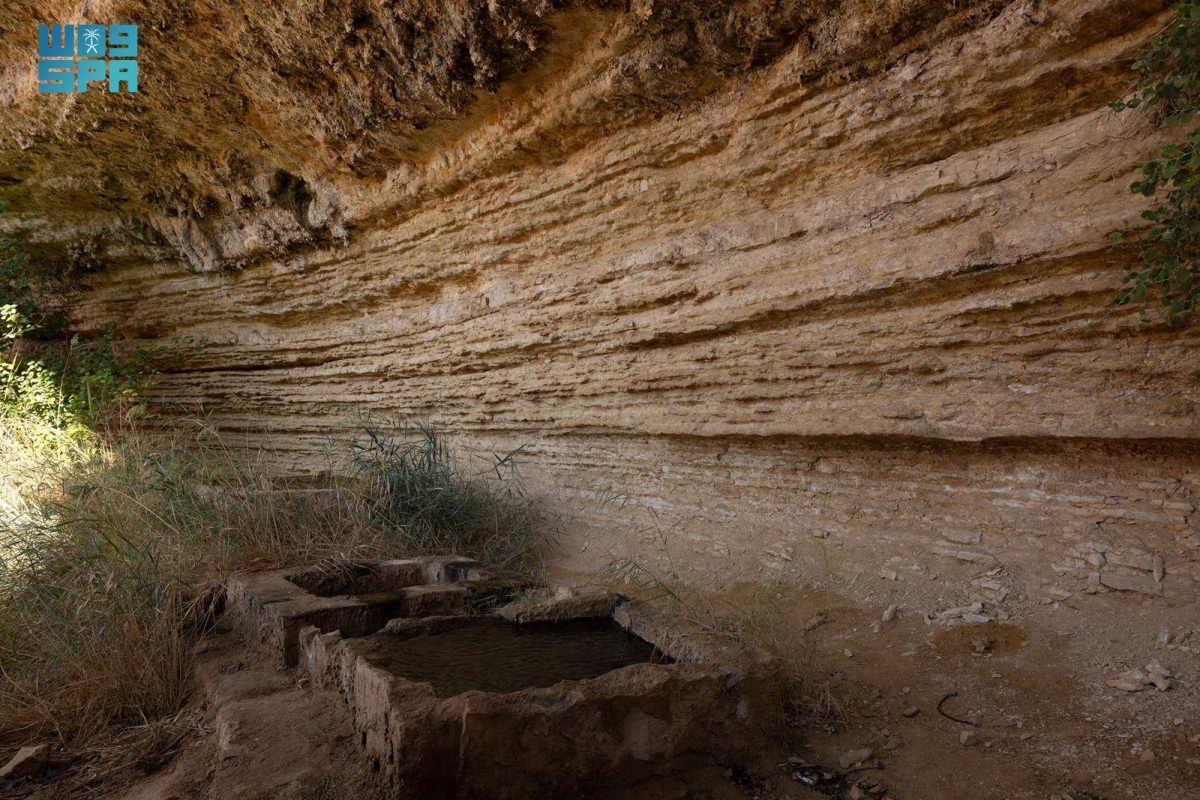
Jabal Ikmah is located in AlUla Governorate, within a sandstone rock passage near Dadan. It is considered one of the most important ancient inscription sites in the Arabian Peninsula. The site gained its fame from the exceptional density of Dadanitic and Lihyanite writings carved on its rock faces, along with inscriptions in Aramaic, Thamudic, and Minaic, and rock art documenting human faces, animals, musical instruments, and scenes of ancient life. Authorities describe it as an 'open library' because its rocks serve as a historical archive that recorded society, religion, rituals, agriculture, and family and political relations during the second half of the first millennium BCE.
In 2023, the collection of Jabal Ikmah inscriptions was inscribed on the international register of UNESCO's Memory of the World programme, in recognition of its global documentary value and its role in studying the evolution of ancient Arabic languages and writing systems in northern Arabia.
Geography of the Environment
Jabal Ikmah lies within the historical area of AlUla, inside a natural sandstone gorge or passage, close to the ancient city of Dadan, which was the center of the Dadanite and Lihyanite kingdoms. Its location overlooks the oasis and palm groves, linking it to the agricultural and urban landscape that flourished in AlUla during the first millennium BCE. It also falls within the historical sphere of the Incense Road, which connected southern Arabia to Egypt, the Levant, and beyond, helping make AlUla a hub for trade and cultural exchange. The current journey between the Dadan site and Jabal Ikmah takes about ten minutes, a spatial proximity that reinforces the historical reading of both sites as part of a single civilizational system: Dadan represents the political and urban center, while Jabal Ikmah preserves a large part of the written, ritual, and social record of that civilization.
The Open Library
The description of Jabal Ikmah as an open library stems from the density, diversity, and distribution of inscriptions on the rock faces within the mountain passage. Instead of preserving documents on tablets or manuscripts, texts were carved directly onto the rock, turning the mountain into a vast archive that remained in its original location for centuries. UNESCO affirms that the site contains the largest known collection of well-preserved Dadanitic inscriptions in one place.
There are differences in the figures circulated among official sources: the Memory of the World registration file indicates approximately 300 inscriptions with documentary value within the core collection, while other UNESCO promotional materials mention over 500 inscriptions and rock carvings when counting the broader set of writings and drawings. More accurate in scholarly research is to distinguish between the 'core documentary inscriptions' included in the registration file and the total number of carvings, drawings, and writings found at the site.
An Extended Civilization
The core collection of Jabal Ikmah inscriptions dates back to the second half of the first millennium BCE, a period associated with the flourishing of the Dadanite and Lihyanite civilizations in AlUla. Dadan developed its own writing system within the family of South Semitic scripts, and the population used writing to document their daily lives and religious, social, and economic affairs.
The importance of the site lies in the fact that its inscriptions do not present a picture of a single historical moment, but rather reveal an organized society that possessed a linguistic system, religious rituals, family relations, agricultural activity, and political and commercial ties with its surroundings. For this reason, Jabal Ikmah is regarded as a primary source for studying the inhabitants of northwestern Arabia during the first millennium BCE.
Languages and Scripts
The inscriptions of Jabal Ikmah are characterized by a diversity of languages and scripts, the most prominent of which are:
Dadanitic, the most densely represented at the site
Lihyanite, associated with the later phase of the oasis's history; Aramaic; Thamudic; and Minaic.
UNESCO notes that this diversity reflects AlUla's status as a meeting point of civilizations, and also helps researchers trace the development of writing systems and ancient Arabic languages and their connection to the early stages of the formation of the Arabic script.
The phrase 'origins of Arabic' should not be understood to mean that Jabal Ikmah alone is the place where the Arabic language originated, but rather that its inscriptions represent important documentary material for studying the evolution of the ancient North Arabian languages and writing patterns that preceded the later form of the Arabic script. This is a more precise formulation than promotional statements that reduce the history of language to a single site.
The Story Told by the Inscriptions
The inscriptions reveal multiple themes, including:
Society and Families:
Some writings record personal names, genealogies, and family ties—information that helps understand the structure of society and relationships among its members.
Religion and Rituals:
The collection includes texts related to vows, worship, and rituals, which has led researchers to consider parts of the site as having a religious or sacred function during certain periods.
Agriculture:
References to agricultural work, resources, and the oasis appear, confirming that agriculture was a central part of AlUla's economy and daily life.
Politics and Relations:
Some inscriptions provide direct or indirect information about authority and relations with neighboring kingdoms and communities.
Commemoration:
There are writings of a commemorative nature, intended by their authors to fix their names or deeds in public memory.
The documents submitted to UNESCO indicate that the inscriptions and drawings provide information about names, family relations, politics, religion, economy, and agriculture, and also allow the study of some social transformations, including the presence and roles of women in society.
Rock Art
Alongside the texts, Jabal Ikmah contains drawings and rock carvings depicting human faces, animals, musical instruments, and scenes related to daily life. These drawings represent a complementary visual source to the inscriptions, as they reveal the animal environment, material culture, and artistic expression of the region's inhabitants.
The investigative value of these drawings lies in helping to compare what the texts say with what the carvings depict: an inscription may mention a ritual, person, or activity, while the rock image provides the shape of the animal, human figure, or tool used. Thus, a composite record of language and image is formed.
The Civilizational Continuity
Jabal Ikmah represents a direct cultural extension of the ancient city of Dadan, which flourished on the trade route and became an important center in northwestern Arabia. The mountain's proximity to Dadan provided a suitable place for inscribing texts, especially in a natural passage relatively protected from erosion, which helped many inscriptions remain clear to this day.
Original source: Al-Riyadh

Comments (0)
Be the first to comment.