Burnham Faces Energy Test: Can He Revive North Sea Oil?
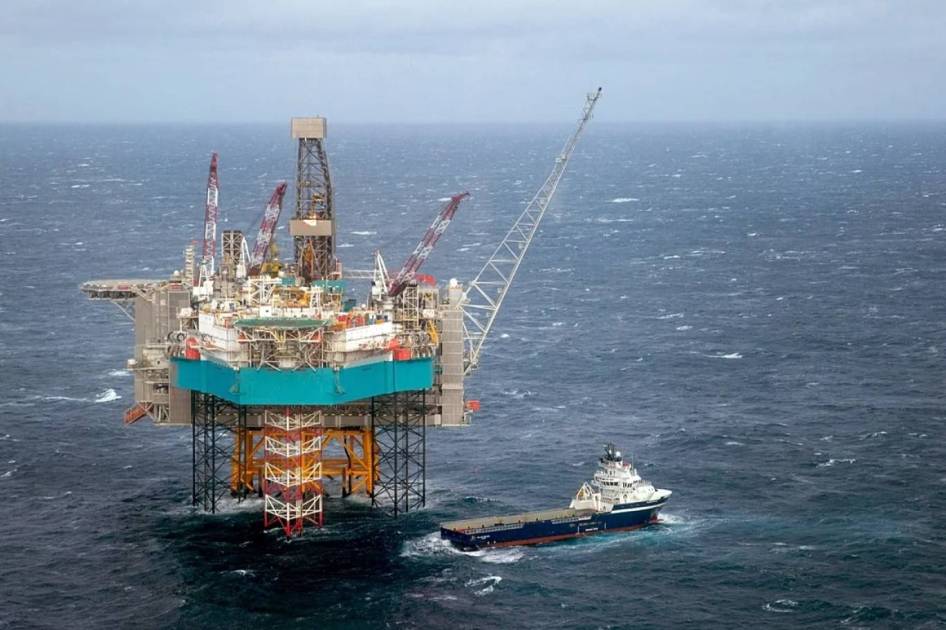
Markets await Andy Burnham's upcoming speech amid expectations of a review of British energy policies, especially after the decline in North Sea production. The potential Labour leader faces increasing pressure to balance climate goals, energy security, and protecting jobs in the oil and gas sector.
); googletag.cmd.push(function() { onDvtagReady(function () { googletag.display('div-gpt-ad-3341368-3'); }); }); }
Summary
Markets await Andy Burnham's upcoming speech amid expectations of a review of British energy policies, especially after the decline in North Sea production. The potential Labour leader faces increasing pressure to balance climate goals, energy security, and protecting jobs in the oil and gas sector.
Markets, investors, and business sectors are awaiting an important speech by British MP Andy Burnham next week, expected to outline his economic and fiscal policy if he becomes leader of the ruling Labour Party and Prime Minister.
Since Burnham won a seat in Parliament in the by-election for the Marckfield constituency in northern England days ago, and with Prime Minister Keir Starmer announcing his resignation and leaving his post as soon as the party chooses a new leader, everyone considers Andy Burnham the next British Prime Minister, perhaps within a few weeks.
Despite cautious anticipation from markets regarding Burnham's leanings, which some fear could steer the party and government policies leftward, there is optimism that Burnham's policies will differ from Starmer's, which were blamed for the party's heavy defeat in local elections last month.
The first statement by US President Donald Trump after Starmer's resignation announcement was criticism of the British Prime Minister's policy that disrupted oil and gas production in the North Sea.
Then, in his first response to a question about Andy Burnham as a potential successor to Starmer, Trump said he hears that Burnham is 'very liberal' and does not know if he will revive oil and gas production in the North Sea.
But the stance on Britain's oil and gas production from the North Sea is not just an American concern; it is a domestic issue involving a large number of British jobs in the energy sector, particularly in Scotland.
North Sea Dilemma
Many analysts and observers believe that Andy Burnham has an opportunity to change the Labour government's policy implemented by Keir Starmer, which led to the collapse of Britain's oil and gas production and increased energy imports, burdening the public budget, especially during the recent Iran war crisis.
In a statement to S&P Global Platts energy information, the CEO of Offshore Energies UK said, 'It is time to reset energy policy, a time when the government changes not only its policies but also its message (to the energy sector), and appreciates the efforts of people who are keen to provide energy for this country.'
Burnham has not given any indication of changing government policy on North Sea oil and gas, but the expected nominations for his government may signal the policy he will pursue.
The fate of two ministers who played the greatest role in the collapse of exploration, production, and investment activity in the North Sea over the past two years is expected to become clear.
The two ministers are Energy Minister Ed Miliband and Treasury Secretary Rachel Reeves, although speculation about Burnham's government, which has already begun, suggests Miliband may take over the Finance Ministry.
Starmer's government had continued the policy of imposing an additional tax, the 'Energy Profits Levy,' on energy companies and increased it further, with the tax rate on companies operating in the North Sea reaching 78 percent.
It is worth noting that Ed Miliband is one of the most enthusiastic proponents of the 'net zero' policy, and his entire effort since the Labour Party took power in 2024 has been to reduce reliance on oil and gas in favor of renewable energy sources.
As a result of that policy, some companies left the North Sea and others reduced their operations there, leading to a massive decline in Britain's oil and gas production and increased reliance on imports.
Energy Tests
The most important test for Andy Burnham's expected government, within weeks, will be approving three energy projects in the North Sea.
Those projects awaiting government approval are the 'Cambo' project by Ithaca Energy to produce 44,000 barrels per day of oil equivalent, the 'Rosebank' oil development project by a Shell and Equinor consortium to produce 70,000 barrels per day, and the gas field belonging to a consortium of Shell and Jackdaw.
Ed Miliband has not granted approval for these projects, which environmental critics argue will not help reduce electricity and gas prices for citizens, while supporters insist on their importance for Britain's sovereign energy security.
David Whitehouse says, 'Today we import derivatives such as diesel and refined jet fuel from Russian oil, while we fail to support our sovereign sources of oil and gas. This is not only contradictory, but wrong.' He adds, 'At a time of unprecedented global uncertainty, the issue is clear: priority must be given to producing all forms of energy locally, supporting job creation in Britain, and increasing domestic added value.'
Read More
This section contains related articles, placed in (Related Nodes field)
There is pressure from union wings in the Labour Party not to appoint Ed Miliband as Chancellor of the Exchequer, and the General Secretary of Unite the Union, Sharon Graham, warned Burnham against appointing Miliband as Finance Minister, because his insistence on achieving net-zero targets threatens jobs in northeast Scotland.
In an interview with The Observer, she indicated that Miliband in government would be 'a stranglehold on what we want to achieve in terms of job creation.'
She added that insisting on replacing fossil fuels with clean energy means Miliband wants 'to get rid of one path before mastering another.'
There is a belief that Andy Burnham is already discussing these issues with Ed Miliband, even before the process of selecting a new party leader and Prime Minister to succeed Keir Starmer begins.
Most commentators believe that Burnham's orientations on energy policies, especially North Sea oil and gas production, differ significantly from Miliband's convictions. Burnham recognizes the importance of reviving the energy sector, particularly in the North Sea, as a local issue also related to employment.
Tough Choices
At the same time that Burnham won the by-election in the Marckfield constituency earlier this month, the opposition Conservative Party candidate, led by Kemi Badenoch, won a similar election in the South Aberdeen constituency in Scotland. The Conservative campaign focused mainly on the oil and gas sector.
After the victory, Badenoch said the election 'was about jobs across the country, but especially about jobs in the oil and gas sector,' and added that 'Aberdeen will not be ignored, and the sector (oil and gas) will not be ignored.'
Indeed, the Scottish Conservative leader Russell Findlay said the election result was 'a referendum on oil and gas.'
This means that the electorate is witnessing a shift in mood regarding energy, away from net-zero goals and toward fossil fuels like oil and gas, which presents Andy Burnham with difficult choices regarding the energy policies his potential government will adopt.
Original source: Independent Arabia



Comments (0)
Be the first to comment.