Egypt: 18 Archaeological Tombs Discovered in the Ancient City of Marina El Alamein
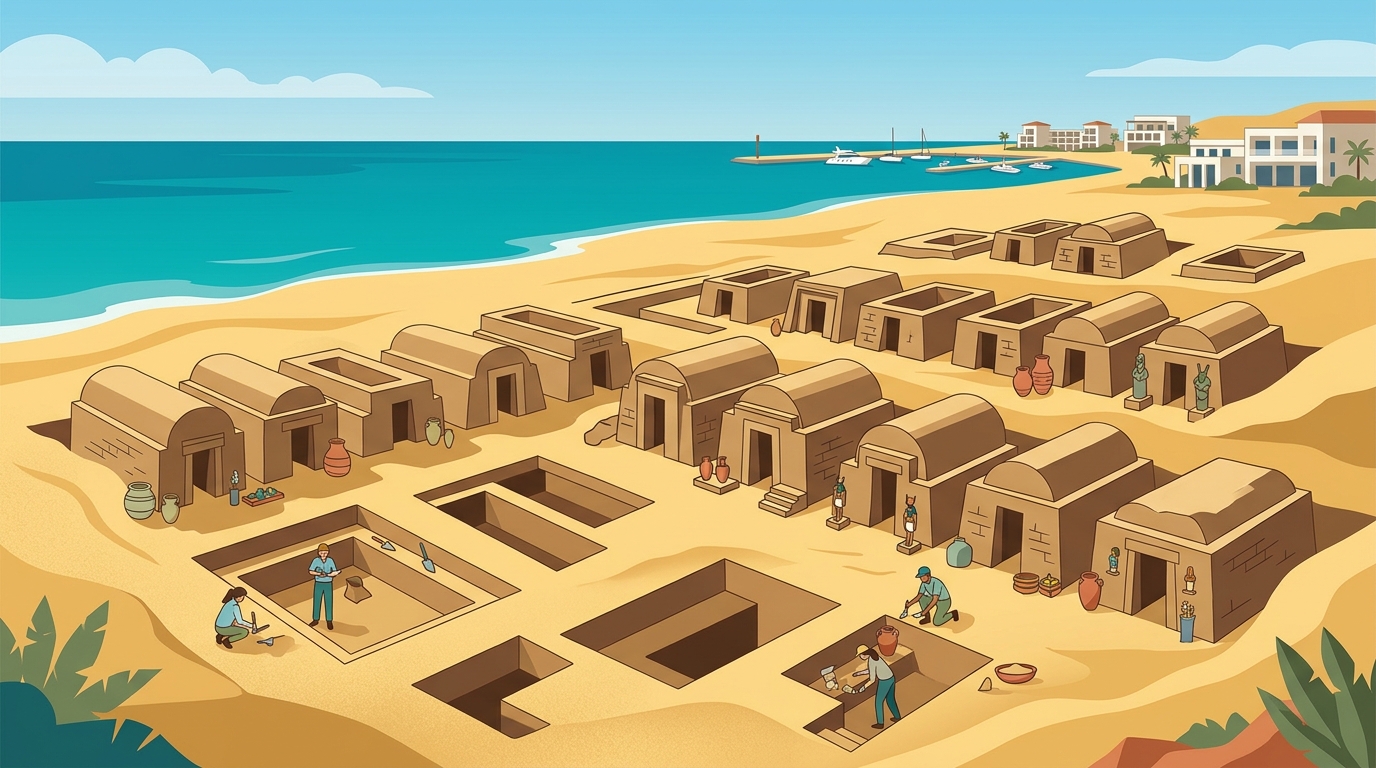
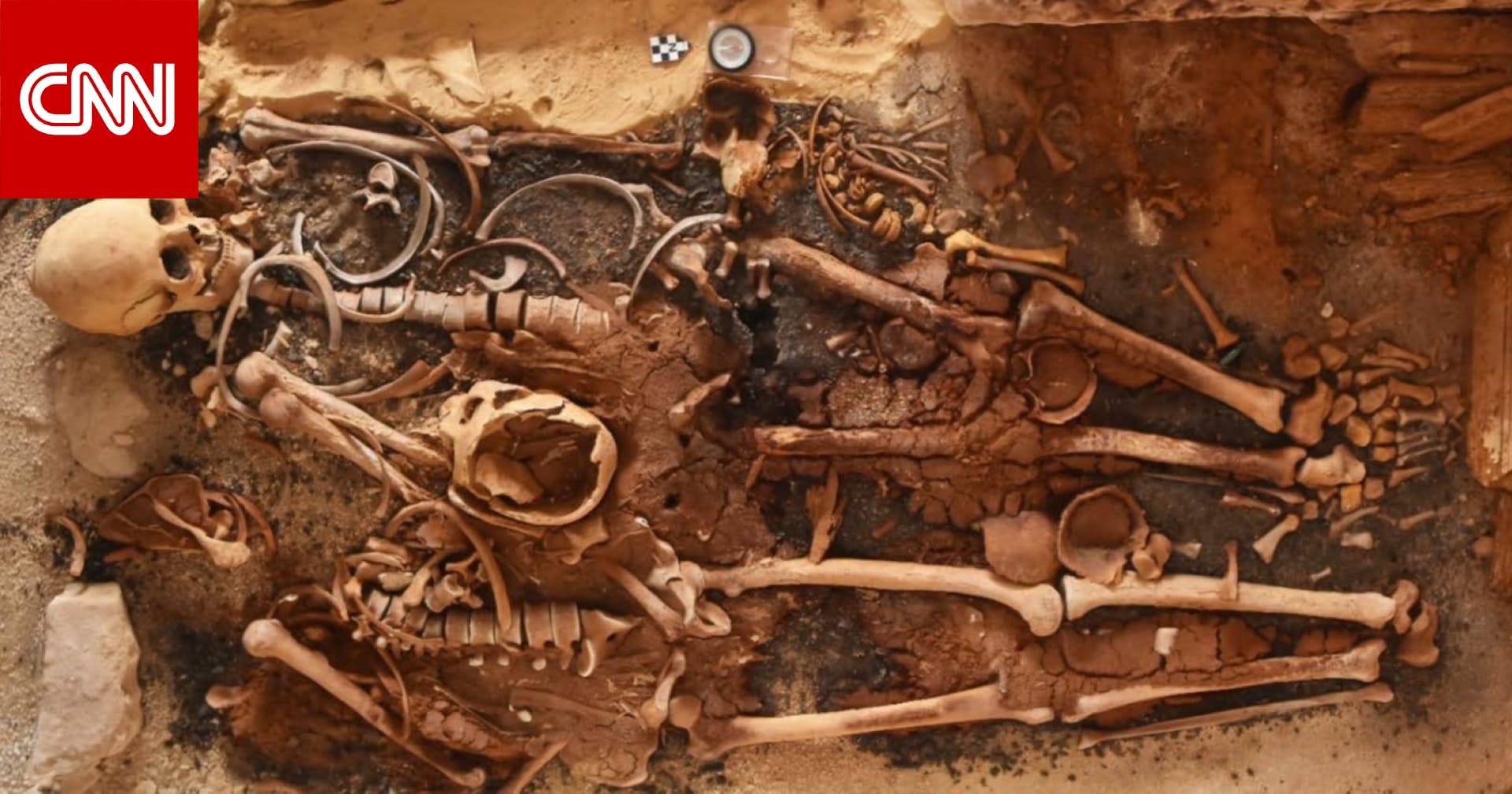
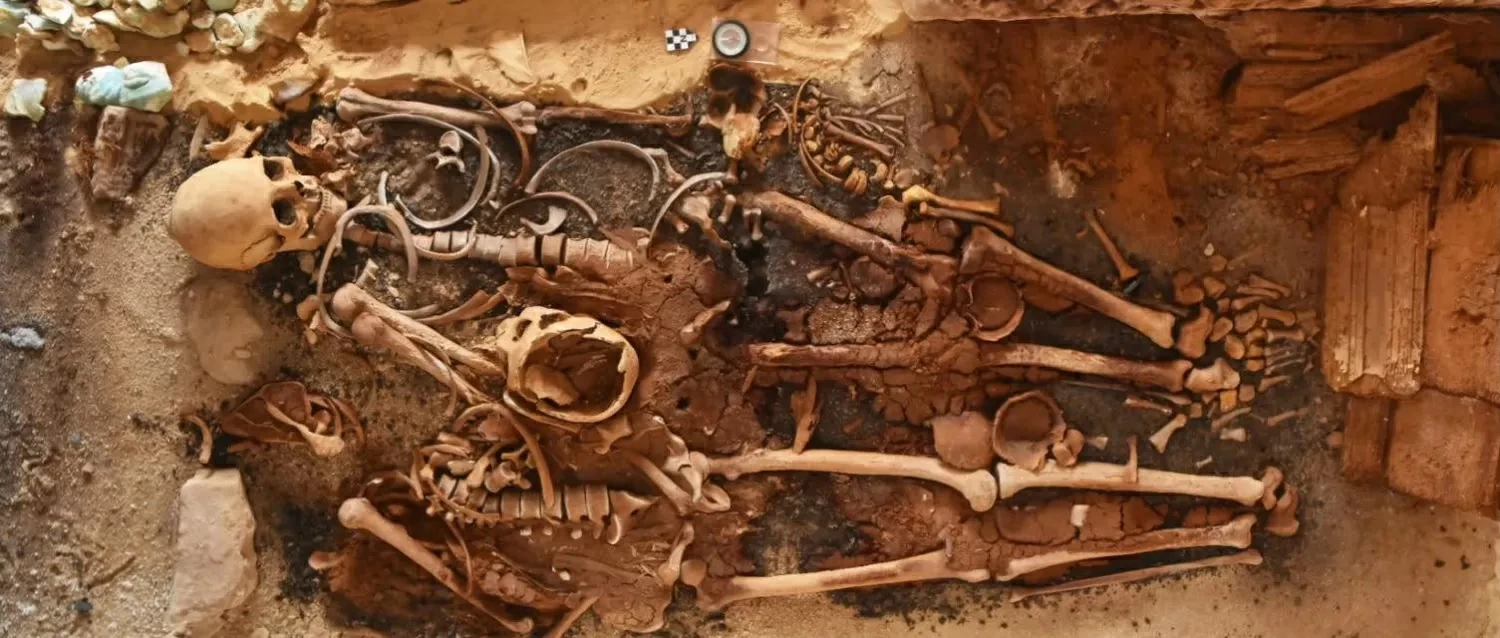
The Egyptian archaeological mission working in the ancient city of Marina El Alamein on the northwest coast has achieved a new archaeological discovery, resulting in the uncovering of 18 tombs, along with a number of surface burials, coffins, and artifacts, during excavation work at the site.
The mission also uncovered remains of the ancient city's extensions and its architectural components, bringing the total number of tombs discovered in the area since the site's discovery in 1986 to 44, reinforcing the site's importance as one of the most prominent ancient coastal cities on the Mediterranean.
Egyptian Minister of Tourism and Antiquities Sherif Fathi stated in a press release that this discovery "represents an important scientific and archaeological addition that contributes to understanding the cultural identity of the inhabitants of the ancient city of Marina El Alamein, and reassessing its historical role as a cultural and civilizational center linking Egypt and the Mediterranean world."
Fathi explained that the ministry "pays great attention to scientific excavation work at the site in preparation for opening it to visitors, adding a new cultural tourism product alongside the beach tourism for which the North Coast region is famous."
For his part, Dr. Hisham El-Leithy, Secretary-General of the Supreme Council of Antiquities, explained that the development project for the area includes establishing a visitor center, paths for electric cars and pedestrians, a museum storage facility, an administrative headquarters, and an open-air theater. The development work is expected to be completed during the first half of next year, making Marina El Alamein an integrated tourist and archaeological destination.
Head of the Egyptian Antiquities Sector at the Supreme Council of Antiquities, Mohamed Abdel Badei, pointed out that the discovered tombs include 11 tombs fully carved into rock (hypogea) with an average depth of 8 meters, in addition to 7 surface tombs built from limestone. Some tombs are exceptionally well-preserved, with burial openings still sealed with stone slabs that have not been opened since ancient times.
The excavations also revealed many surface burials around the tombs, reflecting the social diversity of the city's inhabitants, as well as a water well that was reused for burial purposes in a later period, representing a clear example of the continuation of ancient Egyptian influences in funerary architecture during the Ptolemaic and Roman eras.
Related news
The excavation works also yielded a distinguished collection of artifacts, including complete and semi-complete pottery vessels, amphorae, lamps, plates, limestone altars and basins, as well as a number of architectural elements associated with the tombs.
Dr. Hisham Hussein, Head of the Central Administration for Antiquities of Lower Egypt, explained that among the most notable finds is a limestone offering altar featuring a distinctive architectural facade imitating the "false door" known in ancient Egyptian funerary beliefs, in addition to an unfinished marble statue believed to represent the goddess Aphrodite, a limestone funerary stele of a seated man holding a bird, and a number of glass tear bottles.
In the same context, Dr. Eman Abdel Khaleq, head of the mission and director of the area, stated that a granite coffin measuring 2.5 meters in length was discovered, with its original lid still in place, containing bone remains currently under study. Nearby, remains of a plaster sphinx statue were found, confirming the continuity of Egyptian religious and artistic influences within the city during the Hellenistic and Roman eras.
She added that among the most notable discoveries were 24 gold pieces placed inside the mouths of some deceased individuals, representing what is known as the "golden tongue," an element associated with funerary beliefs of that period, including a gold piece in the shape of the "Eye of Horus," one of the most important protective symbols in ancient Egyptian beliefs.
Original source: Sky News Arabia

Comments (0)
Be the first to comment.