Fidan: NATO summit in Ankara was historic in terms of organization and outcomes
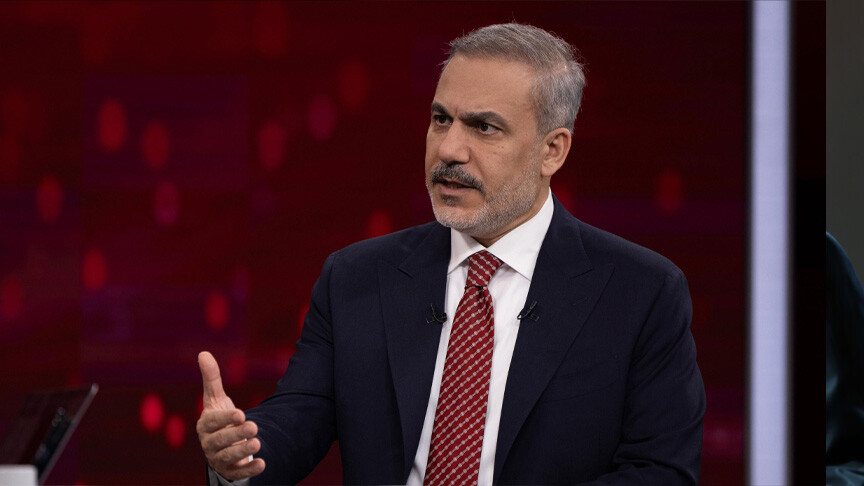
In an interview with Turkish Foreign Minister Hakan Fidan on Turkey's TRT News channel
Ankara/Anadolu
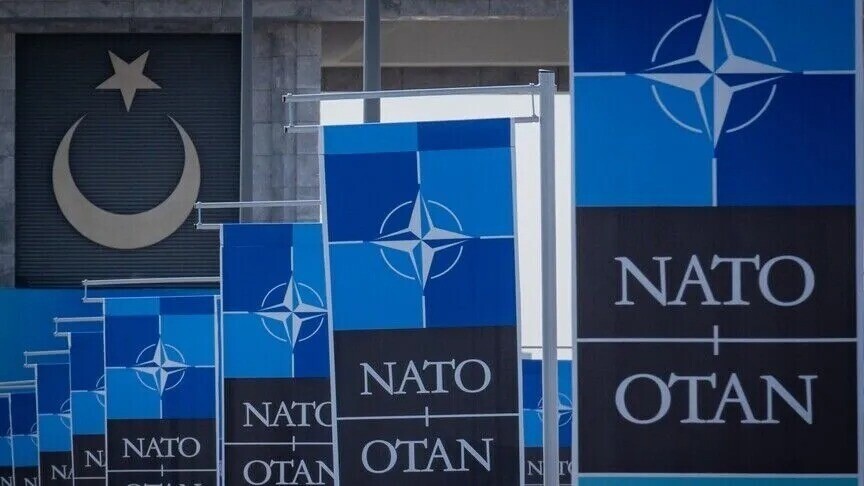
Turkish Foreign Minister Hakan Fidan said on Friday that the NATO summit in Ankara was historic in terms of organization and outcomes, representing an exceptional success for Turkish foreign policy.
In an interview with Turkey's TRT News channel, Fidan noted that the most prominent outcome of the summit was the transformation of the concept of 'burden-sharing' from a mere theoretical concept into a practical, applicable policy.
He explained that the summit took place amid extensive discussions about the future of the alliance, transatlantic relations, and the alliance's deterrence capability, in an atmosphere of ambiguity and uncertainty.
He added that Turkey, thanks to the leadership of President Recep Tayyip Erdogan and the outcomes of its foreign policy, has proven that the alliance still retains its importance and that differences between the two sides of the Atlantic can be overcome. It also contributed to reaffirming the fundamental purpose for which NATO was founded, namely defense, peacekeeping, and stability promotion, not waging wars.
Fidan pointed out that the United States had long complained about bearing the main burden of ensuring Europe's security, while European countries benefited from the US security umbrella to develop their social systems, which became a political issue in Washington.
He said that the Ankara summit witnessed the transformation of the 'burden-sharing' concept from a mere concept to a practically applicable policy.
He added that this is the most important and prominent outcome of the summit, and that the debate on this issue has become a thing of the past.
Fidan stressed that defense industries have become no less important than military capabilities, and have turned into one of the fundamental components of security.
He noted that NATO has institutionally recognized the importance of defense industries in strategic planning processes, and that this trend is reflected in the alliance's documents and strategic doctrine.
He added that one of the most discussed issues during the summit was resilience and endurance, explaining that recent war experiences have shown the importance of having sufficient ammunition stocks, ensuring the sustainability of defense systems, and enhancing logistical capabilities, which made the forum and policies related to defense industries among the most prominent topics of the summit.
He said that the approach outlined by President Erdogan, based on uniting parties and presenting alternative visions for outstanding issues, contributed to the success of the summit and made it a historic milestone for both NATO and Turkey.
Fidan stressed that the future of the alliance should be decided jointly by all its members, noting that the debate continues on whether Europe's security will be led solely by the European Union or with the participation of non-EU European countries, foremost among them Turkey.
He added that the Russia-Ukraine war proved that the two wings of the alliance, European and American, are mutually dependent on each other.
Fidan continued: 'The United States demanded defense burden-sharing, which European countries accepted despite the financial burdens that may affect spending on social services.'
He added: 'The experience that began with the return of US President Donald Trump to power, based on each country seeking to build its own defense system independently, showed that no country can create an integrated defense system on its own, making the construction of a joint defense industrial system among allies a strategic necessity, not just an option.'
Fidan revealed that he held a mini-meeting at the invitation of his US counterpart Marco Rubio, during which the establishment of an integrated defense industry system was discussed with the participation of allied countries with industrial capabilities, and turning this file into a new area of cooperation within the alliance.
He explained that the entrenched image of NATO in many people's minds dates back to the Cold War era, but modern challenges have forced the alliance to seek new mechanisms to maintain the military and industrial capabilities of member states in the face of changing threats.
Fidan stated that the alliance moved from 'NATO 1.0,' associated with the Cold War, to 'NATO 2.0' in the post-Cold War period, emphasizing that the alliance has now entered a new phase that can be described as 'NATO 3.0.'
In response to a question about the impact of increased defense spending by NATO countries and new supply agreements worth over $50 billion on Turkish defense industries, Fidan said that these decisions will have significant positive effects if implemented properly.
He explained that the success of defense industries depends on two main elements: the uninterrupted operation of supply chains and ensuring access to markets.
Fidan pointed out that establishing a joint defense industry system among alliance countries will enhance supply security and ensure market sustainability, enabling the sector to continue its activity without the need for permanent government support.
He added that the defense agreements concluded among allies are of great importance for the future of Turkish defense industries.
Fidan noted that Turkey focuses on developing high strategic importance technologies and weapons, such as air defense systems, missiles, fighter jets, advanced drones, drone swarms, and cyber capabilities.
He pointed out that developing these systems within a collective framework will reduce financial burdens and enhance countries' resilience in the defense field.
Fidan affirmed that the policies pursued by Turkey have proven successful.
Fidan: NATO summit in Ankara showed Turkey's active role in promoting stability. Erdogan: NATO summit showed Turkey's pivotal role in the international security structure.
He explained that NATO drew its future needs from the Russia-Ukraine war and saw in the Turkish experience a practical model for meeting them.
Fidan said that the successes achieved by Turkey in the defense industry field convinced the alliance that this model could be applied on a broader scale within NATO.
He added that Turkey made an important contribution to the alliance by forming a model to be emulated in developing defense industries.
- Turkish-American relations
Fidan stressed that Presidents Erdogan and Trump, during their meeting, reaffirmed the joint will to develop bilateral relations in various fields.
He expressed confidence that a solution would soon be reached regarding the US sanctions imposed under CAATSA and the F-35 fighter jet issue.
Fidan stressed that Trump's visit to Turkey on July 7, this month, should be viewed separately from the NATO summit.
He noted that the visit program included a dialogue that lasted about six hours.
He added that Trump himself stated that he came to the summit to meet President Erdogan.
Fidan considered that this reflects the international stature enjoyed by the Turkish president, which has turned into a national asset and an important diplomatic capability for Turkey.
He pointed out that the direct relationship between Erdogan and Trump is reflected in relations between the two governments and between American and Turkish institutions.
Fidan explained that the two leaders, during their meeting, reaffirmed their will to move forward in developing bilateral relations, along with renewing commitment to removing obstacles and resolving outstanding issues.
He added that the two sides also discussed new ideas to enhance industrial cooperation and trade exchange, in addition to regional and international files, including Lebanon, Palestine, Syria, Iran, and the Russia-Ukraine war.
Original source: Anadolu Agency
Comments (0)
Be the first to comment.