Palestinians in Gaza protest in Khan Younis against exclusion of UNRWA
Palestine
Palestinians in Gaza protest in Khan Younis against exclusion of UNRWA
Hundreds of protesters affirmed rejection of displacement and called for protecting the UN agency's mandate and ensuring continuation of its services
Hosni Nedim
18 July 2026 • Updated: 18 July 2026
GAZA
GAZA / Hosni Nedim / Anadolu
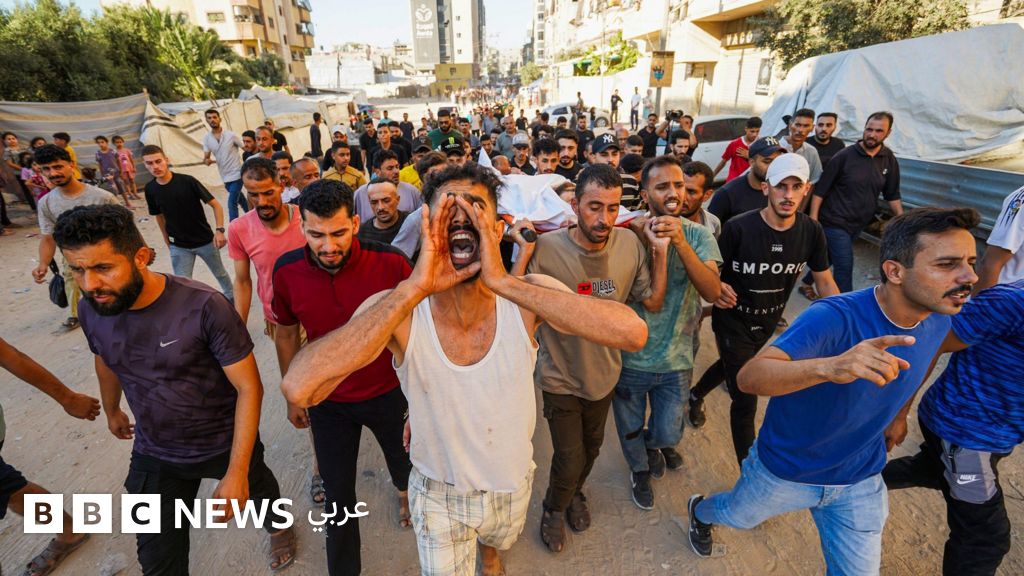
Hundreds of Palestinians participated on Saturday in a march in Khan Younis in the southern Gaza Strip, demanding an end to the Israeli genocide and rejecting displacement, and ensuring the continued work of the UN Relief and Works Agency for Palestine Refugees (UNRWA).
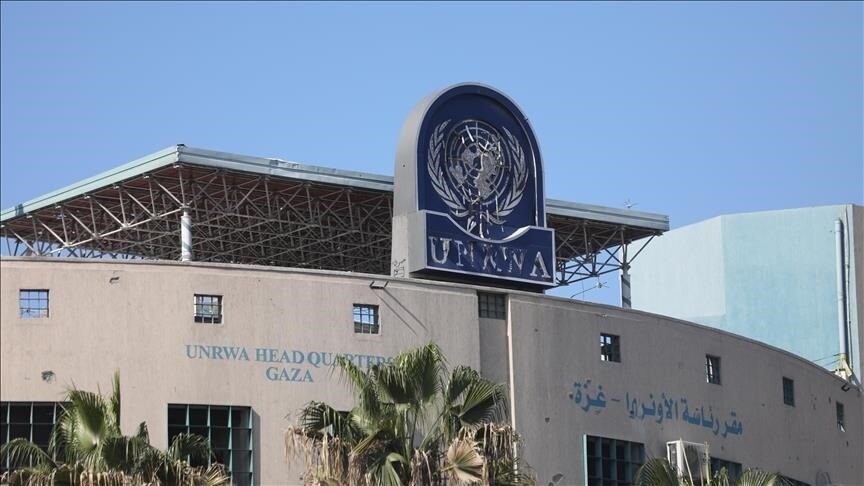
The march came more than two weeks after the 'Peace Council' announced that there is no place for the UN agency in what it called 'New Gaza,' amid Palestinian and Arab rejection of attempts to exclude UNRWA and end its role.
The march, called by the Palestinian People's Party, started from Jaser intersection and arrived at the Khan Younis municipality building, with the participation of representatives of national and Islamic forces, activists, and citizens.
Participants raised Palestinian flags and banners demanding an end to the war, lifting the siege, and providing protection for civilians.
They also called for protecting UNRWA's mandate and ensuring the continuation of its services to Palestinian refugees.
The agency provides educational, health, relief, and social services to registered Palestinian refugees in its five operational areas: the Gaza Strip, the West Bank including East Jerusalem, Jordan, Lebanon, and Syria.
On July 1, the 'Peace Council' announced through its account on the American company X platform that 'there is no place for UNRWA in the new Gaza.'
The council claimed it seeks to end what it described as 'continued reliance on aid.'
It added that Palestinians in the Gaza Strip 'deserve more than that.'
The announcement sparked Palestinian and Arab rejection, amid warnings that excluding UNRWA targets its UN mandate and the Palestinian refugee issue and their right of return.
The 'Peace Council,' chaired by US President Donald Trump, oversees the implementation of the transitional phase plan in the Gaza Strip.
The plan's structures include an executive council under the 'Peace Council,' the 'Gaza Executive Council,' the 'National Committee for Managing Gaza,' along with the 'International Stability Force.'
The White House announced these structures in January 2026 as part of the second phase of Trump's plan for the Gaza Strip.
Ata Abu Rizq, the national relations official of the People's Party in Khan Younis Governorate, said that the march comes 'to affirm the Palestinian people's right to freedom and independence, reject the daily massacres, and end the policy of displacement and forced displacement that the residents of the Gaza Strip are subjected to.'
Abu Rizq added to Anadolu on the sidelines of his participation in the march that the participants demanded ensuring the right of Palestinians to a dignified life by providing shelter, food, water, healthcare, and education, and lifting the siege imposed on the Strip.
He stressed the necessity of UNRWA's continued work, calling for enabling it to continue providing its services to Palestinian refugees until they obtain their rights.
For his part, Imad Mohsen, spokesperson for the Democratic Reform Current in the Fatah movement, said that the participation of Palestinian forces and factions in the march carries a message to the international community about the need to move to stop the war and end the siege imposed on the Gaza Strip.
Mohsen added to Anadolu that the participants demanded starting the recovery and reconstruction phase as soon as possible.
He said: 'Security and stability will not be achieved except by ending the occupation and establishing an independent Palestinian state with Jerusalem as its capital.'
Since the start of the Israeli genocide war on the Gaza Strip on October 8, 2023, Israel has killed 73,269 Palestinians and injured 173,811 others, according to the latest tally announced by the Ministry of Health in the Strip on Saturday.
The war has also left widespread destruction affecting about 90 percent of civilian infrastructure, while the United Nations, the European Union, and the World Bank estimate recovery and reconstruction needs at about $71.4 billion.
Original source: Anadolu Agency


Comments (0)
Be the first to comment.