Fuel Shock in China Transforms Taxi Services Landscape

Listen to the article: Audio text automatically generated by an automated system
0:00
Two minutes to read
At a time when global energy markets are under increasing pressure due to the Strait of Hormuz crisis and rising oil prices, China has found an effective way to mitigate the impact of higher fuel costs through the rapid expansion of electric taxis and ride-hailing services.
Chinese cities are seeing continuous growth in demand for taxis and ride-sharing services, with government data showing that the number of trips reached 3.05 billion trips in May, up 6% compared with the same period last year.
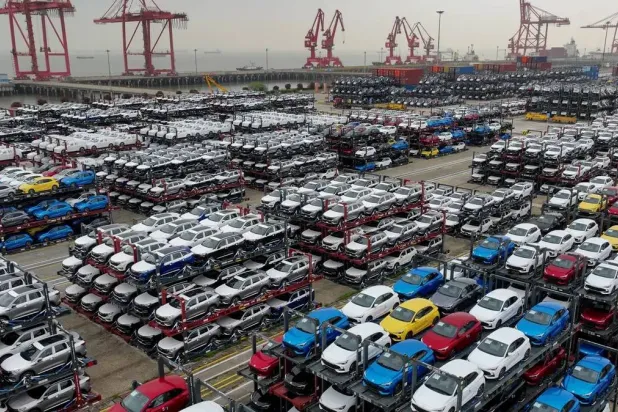
Western companies move EV production to Europe due to tariffs
This growth reflects a notable feature of China's transport sector: the cost of travel for consumers is declining despite rising gasoline prices.
Analysts say that an increase in the number of drivers seeking job opportunities amid an economic slowdown, coupled with lower prices of electric vehicles, has contributed to lower trip prices, encouraging more passengers to abandon their private cars and rely on paid transport services.
Li, a part-time driver in Beijing, said fares have fallen by between 10% and 15% since he started working six months ago. He added in an interview with Reuters while at an electric vehicle charging station: "Competition is fierce."
The impact of this phenomenon is also evident on Chinese social media platforms, where hundreds of posts have spread since March indicating that using taxis or ride-hailing services has become cheaper than driving a private car amid rising fuel prices.
With the acceleration of the transition to electric vehicles, China's transport sector has become less dependent on gasoline, giving it greater protection against disruptions in global oil markets, including crises related to the closure of the Strait of Hormuz or supply disruptions.
According to data from China's Ministry of Transport, about half of the country's taxi fleet of 1.3 million vehicles runs on electricity, with this proportion approaching 100% in several major cities, reflecting the accelerating shift toward electric transport on a large scale.
Advertisement
Advertisement
Read also
Chip stocks boost Nikkei to close sharply higher, SoftBank pressures limit gains - Financial markets
New York bans large data centers for one year to assess risks to power grid and climate - Economy
German machinery industry demands greater protection from Chinese competition, calls for more effective tariff rules in EU - Economy
Original source: Al Arabiya




Comments (0)
Be the first to comment.