Genetic Analysis Reveals Secrets of the Mysterious 'Golden Man' from the Iron Age
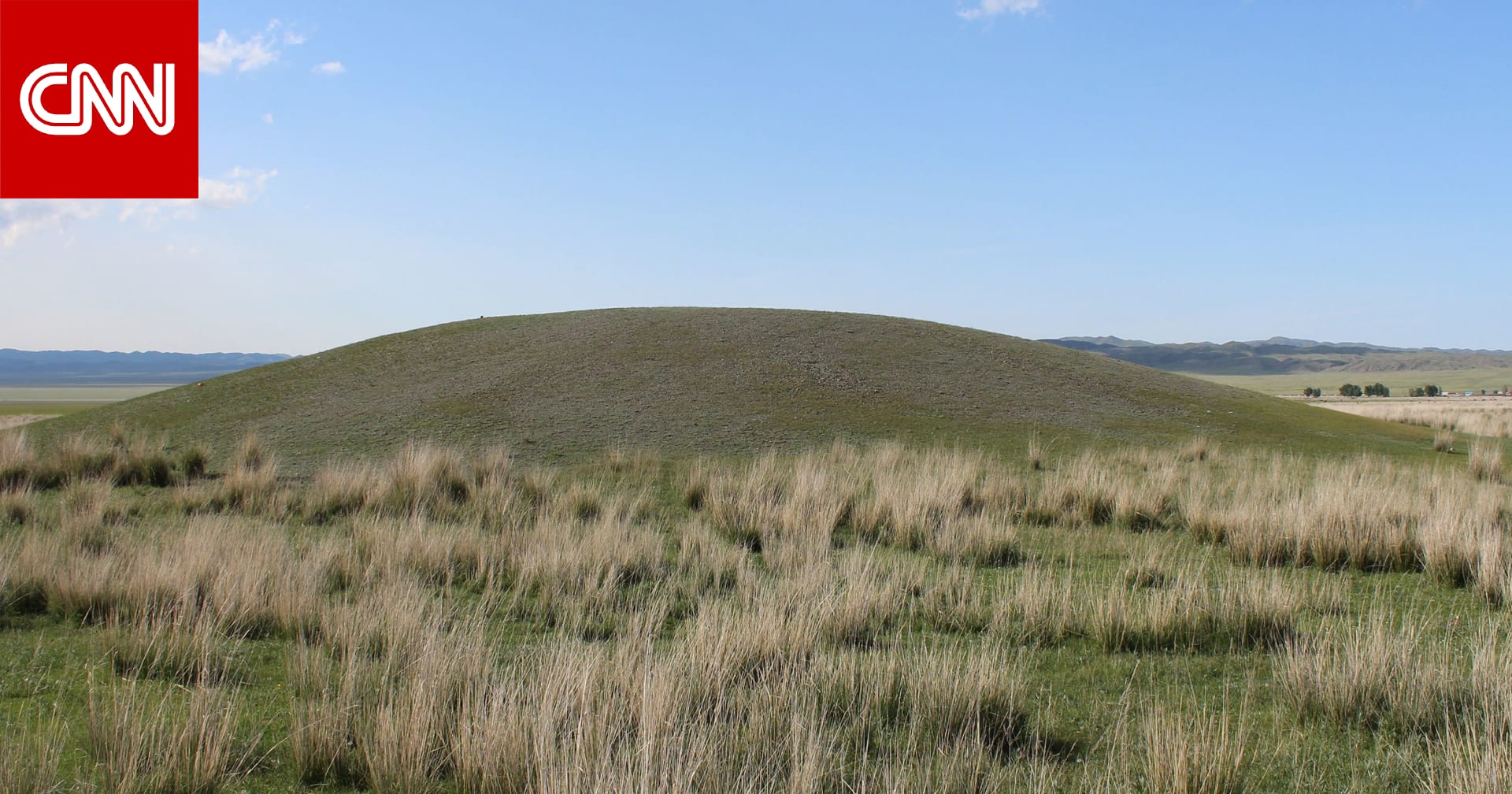
DNA analysis showed that the Scythian elite, such as the 'Golden Man,' inherited their high status and shared power during the Iron Age.
Credit: Rinat Zhumatayev
(CNN) -- Nomadic warriors known as the Scythians roamed the Eurasian steppes on horseback during the Iron Age. The elite class held power in Scythian society, and their high status was immortalized after death through lavish, richly furnished burials. Among the most famous members of this elite is a figure known as the "Golden Man," whose grave contained iron weapons, bronze pieces, a silver vessel, and more than 4,000 gold jewelry items.
Now, genetic analysis has shown for the first time that the Scythian elite, such as the "Golden Man," inherited their prestigious social status and shared power with their relatives, leading to a level of class inequality not seen in this region during the earlier Bronze Age.
By comparing DNA from dozens of individuals across multiple burial sites, scientists discovered family ties among the Scythian elite, even among groups living far apart. These connections contributed to the social inequalities that began to emerge during that period in Scythian history, and the results provide the first evidence that elite individuals were related to each other by kinship, according to a study published in the journal Science Advances.
Reconstruction of the "Golden Man," a young Scythian elite discovered in 1969 at the Issyk burial mound in Kazakhstan. Credit: Gulmira Mukhtarova
The genetic analysis also helped settle long-standing questions about the "Golden Man," whose funerary mound, known as a "kurgans," dates to between about 400 and 300 BC, and was discovered in 1969 at a site in Kazakhstan.
Despite the name suggesting he was male, researchers remained unsure whether the buried youth was male or female.
In the new study, scientists examined genetic markers across the entire genome of the "Golden Man," and used statistical methods to fill gaps caused by damage or loss of some DNA data.
The results indicated that the "Golden Man" was most likely genetically male, and a comparison of his DNA with other Scythian samples showed he belonged to a southern branch known as the Saka.
Alicia Ventriska-Miller, associate professor of anthropology at the University of Michigan, who was not involved in the study, said: "This paper does an excellent job of integrating genetic, archaeological, and textual evidence to support its interpretation that social status was based on family lineage."
She added in an email to CNN that "proving that the elite system was based on lineage is a very important discovery, as it means that wealth was passed down through generations."
Now, researchers have found that it was not just wealth, but social status and power were also inherited.
Emergence of dynastic rule
An aerial photo shows a burial mound after excavation began, dating to between the 8th and 7th centuries BC. Credit: Rinat Zhumatayev
In this study, scientists analyzed DNA samples and other data from 85 individuals; 38 were buried in elite tombs, and 47 were commoners.
Iron Age societies were more genetically diverse than Bronze Age societies. However, the DNA of elites contained genetic similarities known as regions of homozygosity, which are contiguous stretches of genetic markers indicating common ancestry, and their genomes were more homogeneous compared to others.
The data indicated that high-status individuals formed a distinct genetic group within their societies, which "highlights the potential role of elites in maintaining population continuity during a period of extensive genetic admixture," according to the study authors.
Elite burial mounds were massive structures, reaching up to 15 meters in height and 105 meters in diameter, containing passages, crypts, and side chambers with remains of animals or relatives of the deceased.
The remains inside these burials often showed signs of mummification or post-mortem skull perforation to remove the brain, a practice believed to help preserve the body when elaborate funeral preparations took a long time.
Ainash Childebayeva, lead author of the study and assistant professor in the Department of Anthropology at the University of Texas at Austin, said: "It makes sense to preserve the body if a burial mound has to be built for it, or if it needs to be transported to a specific burial site."
In one case, the graves of an elite man and his descendants were found in two different burial sites separated by more than 100 kilometers. Researchers saw this connection, along with the lavishness of the burials, as evidence of hereditary dynastic rule linking high social status to family kinship.
One of the descendants who received an elite burial was only one year old, which Childebayeva considered strong evidence that status was inherited.
She said: "If status were achieved through accomplishment, it is unlikely that a one-year-old child would have done something to deserve this type of burial. He received this privilege only because he was born into a certain family."
High-status women
Extracting gold jewelry from the Eleke Sazy burial site in eastern Kazakhstan. Credit: Zainolla Samashev
Nearly half of the 38 elite individuals in the study were women, with some skeletons showing signs of skull perforation.
Their burials also contained elaborate architectural passages, horses, luxurious clothing, and valuable items, indicating that women were held in high respect and status in Scythian society.
Ventriska-Miller noted that this finding aligns with other studies of Bronze Age Eurasian peoples, where women possessed a large share of wealth, reflected in ornate headdresses and bronze accessories.
She added that among the Xiongnu, a nomadic people who lived in eastern Eurasia during the late Iron Age, the highest-status individuals were women.
Among the prominent women in Scythian society is a figure known as the "Ordjar Princess," who wore a luxurious gold headdress similar to that of the "Golden Man." Her burial also contained a stone altar and medicinal plants, suggesting that she may have played a shamanic or spiritual role.
Childebayeva also hopes to understand what originally led to the emergence of an elite class and ruling dynasty among the Scythians, even though this level of social division was unknown among earlier nomadic groups in the Eurasian steppes.
She asked: "Why do we see this in the Iron Age, while we do not see the same level of class inequality in the Bronze Age? And what factors led to the emergence of this form of inequality?"
Original source: CNN Arabic






Comments (0)
Be the first to comment.