Triplets in Gaza Defy War and Disability, Excel in High School Exams
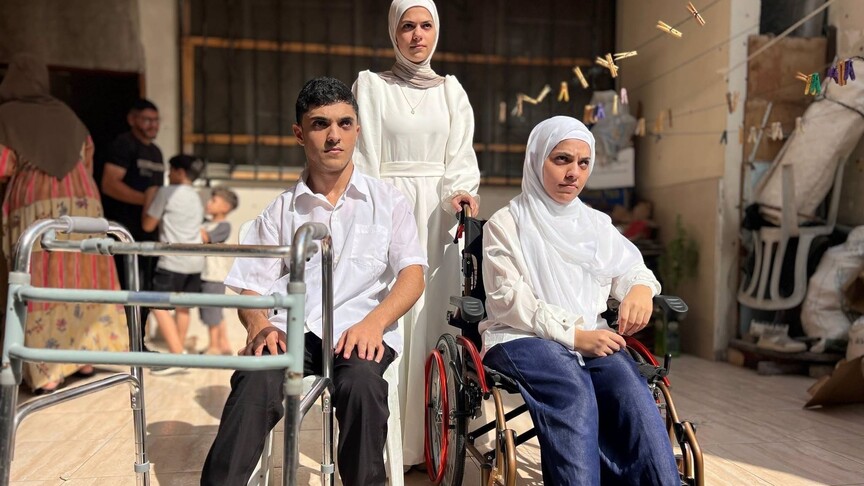
Triplets in Khan Younis achieved a remarkable success in high school exams despite war and physical disability, embodying a prominent Palestinian story of perseverance.
GAZA / Ramzi Mahmoud / Anadolu
In a modest home in Khan Younis, southern Gaza Strip, the challenges of disability and war turned into a success story written by three hearts that shared birth and ambition, and now share the joy of excelling in high school exams.
With the announcement of high school results in Palestine, ululations filled the home of the Moussa family, after the triplets Sama, Abdullah, and Nada Hassan Moussa achieved high scores, despite the displacement and harsh conditions imposed by the Israeli genocidal war, as well as the physical disability that Abdullah and Nada have suffered since childhood.
This came after the Palestinian Ministry of Education announced the high school exam results for the year 2026, which were held this year simultaneously in the occupied West Bank, including occupied East Jerusalem, and the Gaza Strip for the first time in three years, due to the Israeli genocidal war.
** Anticipation and Waiting
Since the morning hours, the three siblings sat with their family members, waiting for the moment the results were announced. When nine o'clock struck and text messages arrived on their phones, screams of joy erupted inside the home, and tears mingled with smiles.
Relatives and neighbors quickly flocked to congratulate the family on this achievement, which they saw as a victory over both war and disability.
Sama scored 97.5 percent, Abdullah 94.6 percent, and Nada 94.4 percent.
Sama Moussa, who achieved the highest score among her siblings, said the conditions students in the Gaza Strip experienced during the academic year were "exceptional and harsh," stressing that the war left significant psychological effects on everyone.
She told Anadolu: "Thank God for everything. I was expecting a higher score, but circumstances dictated this result for a person."
She explained that continuing to study amid the war was not easy, saying: "Even psychologically, one didn't have the energy to continue, but I challenged all circumstances to make my family happy and achieve the score I had dreamed of for years."
** A Shared Journey
Sama spoke about the special bond that united her with her siblings throughout their study journey, explaining that they faced the challenge together and shared the same difficulties.
She noted that due to their physical disability, her siblings could not attend private tutoring like other students.
She explained: "We had to bring teachers to them at home, but they decided to challenge all circumstances and get the score they deserve (...) Thank God, God granted them that."
** Effort Not Wasted
Their mother, Hind Muhanna, spoke with words mixed with pride and gratitude as she recalled years of care and follow-up for her children.
She told Anadolu: "Thank God, we worked hard for them, and today I reaped the fruit of their success. Our effort was not wasted."
She added that the family had strived since their children's childhood to instill confidence in them and not allow disability to become a barrier to their dreams.
She continued: "We made them feel they were better than everyone. From kindergarten to school, everyone who knew them asked me: 'What is the secret of their self-confidence?'"
She explained that her son Abdullah underwent five surgeries due to shortened tendons caused by oxygen deprivation at birth, stressing that he did not let that hinder his educational journey.
She concluded: "He overcame the odds, and thank God, he reaped the fruit of his effort."
** Family Support
For her part, Nada Moussa, who scored 94.4 percent, attributed her success to the continuous support she received from her parents.
She said: "Thank God, thanks to my parents, I challenged all difficulties. They supported me every step of the way and did not skimp on anything for me."
She added that her family was the biggest motivation to persevere despite the difficult conditions imposed by the war, saying: "Thank God, we overcame all the great challenges."
Abdullah Moussa explained that success came after a tough academic year filled with displacement and suffering.
He told Anadolu: "Thank God, it was a score worthy of the effort and hard work. It was a very difficult year, full of displacement and hardships, but despite the pain, we were able to reach the top and achieve the goals we sought."
The story of the three siblings embodies a model for thousands of Palestinian students in the Gaza Strip who clung to their right to education, despite the displacement, loss of stability, and psychological and living deterioration imposed by the Israeli genocidal war.
The announcement of high school results this year comes amid exceptional circumstances experienced by students in the Gaza Strip, many of whom continued studying amid displacement, after the educational process was disrupted and most schools were destroyed by Israel.
According to Palestinian Minister of Education Amjad Barham, about 89,000 students took the high school exams this year in the occupied West Bank, including occupied East Jerusalem, and the Gaza Strip, in addition to more than 2,000 students in 46 countries.
He added that more than 106,000 students took the high school exams in the Gaza Strip over the past three years, including 36,900 students this year.
Barham noted that Israel killed more than 1,100 students who were supposed to take the high school exams this year.
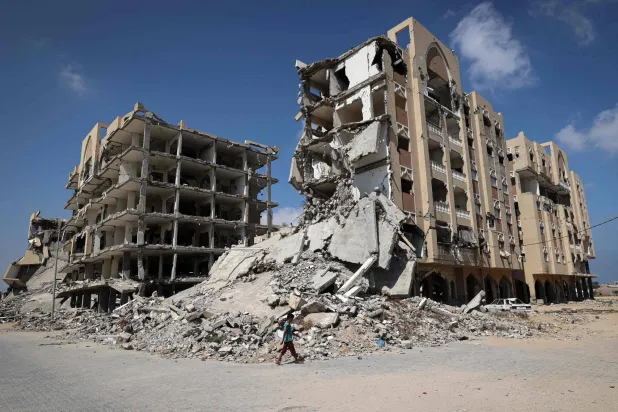
The Gaza Strip is living under the weight of the Israeli genocidal war, which has led to the destruction of hundreds of schools and universities, disrupted the educational process, and forced thousands of students to continue their studies in exceptional circumstances, including tents and shelter centers.
Since October 2023, with U.S. support, Israel has been waging a genocidal war on the Gaza Strip, resulting, according to Palestinian figures, in the killing of more than 73,000 Palestinians and injury of more than 173,000, mostly women and children, in addition to widespread destruction affecting about 90 percent of civilian infrastructure.
Original source: Anadolu Agency



Comments (0)
Be the first to comment.