How a secret British police operation solved a murder mystery more than 40 years after it happened?
How a secret British police operation solved a murder mystery more than 40 years after it happened?
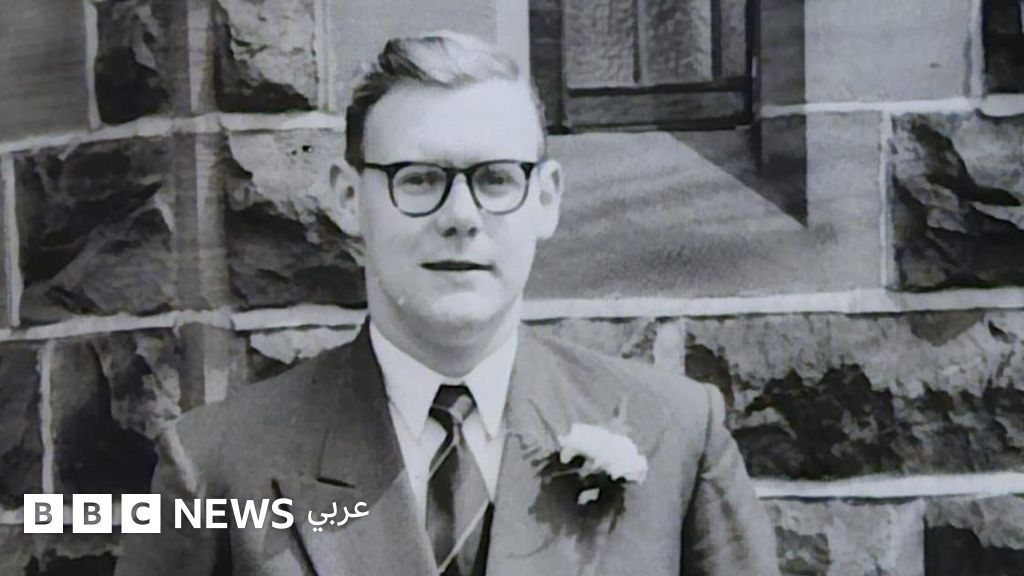
Image caption, Anthony Littler was beaten to death in an alley in north London in May 1984, and his killers remained at large for more than 40 years
Article Information
Author, Guy LynnRole, London Investigations
Published 4 hours ago
Reading time: 10 minutes
Just after midnight on 1 May 1984, civil servant Anthony Littler got off the train at East Finchley station and walked into a dark alley on his way home.
Only two minutes later, the 45-year-old man was lying on the ground, gasping his last breaths.
Anthony, described by friends as a 'gentle giant', lived alone and loved traditional ale. He had been hit twice on the head, nothing was stolen from him, there were no witnesses, no forensic evidence, and no clear motive.
Crime in Manhattan: Beheaded his boss with an electric saw and bought balloons for his girlfriend with his card
Ted Bundy: The calm face of one of the most terrifying serial killers
For 42 years, no one was brought to justice.
But that changed on Friday, when the Old Bailey sentenced Michael Stewart (57) and Anthony Stewart (60) to life imprisonment, with minimum terms of 10 and 15 years respectively, after they were convicted of killing Littler. The brothers were 15 and 18 at the time of the crime.
Although there was no evidence that Anthony Littler was gay, Judge Kats indicated that the Stewart brothers targeted gay men for robbery, saying: '1984 was a different time, and a different place in many ways.'
During the televised sentencing hearing, the judge addressed the defendants: 'I am entirely satisfied that your group was lying in wait for a victim, you targeted that honest and upright man and took his life.'
Building a case
Cold cases are often solved thanks to scientific advances, such as DNA analysis, fingerprints, and re-examining old evidence using modern techniques.
Skip most read and continue reading
Why do mosquitoes bite some people more than others?
Syria gives Trump a way to bypass the Strait of Hormuz – article in The Telegraph
Death of South African player Jayden Adams days after playing in the World Cup
Iran hints at 'non-compliance with agreements with the United States', and a US military delegation visits Lebanon
But this case was different.
Investigators resorted to a daring covert operation, planting listening devices in Michael Stewart's home and car, as well as in his brother's car, and sending two undercover officers to get close to Michael and infiltrate his circle of acquaintances.
The investigators were waiting for him to do what he had repeatedly done over the years: talk.
Image caption, For 42 years, the brothers Michael (left) and Anthony Stewart escaped punishment for murder
Warning - Some readers may find the content and language involving discrimination in this report disturbing.
Anthony Littler was a quiet man living a simple routine life. He was 6 feet 4 inches tall (about 1.93 meters), worked in the civil service, and lived in a flat in East Finchley, north London.
He was very attached to his mother and often travelled to St Helens in Merseyside, where he was born and raised, to visit her.
His greatest passion was traditional ale. On the last night of his life, he travelled across London to attend a meeting of the Campaign for Real Ale (CAMRA), held at a pub in Carshalton, where he spent the evening with friends and drank 5 or 6 pints of bitter.
When the pub closed, he said goodbye to his friends.
Anthony made his way back through London to East Finchley, taking the narrow passage next to the railway line, a shortcut to his home.
Within minutes, he was subjected to a vicious and extremely violent attack, so severe that he never regained consciousness.
Video caption, Watch: Arrest of the killer 40 years after the murder of Anthony Littler
Patricia McClure, one of Anthony's last surviving close relatives, recalls: 'He was like an older brother to me. He used to push my pram when I was little, and he was always there for family birthdays and Christmas celebrations.'
Patricia, who lives in Bebington, Wirral, said what troubles her most is that Anthony would not have fought back or retaliated.
She added: 'He wouldn't even throw a stone at a dog when he was a child. He was always kind-hearted, and his death in such a horrific way is a complete lack of justice.'
Image caption, Patricia McClure, one of the few remaining close relatives of Anthony Littler, holds a photo of her cousin who was like an 'older brother' to her
Image caption, Anthony (right) at a family Christmas celebration in the 1970s, and his cousin Patricia says his absence 'was glaringly obvious at every Christmas he missed' over the following four decades
Appeals broadcast on ITV's 'Police 5' and BBC One's 'Crimewatch' yielded no results. The investigation was closed in January 1985, a second investigation in 1993 led nowhere, and a third investigation between 2012 and 2015 ended without charges.
Patricia says: 'I had accepted that he was gone and that they hadn't caught the killers. It left a permanent sadness that stayed with me, and it surfaced every Christmas he was absent.'
For 42 years, she assumed the killers thought they had gotten away with it.
She adds: 'And until the police started this investigation, they had indeed gotten away.'
Image caption, The original 1984 forensic pathologist's map, annotated by police, marks the location where Anthony's body was found: in an alley just yards from East Finchley station
In the early days of the original investigation by the Metropolitan Police, officers knocked on the door of a house just a few hundred metres from the alley where the crime occurred. That was the Stewart family home.
There they spoke to Michael Stewart, then 15, and a week later to his brother Anthony, who was 18 at the time.
Door-to-door investigation forms recorded that both were safely at home on the night of the murder. On Anthony Stewart's form, officers noted: 'Does not use the alley.'
But that was not true. The court would hear that the brothers had a tendency towards violence and had been in trouble with the police for years.
Image caption, Anthony, in a photo with his mother, to whom he was very attached. His mother died without ever knowing who killed her son.
In 2013, a serious dispute broke out between the brothers. Daniel, the youngest, was not involved in the attack, as he was only ten years old when Anthony was killed.
During that family argument, Daniel told police that Michael had threatened to burn down his house and kill him.
Original source: BBC Arabic




Comments (0)
Be the first to comment.