Hungary’s parliament votes to oust president in latest anti-Orban move

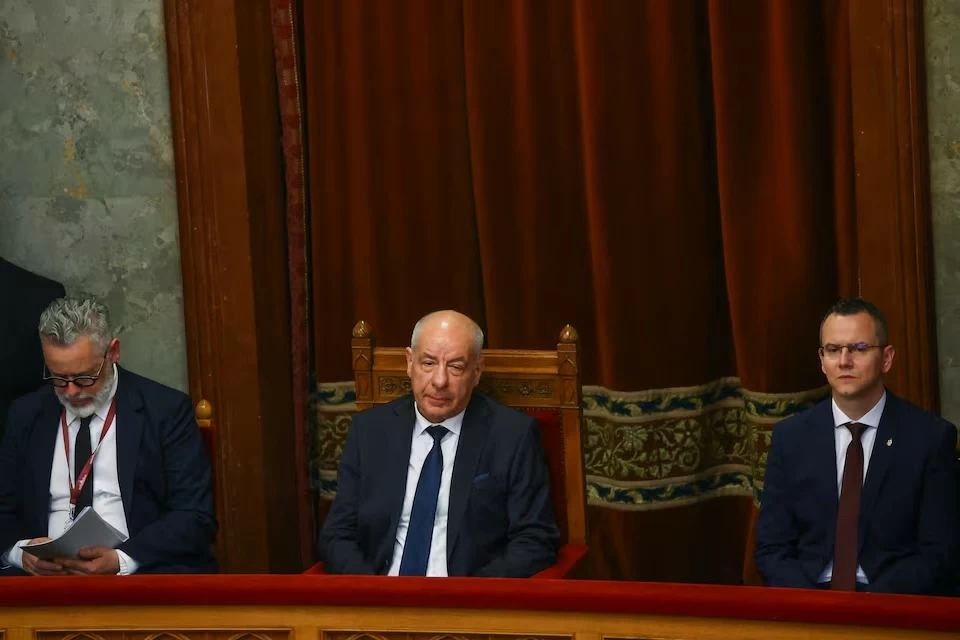
Hungarian parliament passes amendment that would remove President Sulyok, appointed under ex-Prime Minister Orban.

This article is based on reporting from Al Jazeera staff and Reuters.
Hungary's political landscape has been rapidly evolving since the Tisza Party's sweeping electoral win.
Published On 14 Jul 202614 Jul 2026
The constitutional amendment, approved on Monday with 139 votes in favor and just six against, will terminate Sulyok's tenure immediately and allow parliament to select a new president.
In April, Hungarians voted out right-wing nationalist Viktor Orban, and new Prime Minister Peter Magyar's Tisza Party secured a landslide victory, ending Orban's Fidesz party's 16-year grip on power.
Recommended Stories
list of 3 items
- list 1 of 3Indonesia’s jailing of Gojek founder raises fears for investor confidence
- list 2 of 3Who is Zeynep Sonmez, Wimbledon star with a ‘Palestine’ watermelon racket?
- list 3 of 3Billions flow between EU institutions and Israel, despite Gaza genocide
end of list
Hungarians voted out the right-wing nationalist Orban in April, with new Prime Minister Peter Magyar’s Tisza Party winning in a landslide. The election result ended 16 years of power for Orban’s Fidesz party, which had come to dominate many aspects of the country.
Since Magyar’s victory, he has sought to erode that power, including by removing the current president. The constitutional amendment also introduces a series of judicial reforms, creates a body to investigate alleged financial abuses under the previous government, and imposes a 12-year term limit on lawmakers.
Sulyok now has five days to sign the constitutional amendment passed by parliament. Magyar has said that parliament will launch an impeachment procedure against Sulyok if he does not sign it.
The president and other members of Fidesz boycotted Monday’s parliamentary session.
Sweeping away the old order
The parliament elected Sulyok, a former chief of the Constitutional Court of Hungary, in February 2024. He was nominated to replace Katalin Novak, who resigned after pardoning a man convicted of covering up child sexual abuse.
But days after Magyar’s centre-right Tisza Party won a two-thirds parliamentary super-majority in April, the new prime minister declared Sulyok “unworthy to embody the unity of the Hungarian nation” and demanded that he leave office once the new government was formed.
In June, after the deadline to resign had passed, Magyar branded the president a “puppet” of Orban and promised to strip him and other holdovers from office by constitutional means. Weeks later, he unveiled a reform programme, dubbed “Operation Cleansing Fire”, which seeks to install a new constitution, purge state institutions and establish an anticorruption office.
While the presidency is a largely symbolic post, it is empowered to approve laws and can refer them to the Constitutional Court for review, raising fears that Sulyok might use his presidential powers to stymie Tisza’s ambitious reform agenda.
The removal of President Sulyok underscores the new government's determination to dismantle the legacy of the Orban era. The constitutional amendment also includes judicial reforms and creates a body to investigate alleged financial misconduct under the previous administration. With the president now under pressure to sign the amendment or face impeachment, the political showdown in Hungary is far from over.
Original source: Al Jazeera





Comments (0)
Be the first to comment.