Injuries in an attack inside a school in Germany... and arrest of a suspect
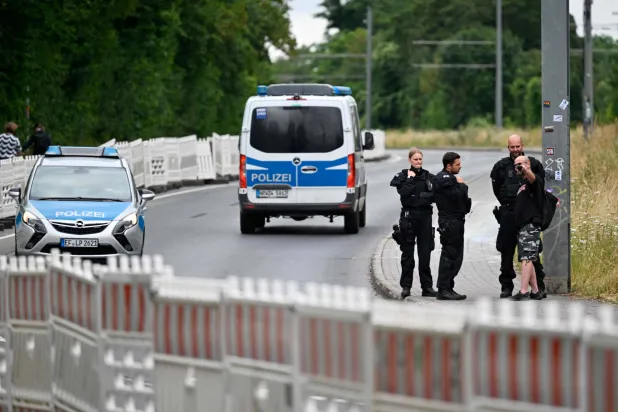
Several people were injured in an attack at a high school in the state of Bavaria in southern Germany on Wednesday, according to police, who confirmed the arrest of a suspect.
Moscow took urgent measures to address the worsening crisis in fuel supplies to the domestic market, the worst domestic impact of the conflict since it erupted in the winter of 2022.
As the Kremlin accelerated steps to mitigate repercussions, Russian officials called for preventing panic over the deteriorating situation in this sector, especially after very long queues appeared in several Russian cities for fuel and diesel products, almost for the first time in the history of Russia, one of the world's largest oil and energy producers.
Smoke rises from an oil refinery following a Ukrainian drone attack in Moscow on June 18, 2026 (Reuters)
By July, the extent of damage to this sector became clear, a few months after the conflict with Ukraine entered a new phase in which the targeting of energy infrastructure, fuel storage depots, and oil industry facilities expanded.
After a series of meetings held by the Russian leadership to address the worsening crisis, during which it took strict measures to mitigate its repercussions, officials in several government sectors were busy trying to ease domestic repercussions by reassuring citizens that the current crisis is temporary and can be quickly overcome. Vyacheslav Volodin, Chairman of the State Duma, announced that Russia would overcome fuel market problems in a short time. He urged avoiding panic, emphasizing the importance of 'unity and mutual understanding to overcome these problems.'
Volodin said that Russia 'will overcome fuel market problems, just as it previously overcame foreign attempts to destroy the financial system and the economy.'
He added that 'spreading panic is the worst thing that can be done. Everyone's will must unite to endure.'
Russian President Vladimir Putin speaks during a plenary session of the 23rd Congress of the United Russia party at the CSKA Arena in Moscow on June 28, 2026 (EPA)
President Vladimir Putin signed a law last week aimed at supplying the domestic market with automobile fuel and supporting Russian oil refineries. The law stipulates that the government determines the types of fuel allowed for trade. According to the measures taken, high-octane gasoline can be produced by directly blending raw materials with other components. Agreements to modernize refineries investing over 100 billion rubles were also extended until the end of the year.
According to the document, which has already entered into force, high-octane gasoline will be considered fully produced motor fuel, and the excise tax will be added to the final price.
Proof of receipt of high-octane gasoline produced in this manner will be required along with the necessary documents, which will be collected within three months. The proportion of gasoline produced will be determined directly based on the results of each tax period.
Furthermore, companies will be able to receive refining support during the blending process, just as during the full refining cycle. Some accredited companies, whose list is determined by the government, are also entitled to this support when importing finished products from abroad.
People walk in Red Square outside the Kremlin on a summer day in central Moscow, Russia, on June 26, 2026 (EPA)
Some regions of the country experienced fuel supply interruptions this summer. As Deputy Prime Minister Alexander Novak explained, these interruptions are due to changes in logistics. To meet the needs of Russian citizens, authorities took additional measures, including a ban on gasoline exports, changes in foreign currency trading to curb prices, tax incentives for fuel imports, and increased production in Russia.
Putin earlier stated that the relevant departments are working quickly to overcome difficulties, noting the establishment of a special headquarters operating around the clock for this purpose. He also called for minimizing the impact of Ukrainian forces' attacks on fuel infrastructure facilities. The Central Bank of Russia considered the difficulties in the Russian fuel market temporary and will assess their impact on inflation before its main meeting to set the interest rate on July 24.
To ensure continued fuel supply flows, Russia is implementing measures including a ban on gasoline and diesel exports (for non-producers), changes in currency trading, tax incentives for fuel imports, and increased production.
Russian Losses
People walk in Red Square in the Russian capital Moscow (AP)
According to reports, Russia's losses in the energy sector include severe damage to infrastructure and refineries from Ukrainian strikes, and a decline in its European market share due to sanctions, leading Moscow to import gasoline to fill the domestic shortage. Moreover, attacks on oil refineries and infrastructure have destroyed and disrupted vital parts of Russia's refining sector. The most prominent losses, according to reports, include production outages; expert estimates indicate that about a third of Russia's oil refining capacity has been halted. The strikes also shut down Russia's largest oil refinery, causing it to stop selling gasoline and diesel on the market via the St. Petersburg International Commodity Exchange.
Consequently, direct strikes on refineries led to a significant drop in the production of refined products, causing a domestic fuel crisis and shortages of gasoline and diesel, resulting in long queues at gas stations in several Russian regions.
Moscow was forced to import gasoline from countries such as India and Belarus, planning to import about 400,000 tons per month to bridge the gap and ease pressure on the domestic Russian market during the summer months of peak consumption. Not to mention the original losses of the oil sectors due to sanctions and the loss of European markets.
A satellite image taken on June 22, 2026, shows smoke rising from the Crimean Bridge, also known as the 'Kerch Strait Bridge,' which connects the Crimean Peninsula to the Russian mainland (AFP)
A New Phase in the Conflict
The war with Ukraine entered a new phase after expanding the targeting of energy facilities and related infrastructure, especially since last March, when both sides expanded strikes on this sector. Fuel facilities became one of the main arenas of confrontation, with Ukraine successfully targeting Russian oil refineries, while Moscow intensified its attacks on fuel stations inside Ukrainian territory.
Ukrainian strikes caused disruptions in the distribution of gasoline and diesel in several Russian regions, especially in Siberia, where long queues appeared at gas stations, and some drivers had to wait for hours, reportedly up to 36 hours, to get fuel. The crisis prompted some local authorities to take exceptional measures to deal with the congestion of drivers, as Russia began looking for alternatives to compensate for the supply shortage.
In response to Russia's strong strikes on Ukrainian energy facilities and fuel distribution centers, Ukraine has intensified its attacks on Russian facilities since March, aiming to deprive Russia of the benefits of rising oil prices after the US-Israeli war on Iran.
Original source: Asharq Al-Awsat



Comments (0)
Be the first to comment.