Israeli far-right promotes re-settlement of Gaza as elections approach
(CNN)-- With elections approaching in October, the Israeli far-right has turned the issue of rebuilding Jewish settlements in Gaza into the focus of its election campaign.
This comes as part of a broader effort to pressure Prime Minister Benjamin Netanyahu to reverse the 2005 withdrawal from the coastal enclave, which saw Israel unilaterally remove its settlements in Gaza.
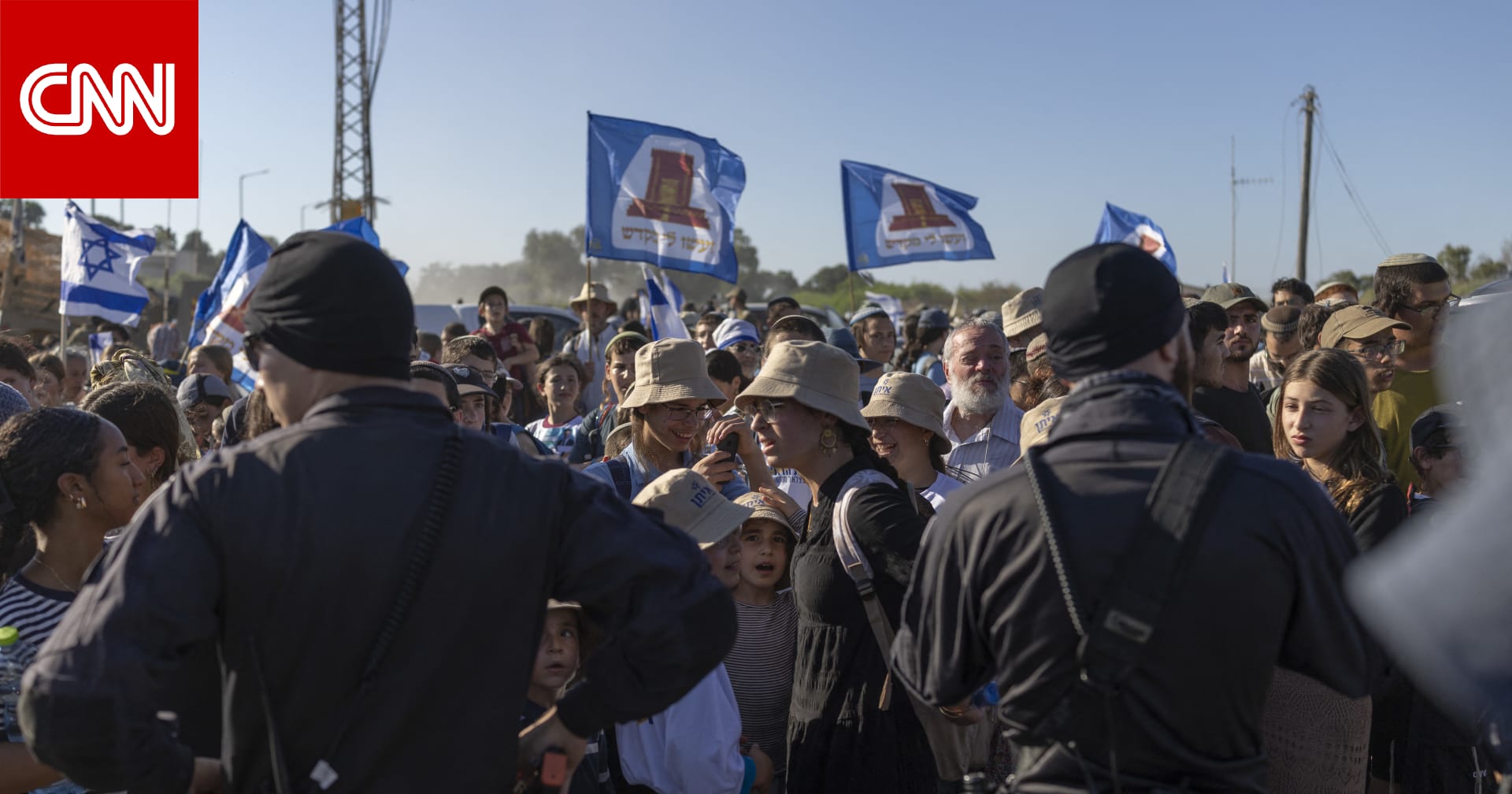
On Sunday, National Security Minister Itamar Ben Gvir and Finance Minister Bezalel Smotrich – two prominent far-right members of Netanyahu's government – led thousands of Israeli settlers and activists to the outskirts of Gaza to demand the rebuilding of three settlements in northern Gaza: Nisanit, Dugit, and Eli Sinai.
The extremist settlement movement "Nahala" organized a demonstration that included senior government ministers and parliament members. The demonstration is not just a political maneuver to win far-right votes; expanding settlements in the occupied West Bank and rebuilding settlements in Gaza represent a dream for the Israeli far-right, and they see the current situation, with Israel occupying more than half of Gaza, as an opportunity to pressure Netanyahu to advance their agenda.
In an attempt to prevent the demonstration from entering Gaza, the Israeli army declared the area a closed military zone, forcing organizers to change its route. However, the protesters were not deterred and continued advancing toward the Gaza border, bypassing barriers set up by the Israeli army and police.
Buses transported families, including children and teenagers, from Jewish settlements in the occupied West Bank, while young activists from Ben Gvir's and Smotrich's parties distributed propaganda materials and flyers.
Ben Gvir said at the rally: "If someone had said three years ago that we would control 70% of the Gaza Strip, nobody would have believed it."
He added: "So I say today: There will be Jewish settlements throughout Gaza," indicating that Israel should "encourage voluntary migration" of Palestinians, an idea briefly floated by the Trump administration before being ultimately rejected in the Gaza ceasefire agreement.
Ben Gvir said: "We are returning to our home. Gaza is ours."
Israeli right-wing activists on the border with Gaza attempting to cross into the besieged enclave on July 19, 2026. Credit: Ilia YEFIMOVICH / AFP via Getty Images
Smotrich framed the situation in clear political terms, warning that a change in government could "undermine all that has been achieved of the Zionist and national settlement revolution" over the past four years under the most right-wing government in Israel's history.
Smotrich said: "All this could go to waste, and we will march here again to prevent evacuation operations." Smotrich has significantly expanded settlements in the West Bank during this government's tenure and has expressed a clear desire to continue this expansion.
Smotrich and Ben Gvir have called for rebuilding settlements in Gaza since October 7, 2023, and have portrayed the Gaza war as an opportunity to reverse the 2005 withdrawal decision.
In June, Smotrich, who also serves as Minister of Settlement Affairs in the Defense Ministry, said that completed plans for three settlements in northern Gaza await Netanyahu's approval. He described Gaza as "an integral part of the Land of Israel" and claimed that re-settlement would serve as a security buffer zone. Smotrich said in late June: "Where there are no settlements, there is no security."
Defense Minister Israel Katz separately announced his intention to establish three military outposts in the area. The Israeli government also uses military outposts as a first step to establish a permanent civilian presence on the ground, which gradually expands to include civilian communities and settlements.
However, Netanyahu has neither endorsed nor condemned these settlement plans, and they have not been presented to the Israeli cabinet. Netanyahu currently heads a caretaker government until the upcoming elections on October 27.
Israeli forces currently control about 60% of Gaza's territory, and Netanyahu has publicly stated that he has ordered the military to control 70% and possibly more. Under the US-brokered ceasefire agreement of October 2025, Israel was supposed to withdraw to about 53% of the territory, but the Israeli military has since expanded its control far beyond that. Meanwhile, the Trump peace plan for Gaza and the ceasefire framework explicitly ruled out Israeli occupation or annexation of Gaza.
Before the 2005 Israeli withdrawal, Israel operated 21 settlements in the Gaza Strip, home to about 8,000 settlers. The unilateral withdrawal under former Prime Minister Ariel Sharon dismantled these settlements and evacuated four others in the northern West Bank. In recent years, Netanyahu's government has reversed aspects of this policy, including legislation allowing Israelis to return to previously evacuated areas in the West Bank and approving new settlements in these areas.
Last week, the Israeli government approved plans to allocate over 2.3 billion shekels (about $766 million) for establishing new Jewish settlements and building access roads in the occupied West Bank, as part of intensified efforts to entrench the settlement system and eliminate the possibility of a Palestinian state.
All Israeli settlements in the occupied West Bank are considered illegal under international law, yet settlers have managed to establish dozens of unauthorized outposts in recent years, eventually obtaining approvals from the Israeli government.
The renewal of Israeli settlement efforts, coupled with the ongoing war in Gaza and escalating settler violence, has led to a sharp increase in international criticism of Israel. Several countries, including the United Kingdom, France, Canada, Australia, New Zealand, and Norway, have recently imposed new sanctions on groups and individuals linked to the settlement movement, as well as travel bans on Ben Gvir and Smotrich in some European countries.
Original source: CNN Arabic



Comments (0)
Be the first to comment.