Israeli poll: Eisenkot's party leads voting intentions in Knesset elections

Israel
Israeli poll: Eisenkot's party leads voting intentions in Knesset elections
For the first time, it won 23 seats compared to 22 for Likud, while the total seats of opposition parties reached 69, compared to only 51 seats for coalition parties.
Zein Khalil
July 9, 2026•Updated: July 9, 2026
JERUSALEM
ISTANBUL/ Zein Khalil/ Anadolu
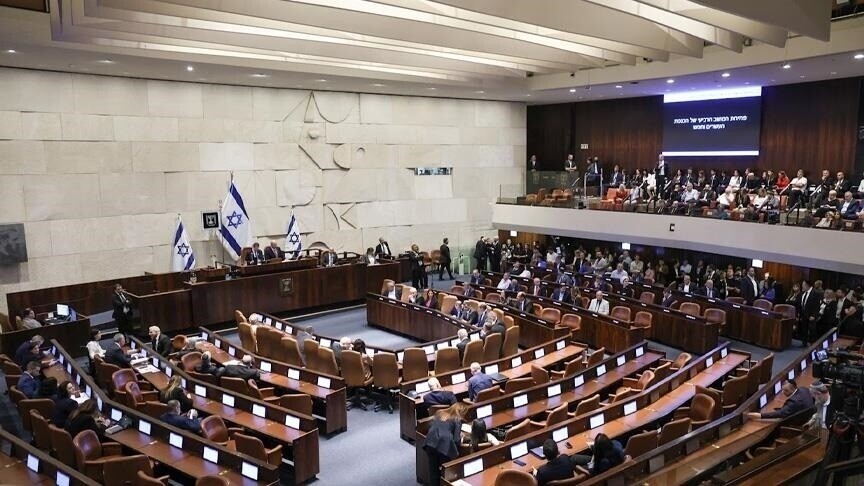
A new opinion poll in Israel revealed that the "Yashar" party, led by former Chief of Staff Gadi Eisenkot, comes first in voting intentions for the Knesset (parliament) elections with 23 seats, surpassing the Likud party led by Prime Minister Benjamin Netanyahu for the first time.
This is according to the results of the poll conducted by the private Israeli Channel 13, whose results were published on Wednesday evening.
According to the channel, "For the first time, the Yashar party led by Gadi Eisenkot becomes the largest in Israel, winning 23 seats."
The poll showed that Eisenkot's party rose by three seats compared to the previous poll conducted last week, while Likud fell by one seat to second place with 22 seats.
As for the "Together" party led by Naftali Bennett, after improving in the previous poll, it lost two seats and settled in third place with 15 seats, according to the same source.
According to the poll results, the "Democrats" party led by Yair Golan and "Israel Beitenu" led by Avigdor Lieberman each received 10 seats, followed by Shas, United Torah Judaism, and Otzma Yehudit (Jewish Power) led by National Security Minister Itamar Ben Gvir, each with eight seats.
Meanwhile, the "Arab Front for Change" alliance received 6 seats, and the "United Arab List" and the "Religious Zionism" party led by Finance Minister Bezalel Smotrich each received 5 seats.
The camp opposing Netanyahu from Jewish parties won 58 seats, compared to 51 seats for Netanyahu's camp, while Arab parties garnered 11 seats.
Thus, the total seats of opposition parties amount to 69, compared to only 51 seats for the current coalition government, according to the same source.
Any government in Israel needs the support of at least 61 Knesset members, while most Jewish opposition leaders say they do not intend to rely on the support of Arab lawmakers to form a government, at a time when Arab lists present their demands in exchange for supporting any government coalition.
Thus, neither Netanyahu's camp nor the Jewish opposition has a sufficient parliamentary majority to form a government alone, signaling continued political deadlock if elections were held according to these results.
Regarding suitability for the premiership, 46% of respondents considered Eisenkot most suitable for the position, compared to 36% for Netanyahu, while 18% said they did not know.
On Tuesday evening, Channel 13 quoted unnamed sources saying that Netanyahu recently told senior Likud officials that the current party list "will not bring governance."
The channel then quoted a senior Likud official as saying that Netanyahu believes "new blood must be introduced and the party ranks renewed by bringing in new and distinguished people."
The current Knesset's term ends in October, when general elections are scheduled to be held.
Original source: Anadolu Agency



Comments (0)
Be the first to comment.