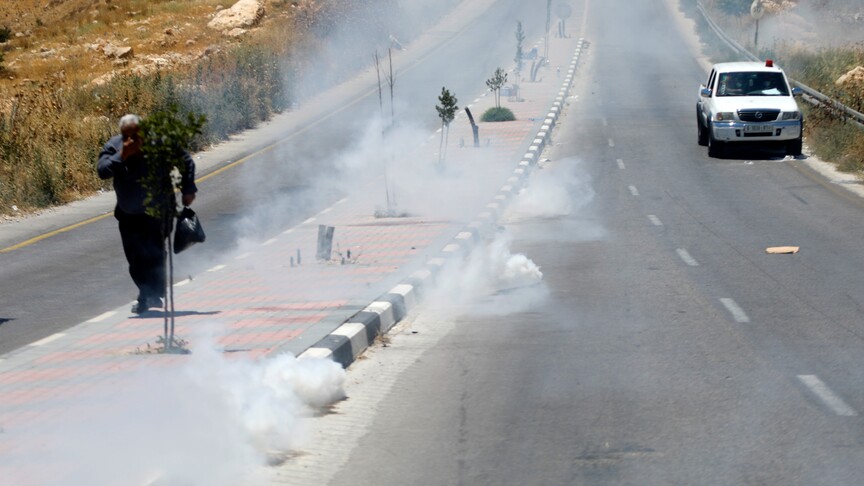
Israeli settlers detain US congressman during West Bank visit
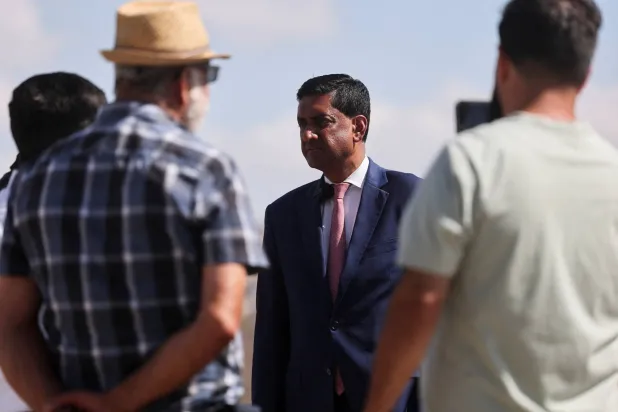
US Democratic Representative Ro Khanna said he was detained by Israeli settlers armed with American-made rifles during a recent visit to the West Bank.
Iraqi factions pledge allegiance to Khamenei... and refuse to hand over weapons
About a week before Iraqi Prime Minister Ali al-Zeidi's scheduled visit to Washington, factions and groups linked to what is called the 'Islamic Resistance in Iraq' announced their refusal to hand over their weapons to the state.
While the US administration pressures Baghdad to disarm the factions and sever their ties with Iran, the recent positions of these factions place al-Zeidi before complex political and security challenges.
The government had previously set the end of next September as the final deadline for handing over and disarming, coinciding with the end of the military presence of the international coalition forces, according to the agreement concluded with the Iraqi government.
Prime Minister al-Zeidi spoke last week about the government entering into dialogue with the factions whose 'work will later move to the political and social arena'.
With the end of the specified deadline for disarmament and handover to state security institutions, 'weapons will be completely monopolized by official state institutions and their competent armed and security forces,' according to al-Zeidi.
Warning from 'Kataib Hezbollah'
In a sharp tone, the official of 'Kataib Hezbollah' known as Abu Hussein al-Hamidawi demanded that the Iraqi government must 'comply' with the resistance.
In April, the US State Department offered a reward of up to $10 million for information about al-Hamidawi, who is known to be one of the faction leaders closest to Iran.
Al-Hamidawi said in a statement that the 'Battalions' were founded by the late Iranian Supreme Leader Ali Khamenei and by his decision, 'so its men were and still are loyal to this line,' as he put it.
Al-Hamidawi continued: 'At this historic juncture, we draw the attention of political leaders and government officials to the necessity of complying with the will of the people of resistance and jihad, and to be extremely cautious about being drawn into arrogant projects or aligning with their malicious agendas. We warn them that our people will say their word and decision if the compass deviates,' in reference to the weapons handover plan.
The so-called 'Islamic Resistance in Iraq' also refused to hand over its weapons. This armed coalition includes a range of undeclared factions whose agendas align with the activities of the Iranian Revolutionary Guard, and they are seen as the secret wings of the known factions linked to Iran.
The group said in a statement on Saturday that it 'remains committed to the approach of resistance, and let the enemies know that the forces of the axis of truth are like one body, according to the jihadist frameworks laid out by our leader (Khamenei), and hardships will not deter us, nor will they do anything but increase our determination to continue our approach to support the oppressed and expel the occupiers from Iraq and the region.'
It added that 'our weapons were never an option for bargaining, but rather a creed and a covenant upon us, and with them we will proceed to break the chains of hegemony and curb the arrogance of the tyrants.'
It continued: 'Accordingly, we affirm to all far and near that we will not stop at the limits of what we have achieved, but will work to develop our military and security capabilities quantitatively and qualitatively, and raise readiness commensurate with the scale of escalating challenges and threats.'
So far, Muqtada al-Sadr, leader of the Sadrist movement, has responded to the call to restrict weapons, after he ordered his faction 'Saraya al-Salam' last month to hand over its weapons and official premises to the state. Both 'Asa'ib Ahl al-Haq' and 'Kataib al-Imam Ali' also responded to the same demand, but the insistence of some factions on rejecting this step could increase the challenges and complexities related to this file for the government, according to observers.
Funeral in Baghdad for members of Iraqi 'Kataib Hezbollah' killed in a raid targeting a 'Popular Mobilization Forces' headquarters in March 2025 (Reuters)
An anticipated step from the judiciary
Observers are divided on the issue of disarming the factions into two groups: those who see it as impossible given the absence of flexibility or clear Iranian approval in this direction, and those who believe in the government's ability to achieve it amid the accelerating regional circumstances and changes.
Political analyst Nizar Haidar stressed in an interview with 'Asharq Al-Awsat' the need to 'differentiate' between what the militias announce and what they conceal; this includes 'secret agreements that will ultimately lead to the complete handover of their weapons and the dismantling of their military formations,' as he put it.
Haidar suggests that the Iraqi judiciary is likely to take a deterrent stance towards entities that violate the law by keeping their weapons outside the state framework, noting that the judiciary is preparing, for the first time since 2003, to announce a legal code.
Haidar said: 'It is expected that any military formation or any military activity outside the state will be classified as a terrorist act, with penalties under current Iraqi laws reaching execution.'
Haidar believes that the legal code, if issued, 'will greatly contribute to helping the government implement its plans regarding restricting weapons to the state.'
He added that the steps to disarm and dismantle the factions are reinforced by 'the government's plans to purge the security and military apparatuses of militia elements who refuse to sever their ties with their leaders, and to hand over their security and military decision to the Commander-in-Chief of the Armed Forces, following the example of factions that have announced that during the past period.'
Original source: Asharq Al-Awsat

Comments (0)
Be the first to comment.