Lawmakers Demand Pentagon Results of Investigation into Raid on Iranian School
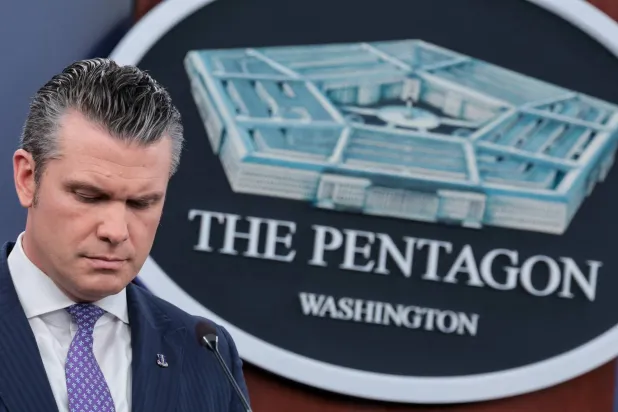
Democratic members of the US Senate on Monday called on the Trump administration to release the results of an investigation into a raid targeting a girls' school in Iran.
In early 2024, the president of a university in Budapest, Hungary, received a surprising request from a high-ranking Hungarian government official.
This information reflects complex intelligence efforts aimed at bringing about a change in Iranian leadership.
The official told the university president, Professor Gergely Deli, that the Ludovika University of Public Service was required to organize a conference on climate change, with an invitation to be extended to an unexpected guest: Mahmoud Ahmadinejad, the controversial former Iranian president.
The reason was even more surprising. The official told Deli that the conference was merely a cover to allow Ahmadinejad to hold secret talks in Budapest with Israeli intelligence operatives, his declared enemy.
Deli was aware that this invitation could damage both his reputation and the university's. But he said in an interview that he thought he might play a role in saving lives.
He said: 'You have two enemies, and if these two enemies want to talk to each other, it's better to do what you can to make them talk.'
According to US and Iranian officials familiar with the operation, who spoke on condition of anonymity due to the sensitivity of intelligence information, Ahmadinejad's visit to the university in 2024, followed by a second visit the following year, were part of a years-long Israeli effort to groom him as an intelligence asset who could, when the moment came, be installed as Iran's new leader.
Former US officials said that recruiting Ahmadinejad was such a high priority for Israel that the then-head of Israeli intelligence, David Barnea, personally traveled to the Hungarian capital in 2024 to meet Ahmadinejad. They added that the Mossad, Israel's foreign intelligence service, shortly afterward informed the US Central Intelligence Agency (CIA) that it had been in contact with Ahmadinejad.
Image published by the website 'Dolat-e Bahar', the spokesman for the office of former president Mahmoud Ahmadinejad, of his participation in the funeral of former Supreme Leader Ali Khamenei in Tehran on Monday
Israel's decision to formulate a regime change plan centered on Ahmadinejad represents an extraordinary shift in its relationship with the former Iranian president, known for accelerating Iran's nuclear program, his repeated calls for Israel's destruction, and his denial of the Holocaust.
According to US officials, Israel in recent years secretly paid Ahmadinejad to cover housing and travel expenses, and Israeli operatives met with him abroad on several occasions, including during his trips to Budapest.
This effort culminated in late February of this year, during the early days of the US-Israeli war on Iran, with a daring operation to move the former leader, who was living under tight surveillance in Tehran. The goal was to launch the plan to overthrow the current regime and install Ahmadinejad. But the plan failed.
On February 28, an Israeli airstrike hit Ahmadinejad's compound, targeting his personal guards' building and his armored vehicle. After the strike, according to four senior Iranian officials, a black Peugeot arrived, picked up Ahmadinejad, and sped away from the chaotic site.
US and Iranian officials familiar with the operation said the car was driven by Mossad operatives, who transported Ahmadinejad to a secret safe house inside Iran.
But the former Iranian president was displeased with the frantic rescue operation and appeared disillusioned with the Israeli plan to restore him to power, according to people with knowledge of the events.
He later left the safe house under circumstances that remain unclear. Ahmadinejad did not appear publicly again until July 6, when he briefly participated in the funeral procession of the late Iranian Supreme Leader Ali Khamenei.
His current status remains uncertain. But four senior Iranian officials said Ahmadinejad is being held by the intelligence arm of the Revolutionary Guards and is currently under house arrest after Iran learned many details of his communications with Israel.
Israeli officials have not publicly commented on the plan to install Ahmadinejad as Iran's leader, which was part of a broader attempt to topple the Tehran government. Another element of the plan involved arming and training Kurdish Iranian opposition forces based in northern Iraq to cross the border into western Iran, seize territory there, and eventually advance toward Tehran, a plan that never materialized.
Tamir Hayman, former head of the Israeli military's intelligence directorate, said on the PBS program 'Firing Line' in May, after The New York Times first revealed details of Ahmadinejad's role in the plan: 'The regime change plan involved a series of special operations, very, very unique, that were supposed to be executed.' He added: 'And Ahmadinejad was part of that chain.'
Mossad officials did not respond to requests for comment. Ali Akbar Javanfekr, Ahmadinejad's spokesman, also declined to comment.
Post-Presidency Transformation
As president of Iran from 2005 to 2013, Ahmadinejad was the country's most prominent hardline politician. He called for the destruction of Israel, and under his tenure, Iran resumed uranium enrichment, raising suspicions that it was pursuing a secret nuclear weapons program. He also ordered a violent crackdown on the nationwide uprising protesting his 2009 re-election, and his tenure saw the judiciary carry out mass executions of opponents and the imprisonment of rivals and competitors.
Ahmadinejad waves his hands upon arriving at the headquarters of the Presidential Election Candidate Registration Committee at the Interior Ministry in June 2024 (Archive - EPA)
But in the years following his presidency, Ahmadinejad moderated his positions and toned down the anti-Israel rhetoric that marked his tenure. He was eager to project a new, more moderate image by giving interviews and speeches in which he discussed Iranian pop music culture, criticized security forces for violent crackdowns, and accused the ruling class of financial corruption.
He also abandoned his characteristic loose khaki jacket and began wearing tailored suits. He groomed his unkempt beard, appeared to have undergone Botox treatment, and started learning English.
In his Tehran office, he held hour-long public meetings every morning to listen to ordinary citizens' complaints, some of whom sought his help dealing with government bureaucracy. Sometimes he wrote letters to ministries recommending that certain applicants be granted loans. He also traveled regularly around the country, meeting supporters in cities and rural areas.
Ahmadinejad speaks with his ally Saeed Jalili, advisor to the Iranian Supreme Leader, on the sidelines of the opening ceremony of the Assembly of Experts in Tehran (Archive - ILNA)
Ahmadinejad's relationship with the Iranian government was complex. Senior leaders marginalized him and imposed restrictions on his movements, but they allowed him to sit alongside other senior officials on a high-level council that advises the Iranian Supreme Leader. He attended a meeting of that council in February, just days before the war broke out.
Original source: Asharq Al-Awsat



Comments (0)
Be the first to comment.