Lebanon army begins taking over southern ‘pilot zones’: US

The United States announced Monday that the Lebanese army has assumed security responsibilities in three southern villages, marking the first operational test of an agreement designed to secure Israel's withdrawal and Hezbollah's disarmament.
The deployment represents a fragile yet significant step in a long-stalled diplomatic track between Israel and Lebanon.
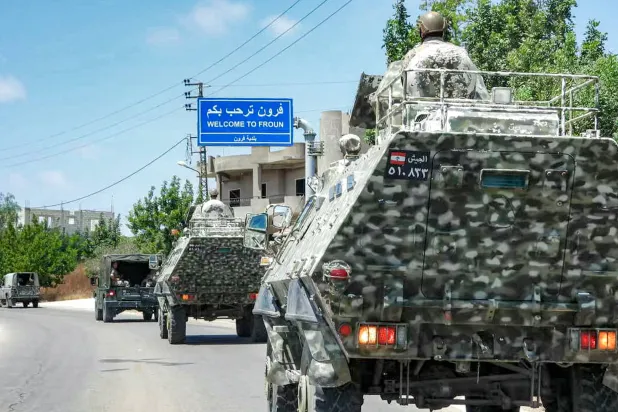
The US State Department said operations had started in “pilot zones” in Froun, Srifa and Zawtar Al-Gharbiya “in accordance with the Trilateral Framework and under the auspices of the Military Coordination Group for Lebanon.”
State Department spokesman Tommy Pigott described the step as “a direct outcome” of talks held between Israeli and Lebanese delegations in Rome last week, adding that Washington would keep working with both sides “to implement the framework to a successful conclusion.”
The framework, signed by Lebanon, Israel and the United States on June 26 after several rounds of direct negotiations, envisions a phased Israeli pullback from positions in south Lebanon.
In exchange, the Lebanese Armed Forces are to assume sole security control of vacated areas and certify that they have been cleared of Hezbollah weapons and infrastructure.
The pilot villages, located along the Litani River, are meant to test the new security arrangement before it is rolled out more broadly.
Hezbollah has refused to accept the deal, insisting that any Lebanon-related arrangement be tied to broader US-Iran talks. The group has remained silent on whether it will actively oppose the implementation in the specified zones.
The agreement does not set a timetable for Israel’s withdrawal.
Israeli officials have also vowed that their forces will remain in a “security zone” 10 kilometers (six miles) deep along the frontier for as long as Hezbollah remains armed.
Lebanon and Israel, which have no formal relations, started negotiations after Iran-backed Hezbollah drew Lebanon into the broader Middle East war by attacking Israel in March.
A Lebanese military source told AFP that troops had begun intensifying patrols in several villages adjacent to areas occupied by Israeli forces in southern Lebanon, including Froun.
The framework agreement was reached following a fragile ceasefire in the Israel-Hezbollah war.
Israel still launches occasional strikes in southern Lebanon and carries out detonations in villages it occupies near the border.
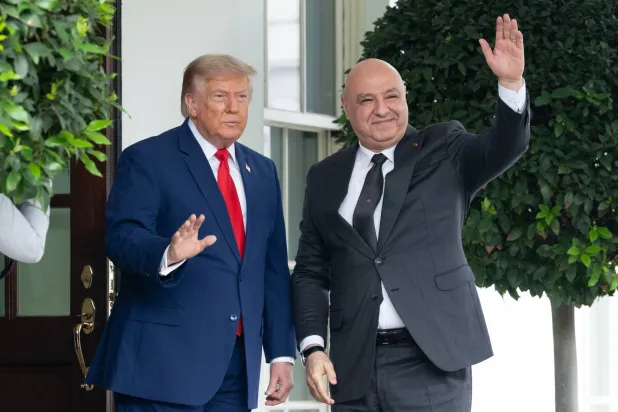
The talks in Rome came ahead of Lebanese President Joseph Aoun’s planned meeting with President Donald Trump in Washington on Tuesday.
The agreement, however, faces major hurdles, as Hezbollah has rejected the framework and Israel has vowed to maintain a security zone. Without a timetable for withdrawal and with Hezbollah's stance unclear, the pilot zones remain a tentative test. The broader success of the deal will depend on sustained US mediation and the ability of the Lebanese army to assert control.
Original source: Arab News



Comments (0)
Be the first to comment.