Lebanon: Tyre Beach Between War Rubble and Return of Life
The city, which lived under Israeli threats and bombardment for over 3 months, regains one of its most prominent public breathing spaces
Beirut / Naeem Barjawi / Anadolu
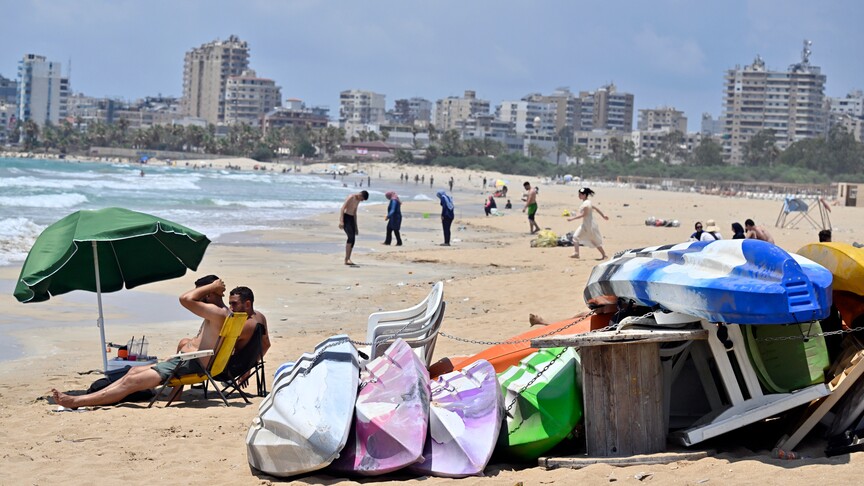
The beach of the city of Tyre, southern Lebanon, regained its vitality with the return of hundreds of sea-goers and swimming enthusiasts, after the city lived under the weight of Israeli threats and bombardment for over 3 months.
Tyre is one of the most important cities of Phoenician civilization on the Mediterranean coast, known as the "Queen of the Seas."
The Tyre beach, one of the most prominent public beaches in Lebanon, is located about 8 kilometers from the Al-Bayyada area, which is still under Israeli military control and can be seen with the naked eye from the beach.
But this reality did not prevent Lebanese from returning to the golden-sand beach, which is one of the few remaining public beaches in the country amid the spread of private tourism projects along most of the coast.
In an interview with Anadolu, "Abbas," one of the visitors, said that despite everything the city has witnessed, Tyre remains beautiful in the hearts of Lebanese, especially its beach that embraces everyone.
He pointed out that the city is distinguished by coexistence among different sects.
Abbas affirmed that the influx to the beach is increasing day by day.
Meanwhile, another visitor named "Ali" told Anadolu that "the city of Tyre will return more beautiful than it was."
He considered that the Tyre beach has begun to attract visitors again, after the war stopped and calm somewhat returned.
For his part, "Mohammad" said in an interview with Anadolu that returning to the Tyre beach "indicates that we are a stubborn, steadfast people who do not bend before an arrogant enemy that knows only the language of force."
He added: "Beautiful is the scene of returning to the land, and to the ancient Tyre beach, which is a wonderful and lovely breathing space, and we hope to enjoy some rest and safety after witnessing successive wars."
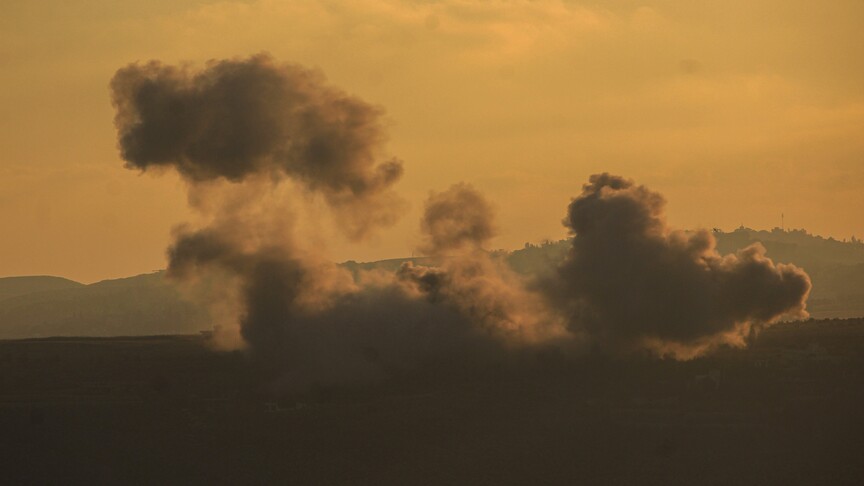
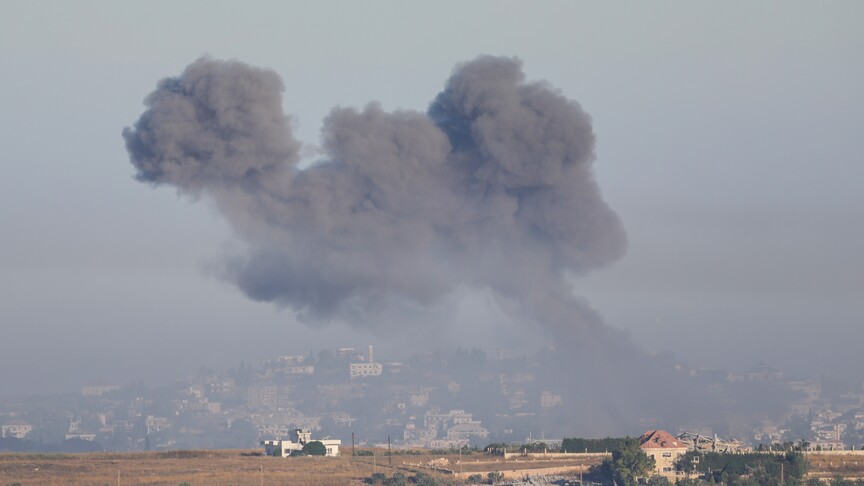
The return of beachgoers comes as Israel continues its attacks in southern Lebanon, albeit at a limited pace, despite the framework agreement signed between Lebanon and Israel last week.
Under American patronage, Beirut and Tel Aviv signed a framework agreement on June 26, 2026, stipulating a gradual Israeli withdrawal from all occupied Lebanese territories.
While Lebanese officials saw the agreement as a "first step" towards restoring state sovereignty over all its territories and the return of displaced persons to their towns, Hezbollah said the agreement was "nonexistent" and "humiliating."
Israel still occupies areas in southern Lebanon, some for decades, while it seized other areas during the war that broke out between 2023 and 2024.
The city of Tyre was subjected to several Israeli airstrikes during the 2024 and 2026 aggressions, resulting in the destruction of a number of buildings, and the Israeli army issued evacuation warnings multiple times.
Earlier on Saturday, the municipality of Tyre announced that "the works teams of the Southern Council (governmental) will start on Monday morning the removal of rubble from buildings destroyed by the Israeli aggression."
Throughout history, Tyre was famous for its handicrafts, the production of purple dye, ships, transparent glass, and fishing, due to its geographical location, in addition to its clear beaches, ancient port, and Roman ruins.
The city was inscribed in 1984 on the World Heritage List of the United Nations Educational, Scientific and Cultural Organization (UNESCO).
Historically, Tyre was ruled by Assyrians, Babylonians, and Persians, then was conquered by Alexander the Great in 332 BC, before coming under Islamic rule in the 7th century AD.
It was also ruled by the Crusaders in 1124 AD, before the Mamluks managed to eliminate the Crusader presence in Tyre in 1291 AD.
Original source: Anadolu Agency

Comments (0)
Be the first to comment.