Likens it to social welfare: Netanyahu wants to phase out US financial aid
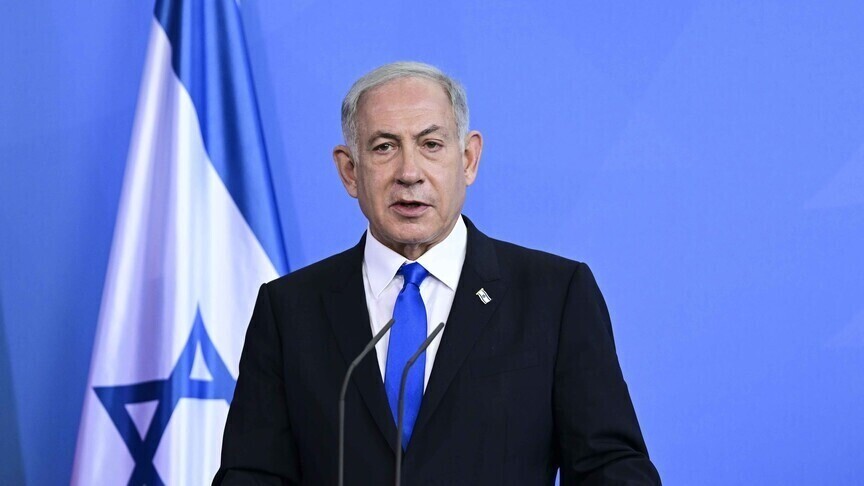
- Says he wants a ten-year period to gradually reduce reliance on the United States | Anadolu
JERUSALEM / Anadolu
- Leaves door open for possible Israeli settlements in Gaza
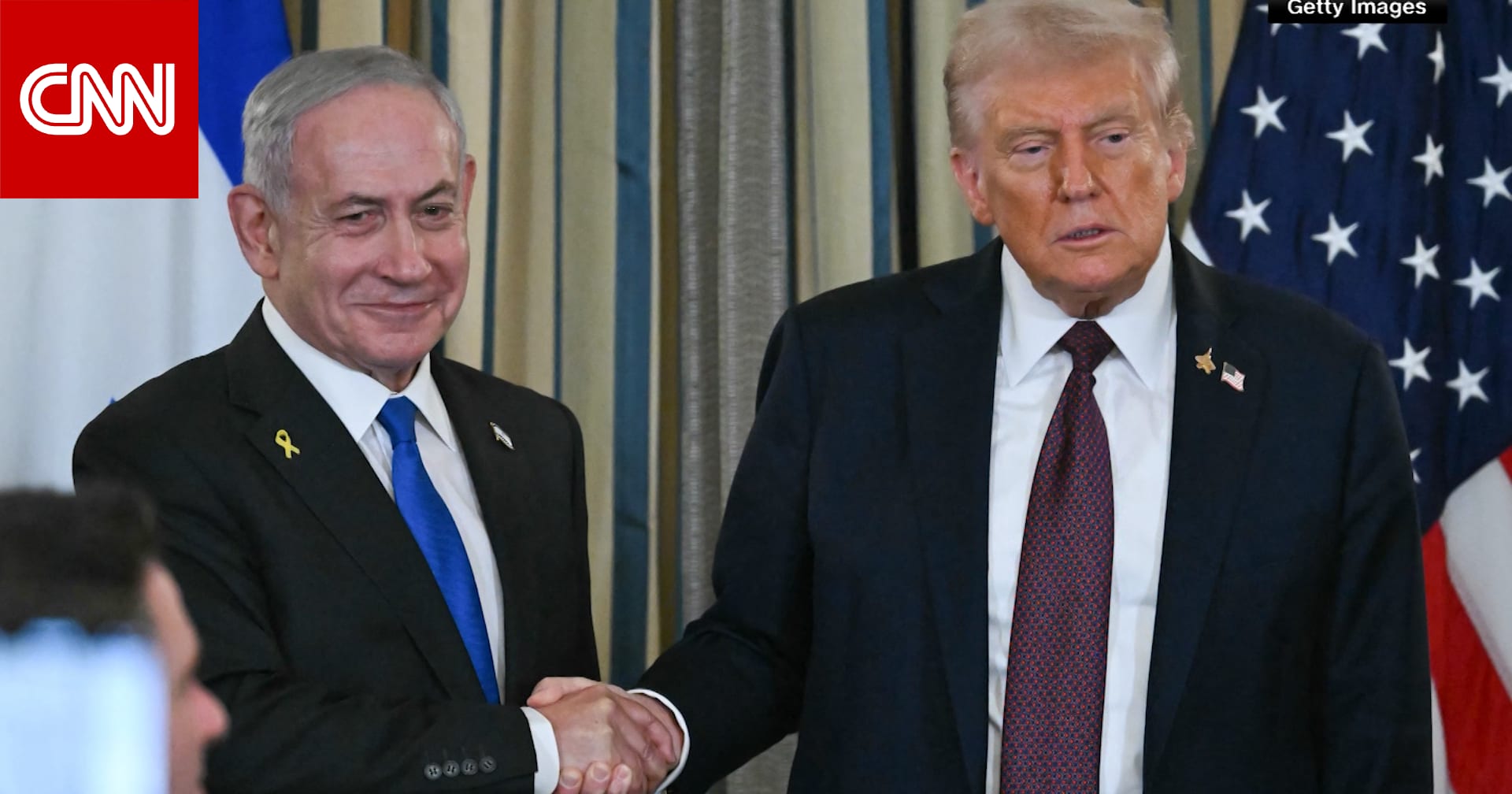
Israeli Prime Minister Benjamin Netanyahu compared the financial aid the United States provides to Tel Aviv to "social welfare," announcing his desire to start phasing it out, amid disagreements between the two sides, especially over Iran.
In an interview with Israel's Channel 14 aired Tuesday evening, he said: "I want to stop US aid, it's like social welfare, I don't want it."
He claimed that "the Israeli economy is no longer classified as a small economy, but has become able to stand on its own and fully bear its costs."
He considered that US funding represents "a small part of GDP," and that "Israel now has sufficient financial capacity to cover this entire amount from its own resources."
Netanyahu, who is wanted by the International Criminal Court on charges of committing war crimes in the Gaza Strip, was asked whether he wanted to stop receiving US aid and replied: "Yes."
He added that he wants "a ten-year period that would gradually reduce Israel's dependence on the United States."
He continued: "When I was first elected prime minister in 1996, I told the US Congress that Israel would pursue a free-market economic revolution and would eventually become independent of US economic aid."
Netanyahu added that "Israel's economy is approaching a trillion dollars, and it will be able to fund itself starting next year."
On May 11 last year, Netanyahu was asked in an interview with CBS's "60 Minutes" whether it was time to reconsider the financial relationship with the United States and possibly restructure it.
He replied then: "Absolutely, and I stated that to US President Donald Trump and to our people as well."
He clarified: "I want to reduce US financial support to zero, meaning the financial component of our military cooperation. We receive $3.8 billion annually, and I think it's time to gradually eliminate the remaining military support."
Regarding whether a timeline could be set for that, he answered: "Let's start now, and implement it over the next decade."
The United States is Israel's largest ally, and the two sides signed an agreement in 2016 for 10 years between 2019 and 2028, under which US aid to Israel totals about $38 billion.
For some time, disagreements have been escalating between Tel Aviv and Washington over ongoing negotiations with Iran and the memorandum of understanding between the two sides.
Israeli officials say Trump sidelined Tel Aviv from negotiations with Washington and did not consider its interests and demands.
On the other hand,
Netanyahu acknowledged that the goals of the US-Israeli war on Iran were not achieved, adding that his pursuit of "total victory" over Iran and its proxies "never ends."
Israel set three main goals for the war on Iran: toppling its regime, destroying its nuclear and missile programs, and eliminating its proxies in the region.
On February 28, the United States and Israel began a war on Iran, which left more than 3,000 dead, according to Tehran, which responded with attacks that killed Israelis and Americans.
Netanyahu was asked whether his pledge for "total victory" in Gaza still stands, and he said: "It never ends (...) but we still have a lot of work ahead, we will take care of the rest of the Iranian axis."
Netanyahu boasted of Israel killing a large number of Hamas, Hezbollah, and Iranian leaders, and establishing buffer zones in the Gaza Strip, Lebanon, and Syria.
He said: "We did not leave Lebanon, but established a security zone on the ground in agreement with the Lebanese government," in his words.
He insisted that additional peace agreements between Israel and its neighbors are still possible, even as he made opposition to the establishment of a Palestinian state a condition for joining the "broad national government" he seeks to form after the elections scheduled for October.
He said: "We have greatly weakened our enemies, we have more work ahead to deal with the remnants of the Iranian axis and strengthen peace agreements with other countries in the region."
When asked to specify the countries he expects to reach peace agreements with, and whether Saudi Arabia is among them, he refrained from naming specific ones, but insisted that several countries are competing for that, including Lebanon.
There was no immediate comment from the Lebanese side on what Netanyahu said.
He said: "I won't mention names because I want to achieve results; everyone will see the results. There are understandings with Lebanon that no one expected, and there are contacts with other countries as well; I cannot go into details."
In response to a question about the possibility of a third confrontation with Iran after the wars of June 2025 and the beginning of this year, Netanyahu answered: "If necessary," repeating his pledge that "as long as I am prime minister, Iran will not possess nuclear weapons."
Regarding the possibility of expanding settlements in Gaza, Netanyahu left the door open to that possibility, merely saying that "sometimes it is advisable to separate actions from public statements," and that "therefore, I have nothing to add on this matter."
He had previously ruled out building settlements in the Gaza Strip, but he seems to be changing his public stance as elections approach.
Regarding the goals of the genocide war in Gaza, Netanyahu said Israel achieved two of the three war objectives: returning the hostages and eliminating Hamas as a military threat.
He vowed to achieve the third goal of eliminating Hamas's civil rule in the Gaza Strip.
Since October 8, 2023, Israel, with US support, has been committing genocide in Gaza, leaving more than 73,000 dead and over 173,000 Palestinian wounded, mostly children and women, and destroying 90% of infrastructure.
Despite the ceasefire agreement announced on October 10, 2025, Israel continues its military operations through daily shelling that has resulted in dead and wounded, mostly children and women, in addition to widespread destruction.
Regarding the government he intends to form after the elections if he wins, he said: "I want a broad national government... We face great challenges and opportunities. In such circumstances, we seek to achieve the broadest possible consensus. This does not mean unity, because we will not reach full unity."
He added: "The government I intend to form will be built on clear principles; whoever accepts these principles may join it."
The principles according to Netanyahu: "Israel is the nation-state of the Jewish people; there will be no Palestinian state; we have a proactive security policy - we do not wait."
Original source: Anadolu Agency
Comments (0)
Be the first to comment.