Massad Boulos’ Plan to Reunify Libya... ‘A Risky Bet’
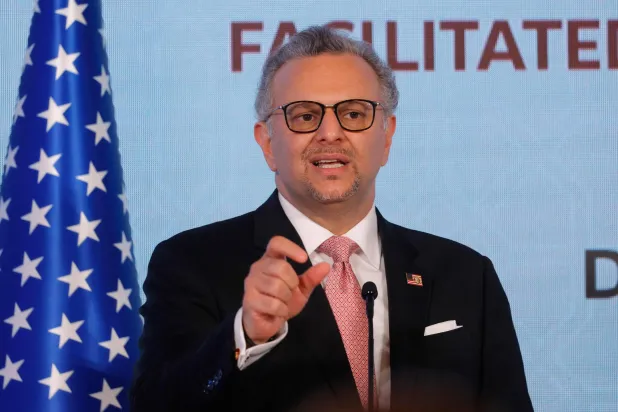
US President’s adviser for Africa and the Middle East, Massad Boulos, is intensifying his efforts to bring together eastern and western Libya, which are governed by parallel authorities, in an attempt to settle matters between influential figures at the expense of an electoral process that Libyans await with ‘eagerness’, according to analysts.
Libya has been experiencing division and chaos since 2011, when the rule of Colonel Muammar Gaddafi was overthrown in a popular uprising backed by NATO, and he was later killed.
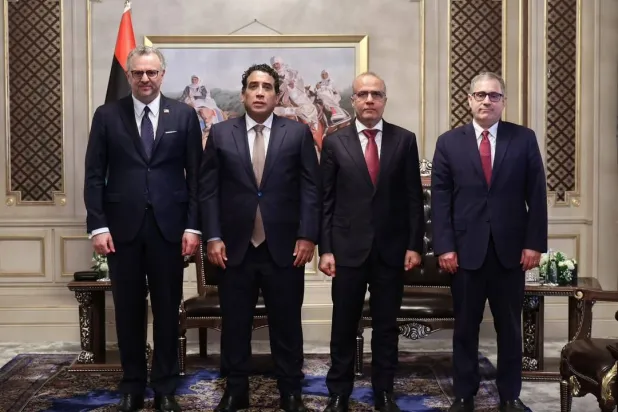
Boulos began a series of meetings with Libyan political, military, and economic leaders a year ago, both in Libya and abroad.
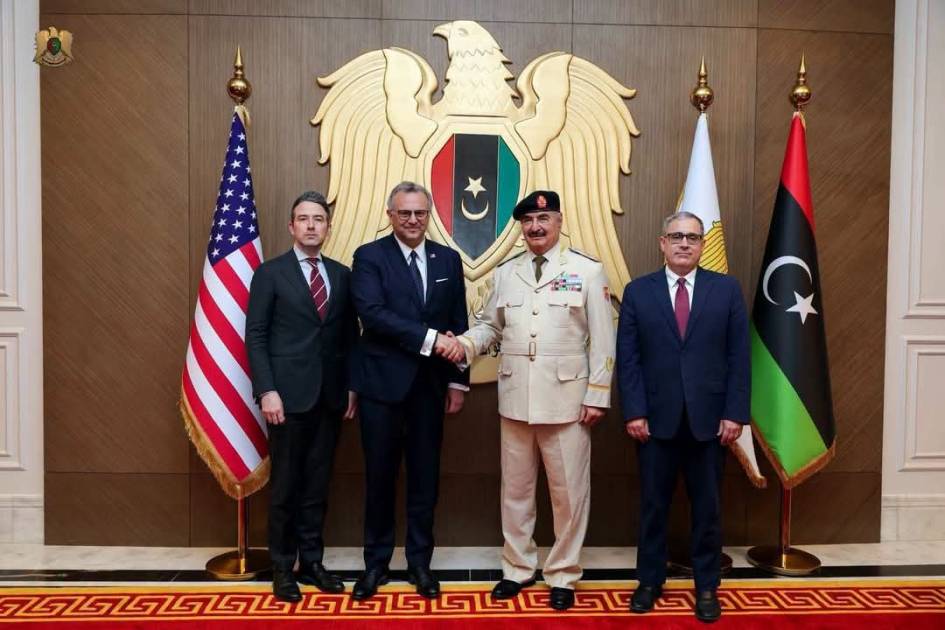
Last week, he met with the prime minister of the internationally recognized government, Abdul Hamid Dbeibeh, in Tripoli, and with the commander of Libyan forces in the east, Field Marshal Khalifa Haftar, in Benghazi, where a parallel government supported by Haftar is based.
Boulos recently stated that the goal of the plan is ‘to end the division,’ and while remaining silent on details, he expressed his desire to facilitate ‘communication between the two sides,’ stressing that the plan is ‘Libyan-Libyan’.
The proposed plan stipulates that Prime Minister Abdul Hamid Dbeibeh retains his (unity) position.
According to a scenario circulating in media and diplomatic circles, the plan stipulates that Prime Minister Dbeibeh retains his post, while Saddam Haftar, the son of Field Marshal Haftar, assumes the presidency of the Presidential Council. Boulos declined to comment on these reports, pointing out that ‘these details are a matter for the Libyans themselves.’ He also did not respond to inquiries from Agence France-Presse on the matter.
The proposed scenario would have Saddam Haftar head the Presidential Council instead of Mohamed al-Menfi (AFP).
Oil and Stability
In June, Khalifa Haftar’s forces welcomed ‘Boulos’ plan,’ describing it as a ‘realistic’ initiative, in an implicit rejection of a roadmap announced on the same day by three institutions—the House of Representatives, the High Council of State, and the Presidential Council—setting a date for parliamentary and presidential elections by February 17, 2027.
The House of Representatives, the High Council of State, and the Presidential Council rejected setting a date for parliamentary and presidential elections by next February 17 (Election Commission).
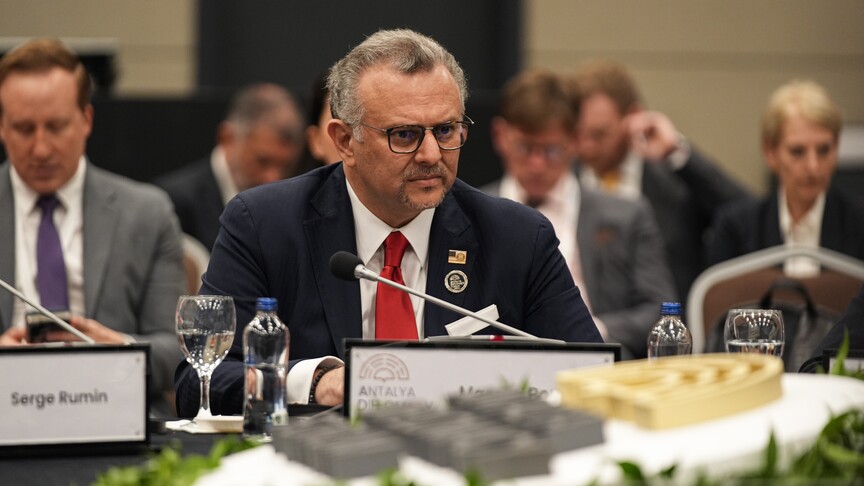
Boulos insists that his initiative is ‘fully complementary’ to the UN efforts. But analysts and observers question whether reaching a settlement among the figures dominating the political scene will lead to ‘postponing the elections,’ which the UN has again called for, following the failure to hold them at the end of 2021 for political and security reasons.
Boulos reiterates that the goal of the initiative is a ‘short-term solution not exceeding two to three years’ as a transitional phase, aimed at ‘ending the political division’ and ‘unifying institutions’ in Libya.
Authorities in western Libya and the UN mission, which organized intensive dialogue for months between east and west, did not respond to Agence France-Presse’s requests for comment on Boulos’ initiative.
The United States sees stability in the country as an economic opportunity. In this context, Massad Boulos told the Financial Times that Washington encourages major US companies to invest in Libya, highlighting that the country’s oil production could be doubled to three million barrels per day by the end of the decade. This would enable Libya to join the ‘ranks of major oil-producing countries in the world’.
Meanwhile, a US State Department official told Agence France-Presse that the United States is working in Libya ‘cautiously and gradually, which has resulted in notable progress’ since the summer of 2025. Last April, the first ‘unified expenditure’ budget in Libya in 13 years was approved. Also, the city of Sirte hosted the ‘Flintlock 2026’ exercises, organized by the US Africa Command (AFRICOM), bringing together military units from east and west.
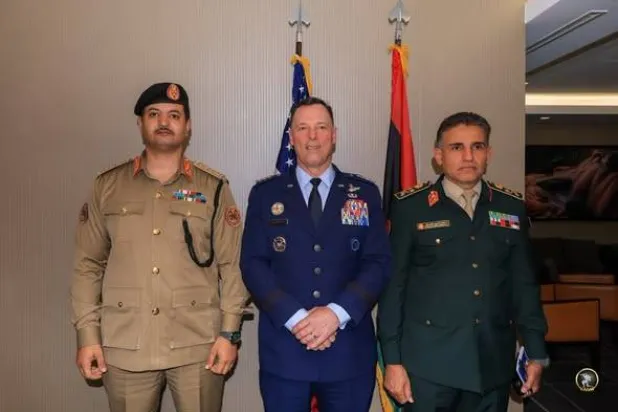
At the end of June, Washington hosted Saddam Haftar, who met with US Secretary of State Marco Rubio, while the Deputy Defense Minister of the Dbeibeh government, Abdel Salam al-Zoubi, met with the Deputy Commander of US Africa Command.
‘A risky bet’
International relations professor Khaled al-Muntasir believes that the US plan is based on those who actually hold the reins of power. He explains: ‘Washington knows that the success of a solution in Libya is controlled by the players who dominate the ground,’ pointing to a ‘high chance of success, with a margin of risk.’ But political analyst Faraj al-Dali seems skeptical; he sees that Boulos’ plan will face ‘major obstacles and problems, as it relies on inflating controversial figures who lack broad support from the majority of warring parties,’ and asserts that it ‘will collide with a non-homogeneous mix of influential players, especially in western Libya, who have reservations about the figure of Haftar’s son.’
From the latest UN Security Council session dedicated to discussing developments in the Libyan political crisis (Council).
Boulos acknowledged that the situation is ‘more complex in western Libya,’ but welcomed all ‘figures and groups,’ calling on them to be part of ‘any understanding.’
For his part, Karim Mezran from the Atlantic Council think tank saw that the US plan is not a ‘recipe for stability’ but rather a ‘delayed explosion.’
He said in an article published by the center: ‘By supporting an agreement between elites with no popular support (...) Washington is taking a risky bet,’ adding that even if the settlement holds for a while, ‘many structural contradictions will not be slow to emerge, and may lead to its collapse under the influence of violence.’
Original source: Asharq Al-Awsat


Comments (0)
Be the first to comment.