Moscow Paves the Way for the Annexation of South Ossetia Through New Appointments and Understandings

Analytical estimates indicate Moscow's pursuit to tighten its control over the Russian-occupied Georgian region of South Ossetia through administrative decisions and cooperation treaties, amid the ruling party in Georgia being preoccupied with the domestic situation.
South Ossetia.. Russia's next target for annexation
Signing of an alliance agreement between the two countries
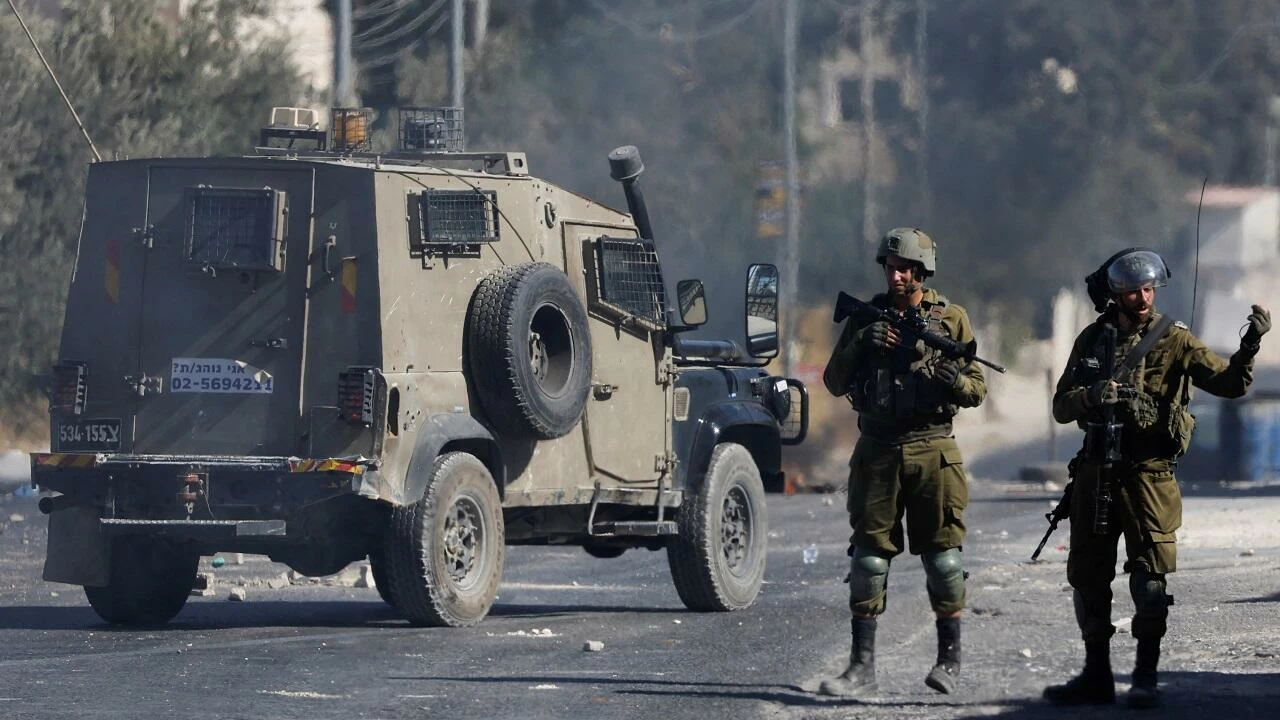
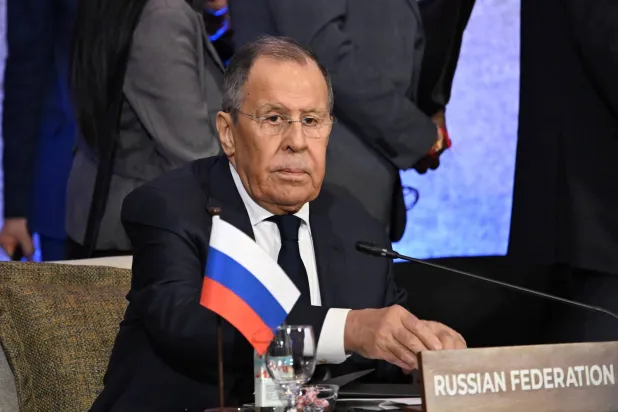
The change in leadership of the part of Georgia under Russian occupation indicates that Russia remains determined to redraw borders in the Caucasus region, according to political analyst Ketevan Korkia, a specialist in international law and national security at the Foundation for Defense of Democracies. Korkia says in an analysis published by the American magazine The National Interest that as Russia's war in Ukraine continues, Moscow is seeking to strengthen its control over the region belonging to its neighbor Georgia, but this time not with tanks, but through an administrative decision. Last week, the Kremlin appointed a new leadership in the Russian-occupied Georgian region of South Ossetia, in a move that could pave the way for the annexation of this breakaway region. At the same time, Georgia's increasingly authoritarian ruling party remains more interested in maintaining its internal control than in mobilizing international opposition against Russia. On June 23, Alan Gagloev, who had served as the de facto president of South Ossetia since 2022, resigned from his post and announced he was joining Russian President Vladimir Putin's administration as an advisor. Gagloev announced this step in a speech, describing it as a step toward achieving his "cherished dream" of incorporating South Ossetia into the Russian Federation. Marat Kambolov, a former Russian government official of Ossetian origin, was appointed to replace Gagloev. Russia and South Ossetia laid the legal foundations for this step on May 9, a public holiday celebrating the Soviet Union's victory over Nazi Germany in 1945. The two sides signed the "Treaty on Deepening Allied Cooperation between the Russian Federation and the Republic of South Ossetia," which allows Russian citizens to hold government positions in the occupied region, and vice versa. The Russian State Duma ratified the treaty in mid-May. Korkia pointed out that under the treaty, Russia and South Ossetia are committed to taking further steps toward establishing a "unified economic space." These steps include harmonizing legislation regulating commercial activity, and moving toward common rules for external borrowing and foreign investment. The treaty also provides for gradual integration in energy, transport, and telecommunications industries. In other words, Russia is not content with appointing pro-Moscow officials in South Ossetia, but is working to integrate the region's economy, infrastructure, and legal framework into the Russian framework. The South Ossetia region has been under Russian occupation since the Russia-Georgia war in August 2008, after which Moscow recognized South Ossetia, along with the breakaway Georgian region of Abkhazia, as "independent" states. The United States, the European Union, and most of the world still consider South Ossetia to be part of Georgian territory. Russia stations the 4th Russian Military Base in the city of Tskhinvali, the capital of South Ossetia, and the breakaway region's armed forces have been officially integrated into Russian command structures. About 90% of South Ossetia's 56,000 residents currently hold Russian citizenship. Russian funding accounts for about four-fifths of South Ossetia's budget. Tens of thousands of ethnic Georgians were displaced from South Ossetia due to the 2008 war and its aftermath. Many of them still live in unoccupied parts of Georgia. These individuals do not hold Russian passports and have no voice whatsoever in any process taking place on the territory of the region they were forced to leave. Russia is an occupying power working to impose a demographic and "legal" fait accompli at gunpoint. The nominal independence of political institutions in South Ossetia has always been a thin mask hiding Russian control. That mask is falling off. Russia has executed this plan before. In eastern Ukraine, Russia fomented separatist violence and eventually intervened militarily to establish "independent republics" in the Donetsk and Luhansk regions. Moscow spent years integrating these proxy entities into Russian administrative, legal, and economic structures through the distribution of passports, alignment of laws, and treating the presence of "Russian citizens" as a pretext for deeper intervention. In 2022, Russia officially annexed those regions. The Kremlin denies that its latest steps in South Ossetia indicate a plan for formal annexation, but this offers little reassurance. Moscow offered similar denials in 2021 before its full-scale invasion of Ukraine. The lesson learned is that formal annexation is often the last step, not the first. Korkia considered Abkhazia, the second Georgian region under Russian occupation, to be the next obvious target. Russia controls the region through the same mix of military presence, distribution of Russian passports, and fostering economic dependence, though the process is less advanced there because Abkhaz public opinion is more resistant to full integration. The Georgian government has been indifferent to the seizure of its territory. After Putin and Gagloev signed the treaty on May 9, Tbilisi initially made no public comment, but a few days later, Foreign Minister Maka Botchorishvili acknowledged that "Russia continues to ignore its international obligations and takes steps aimed at annexing Georgian regions." Until then, the ruling Georgian Dream party considered the treaty to vindicate its policy of easing tensions with Moscow. This is hardly surprising given that Bidzina Ivanishvili, the businessman who runs the ruling Georgian Dream party from behind the scenes, made his billions in Russia and maintains strong ties there, to the extent that he went as far as inviting Georgia to apologize for the 2008 war. Tbilisi has strengthened economic relations with Russia in recent years, becoming a hub for evading sanctions imposed on Russia due to the war in Ukraine while also deepening relations with China and Iran. Meanwhile, Georgia has wrecked its once-strong partnership with the West by cracking down on domestic opposition, civil society, and independent media in Georgia. For Washington, the stakes go beyond South Ossetia and even Georgia. If Moscow manages to quietly annex the region after enough time passes and enough facts are created on the ground, it reinforces a broader lesson that Russia has been testing across the former Soviet space—that borders can still be redrawn through force, occupation, and forced dependence. Korkia concluded her analysis by stating that the United States should not wait for a formal annexation decree to respond to it. It must condemn the annexation process now, reaffirm that South Ossetia is a Georgian region, coordinate with European partners, and signal that officials who facilitate the region's annexation to Russia could face consequences.
Original source: Al-Riyadh

Comments (0)
Be the first to comment.