No Grand Plan for Iran
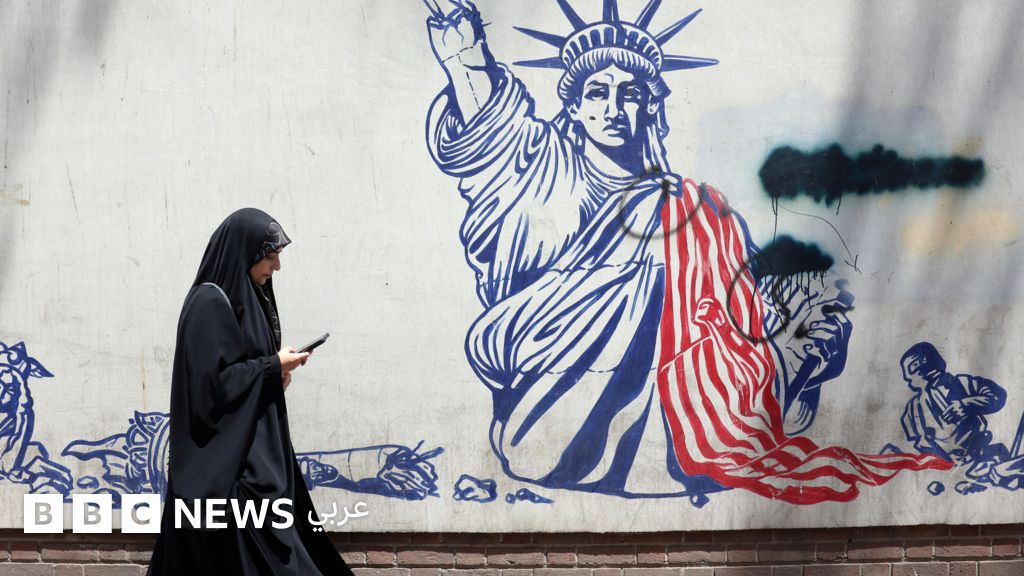
Global newspapers discuss the US strategy on Iran, wage inequality between executives and workers in the UK, and political intersections in the World Cup.
"No Grand Plan for Iran" - an article in the Financial Times
Published 6 minutes ago
Reading time: 5 minutes
In our Friday press review, we look at opinion pieces on the US plan for war on Iran, wage inequality in the UK, and political relations and their impact on football.
We begin our tour with an article on the US-Israeli war with Iran in the British Financial Times by Kim Ghattas, who discusses US policy towards the Middle East and says that "the United States sought to contain local nationalist tendencies in the Middle East, but ended up pushing some countries towards rapprochement with the Soviet Union" such as Iran.
She cites Egyptian President Gamal Abdel Nasser in the 1950s as saying, "The genius of the Americans lies in that they never take a stupid obvious step, but only complicated stupid steps."
US says negotiations with Iran continue despite exchange of strikes and targeting of Gulf states
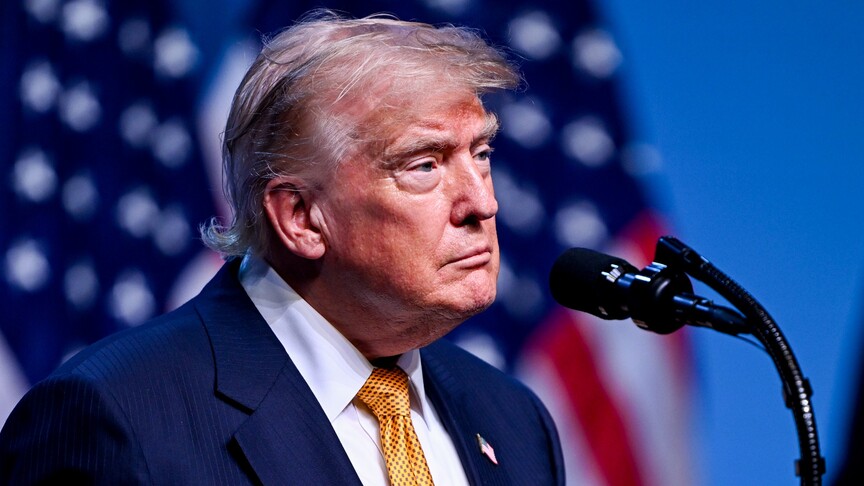
She criticizes the lack of a "new grand plan" for the US, which entered the war despite warnings from Gulf states not to do so. She argues that the US president did not keep his promise to the Iranians to provide them with assistance.
The writer notes that the military strikes may have been "executed skillfully," but they did not lead to regime change in Iran, instead ending with a temporary agreement "on terms extremely favorable to Iran," ignoring the concerns of Gulf states.
As for the Gulf states, who according to the writer paid the price of this war, they are "intensifying their efforts to hedge to compensate for the lack of strategic planning." On the one hand, they will maintain relations with Trump but with some restrictions on Washington's military powers; on the other hand, they will seek a breakthrough with Iran. They will also deepen security cooperation with Israel, particularly the UAE in her view.
She highlights the contradiction in the narratives of US Vice President JD Vance and Secretary of State Marco Rubio, noting that "each is promoting a different vision of the region" within what she sees as their "competing presidential campaigns."
US announces new strikes on Iran, Trump threatens to increase intensity
She explains that "the only player here with clear moves is Israeli Prime Minister Benjamin Netanyahu, who considers war a necessity for political survival, and who still hopes that the Iranian regime's resilience is not limitless."
Skip to most read and continue reading
US says negotiations with Iran continue despite exchange of strikes and targeting of Gulf states
Mutual strikes and ongoing negotiations between Washington and Tehran, reports reveal Iranian 'plot' to assassinate Trump
Morocco's World Cup dreams collide with France's strength and Mbappé's brilliance
World Cup: France ends Morocco's dream again with 2-0 win, reaches semi-finals
In conclusion, the writer predicts a return to all-out war. She says: "The region seems headed for a long, hot summer of calculated escalation, a slippery slope that could lead to a full-scale war, at least until the Israeli elections in October and the US midterm elections in November."
UK ranks second in wage inequality
Skip podcast and continue reading
Worth paying attention to
In-depth explanation of key events and topics, to help you understand the most important changes around you and their impact on your life
Episodes
End of podcast
We move to an article in The Guardian titled 'A think tank exposes corruption of the powerful and obscenely high pay. Imagine what happened to it?' by Polly Toynbee.
The writer discusses the closure of the 'High Pay Centre,' which analyzes excessive salaries at the top of the job pyramid and the growing wage gap between CEOs and their average employees.
She argues that the closure is not just the shutdown of a research institute, but the loss of a voice that revealed the causes of the widening income gap between executives and ordinary employees, reflecting declining interest in economic justice and equality issues.
She attributes the centre's closure to the Aberdeen Group's decision to dissolve its Financial Justice Trust, which funded many research institutions including the High Pay Centre, and reopen the fund under the name 'Aberdeen Charitable Trust' to support local environmental initiatives and help people find jobs.
Wage gap between men widens fourfold in Britain
She notes that 'the Financial Justice Trust was established with a capital of £90 million, aiming to fund research, campaigns, and policies to make the UK more financially just for low- and middle-income individuals.'
The writer highlights the importance of the High Pay Centre and explains that 'the UK ranks second among wealthy countries in income inequality, after only the United States, where the corporate governance system contributes to this major imbalance,' a matter requiring analytical studies.
She points out that the CEO of the largest British companies, on average, needs less than two and a half days of work to earn what a full-time employee makes in a whole year.
In conclusion, the writer leaves us with two options: either the centre is saved if new donors step in, or oversight of top executive pay will disappear, making them less subject to accountability and criticism.
"The World Cup is not a reflection of international relations, and if it is, it is a highly distorted reflection"
We conclude our tour with a sports article in Le Monde by Gilles Paris, who criticizes Donald Trump's interference in football affairs, as international football governing bodies immediately responded to Trump's request to lift the suspension of American forward Folarin Balogun for a decisive match.
He says football has become an extension of the US president's challenge to the global order, as visas were denied to fans from some countries, a referee from Somalia was expelled, and strict checks were conducted on players from certain teams upon arrival.
He adds that even the partnership of Canada, the US, and Mexico in hosting the World Cup has not positively affected the US president's hostility towards his neighbors.
He also criticizes FIFA President Gianni Infantino for his proximity to the powerful, stating that Infantino 'is known for his complete submission to the powerful.'
Red card system in chaos due to Trump, FIFA, and Balogun decision
He argues that 'the World Cup is not a reflection of international relations, and the geopolitics of football bears no relation to geopolitics in general.'
He explains that China, strong economically and politically, is weak in football; major nations India and Indonesia have limited football presence; and Europe, despite its relatively declined influence in international politics, still dominates sportingly.
He notes that many players represent countries other than their birth nations, seeing this as a reflection of continued globalization despite rising anti-immigration and open-borders rhetoric, calling it 'globalization of players.'
Original source: BBC Arabic




Comments (0)
Be the first to comment.