Palestine Elections After 20 Years: Renewal of Legitimacy Beset by Caveats
RAMALLAH / Qais Abu Samra / Anadolu
** President Abbas issued a decree setting November 28, 2026, as the date for elections frozen since 2006
** Political science professor at An-Najah National University Raed Nairat:
- The main motive behind the decision is the Palestinian Authority's attempt to respond to international demands for reform
- The political environment does not provide national consensus on elections, and many Palestinians do not see them as a priority amid the war
- But the real question is about what comes after the elections and how to deal with their results amid ongoing division and challenges
** Political expert Jihad Harb:
- The success of elections depends on removing the obstacle of Israel's refusal to hold elections and the obstacle of the Gaza Strip, which needs understandings regarding its administration
- Any new legitimacy will be stronger than continuing the existing legitimacies, and participation of all factions is an essential factor for the success of elections
- Boycott will deprive Palestinians of a chance to bring about change after years of stalled elected institutions
** Palestinian expert Adel Shadeed:
- Requiring political forces to commit to certain positions before elections may deepen division and will not produce institutions with national consensus
- Elections will not achieve their political goals if they do not include occupied East Jerusalem and the Gaza Strip
- Insisting on holding elections in Jerusalem embarrasses Israel before the international community and turns elections into political resistance
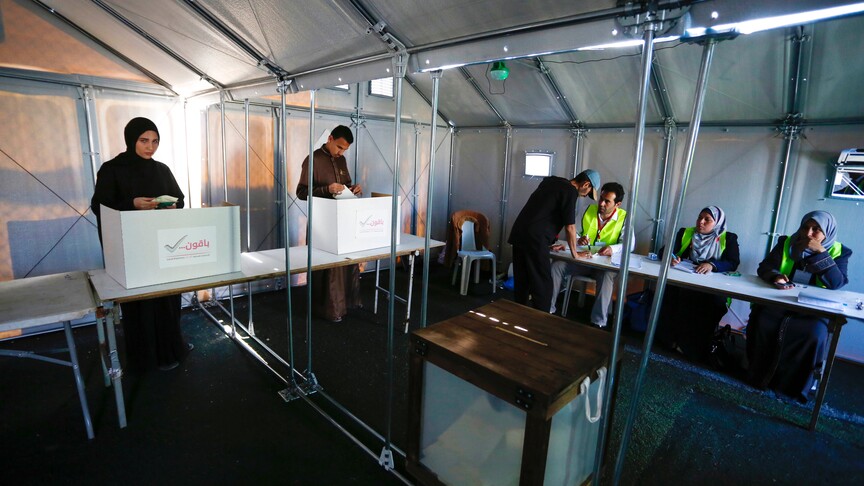
Palestinian President Mahmoud Abbas brought the elections file back to the forefront of the political scene by issuing a decree setting November 28, 2026, as the date for legislative elections, in the first such step in nearly 20 years.
The move raises questions about the chances of rebuilding the Palestinian political system and renewing its legitimacy amid internal division and the ongoing Israeli genocide in the Gaza Strip since October 2023.
Experts who spoke to Anadolu believe the decree represents an attempt to revive elected Palestinian institutions and respond to internal and external reform demands.
But they stress that success remains conditional on overcoming political, field, and legal obstacles, most notably ensuring elections are held in occupied East Jerusalem and the Gaza Strip, and achieving broad participation of Palestinian factions.
On Thursday, Abbas issued a decree calling on Palestinians in East Jerusalem, the West Bank, and the Gaza Strip to elect a new Legislative Council (parliament) on November 28.
A date for the presidential elections, scheduled for the first quarter of 2027, will be set later.
The decree came a month after amendments to the general election law that included raising the number of Legislative Council members from 132 to 200, lowering the candidacy age from 28 to 23.
The amendments also reduced the electoral threshold to 1 percent, with a requirement that at least one woman be included in every three candidates on electoral lists.
Legislative elections have been suspended since 2006, and the council's work stalled after the Palestinian division in 2007 and Hamas's takeover of the Gaza Strip, before Abbas issued a decision to dissolve it in 2018.
Legislative and presidential elections scheduled for 2021 were canceled after a decision by President Abbas to postpone them, citing the lack of Israeli approval to ensure Palestinian participation in occupied East Jerusalem.
** Reform or Response to Pressures?
Political science professor at An-Najah National University Raed Nairat believes the timing of the decree is linked to political shifts and international pressures demanding reform of Palestinian Authority institutions.
He says, "The main motive behind the decision is the Palestinian Authority's attempt to respond to international demands for reforming its institutions, especially amid American and European talk about reforming the Authority and reactivating its role."
He adds that elections are among the most prominent steps the Authority can present as an indicator of reform.
He explains that this comes particularly amid the international movement related to files of clearance funds, settlement, and the future of the Palestinian Authority.
But he points out that the current political environment "does not provide full national consensus on the electoral process."
He says, "Elections are not being held today under national consensus, and many Palestinians may not consider them a priority amid the ongoing war and the complex humanitarian and political conditions it has created."
He adds, "Holding elections may be a goal in itself, but the real question is about what comes after and how to deal with the results amid the ongoing division and existing challenges."
** Jerusalem and Gaza: Key Challenges
For his part, political expert Jihad Harb believes the success of elections depends on removing two main obstacles in Jerusalem and the Gaza Strip.
He says, "The first obstacle concerns the city of Jerusalem, given a right-wing Israeli government that is not expected to allow elections inside the city."
The second obstacle concerns the Gaza Strip, which needs political understandings regarding which body will govern the strip.
The strip also needs extensive technical arrangements after the war, including updating the electoral register, identifying polling stations, and addressing the effects of widespread displacement, according to Harb.
The Palestinian expert explains that these challenges "require a great effort in a relatively short period of time."
But he stresses the importance of holding elections, saying, "Any new legitimacy will be stronger than continuing the existing legitimacies, and elections can rebuild the Palestinian political system and give citizens the right to choose their representatives."
He adds that the participation of all factions is "an essential factor for the success of the electoral process," considering that a boycott "will deprive Palestinians of the chance to bring about change after years of stalled elected institutions."
Harb believes that a Legislative Council representing the West Bank and Gaza Strip could form "an entry point to end the division and strengthen the unity of the Palestinian political system and prevent the consolidation of the strip's separation."
** Legitimacy Conditional on Participation Terms
For his part, expert Adel Shadeed believes the need to renew Palestinian legitimacies has become urgent after more than 20 years without elections.
But he considers its success depends on the nature of the conditions for participation.
He says, "The most important question is not about holding elections itself, but about their conditions: will they be open to all Palestinians for voting and candidacy, or will political conditions be imposed that restrict participation?"
He warns that requiring political forces to commit to certain positions or agreements before participation "may lead to deepening the division and will not produce institutions with broad national consensus."
He stresses that elections will not achieve their political goals if they do not include occupied East Jerusalem and the Gaza Strip.
Shadeed adds, "Without Jerusalem and Gaza, elections lose a large part of their national value."
He considers that insisting on holding elections in Jerusalem could constitute "a means to embarrass Israel before the international community and turn the electoral process into a form of political resistance."
Despite differing interpretations of the motives and outcomes of the decree, experts agree that elections represent a pivotal moment for the Palestinian political system after many years of stalled elected institutions and internal division.
However, they stress that the success of this event does not depend solely on the issuance of the presidential decree.
Original source: Anadolu Agency



Comments (0)
Be the first to comment.