Political and Security Dimensions Behind Resumption of Direct Flights Between Lebanon and America
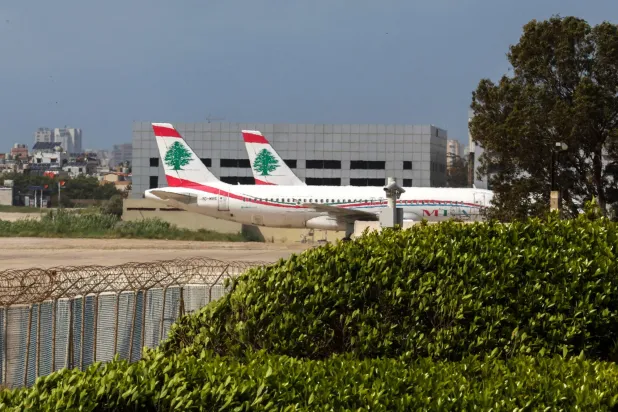
Lebanese were preoccupied with US President Donald Trump's announcement that he gave instructions to allow all US airlines to operate direct flights to Lebanon.
Lebanese were preoccupied with the announcement by US President Donald Trump that he gave instructions to allow all US airlines to operate direct flights to Lebanon, following his meeting with Lebanese President Joseph Aoun.
The decision is seen as going beyond being merely a measure related to air traffic, carrying political, economic, and security dimensions that reflect a shift in the American view of Lebanon and signal a new phase in relations between the two countries.
Direct flights between the United States and Lebanon were suspended in 1985 in response to a plane hijacking and the detention of 39 American passengers, with the US holding elements of Hezbollah responsible for the operation.
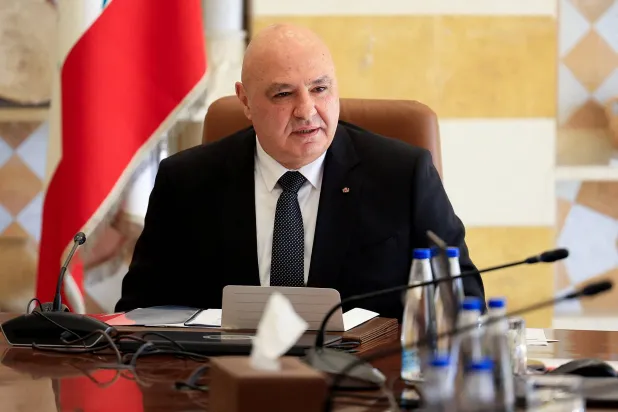
Prime Minister Nawaf Salam thanked the US president for this step and affirmed the readiness of the Lebanese government to follow up on all required executive and technical measures to implement this decision as soon as possible, considering it 'an important opportunity to enhance travel and communication between Lebanon and the United States and support the Lebanese economy.'
Updating the transport agreement with America
Minister of Public Works and Transport Fayez Rasamny considers that the US presidential announcement 'constitutes a historic milestone in the course of relations between Lebanon and the United States, because it opens the door to reconnecting our country with a direct air route that was cut off for more than four decades,' stressing that 'the importance of this step is not limited to the aviation sector, but extends to the economy, investment, tourism, and facilitating the movement of Lebanese expatriates in the United States and enhancing communication between them and their homeland. It also carries a message of confidence in Lebanon and in the path led by President Joseph Aoun, and confirms that restoring the confidence of the international community begins with a strong state, effective institutions, and partnerships based on mutual respect.'
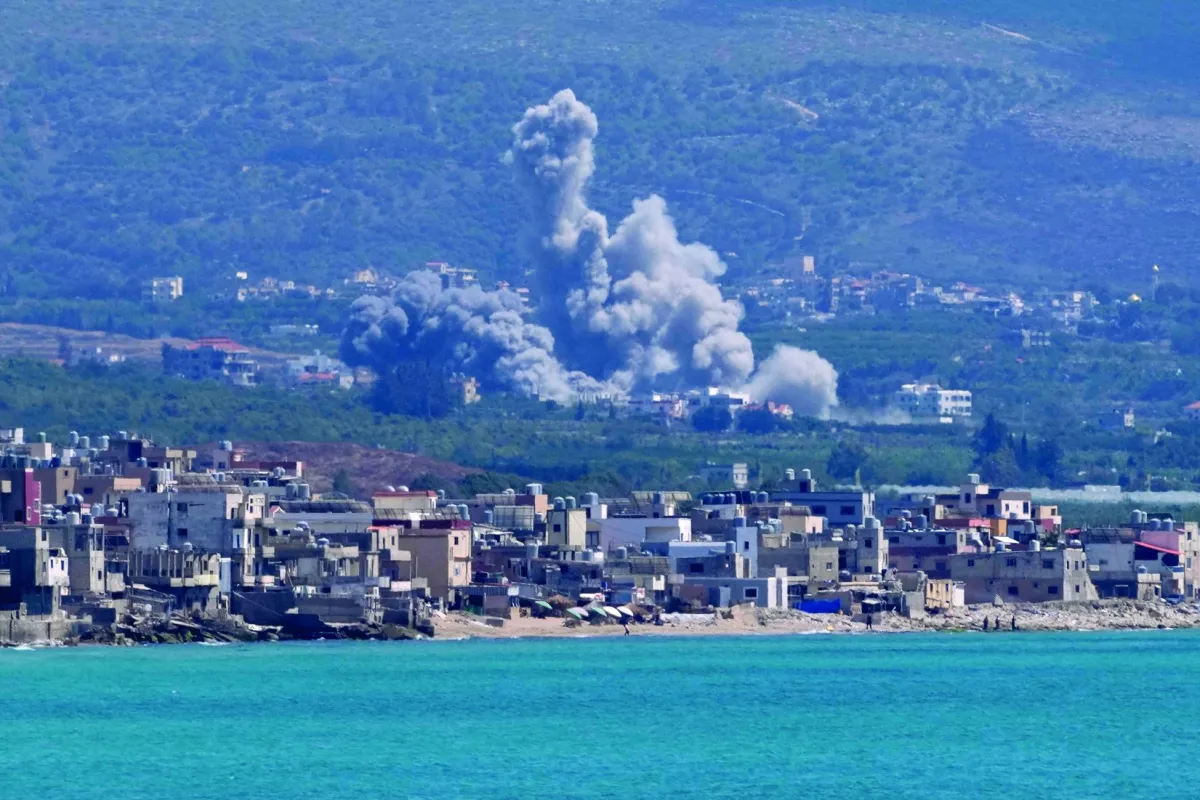
A plane belonging to Middle East Airlines (Lebanon's national carrier) takes off from Beirut Airport, with smoke from an Israeli airstrike targeting the southern suburb visible (Archival - AFP)
Regarding the required executive procedures, Rasamny told Asharq Al-Awsat: 'The presidential announcement is the political step that opens the door to starting work, but it naturally needs a technical and regulatory path to be completed before it turns into actual flights.' He added: 'On the American side, the competent authorities will translate the presidential directive into the necessary regulatory procedures. Meanwhile, Lebanon, through the Ministry of Public Works and Transport, the Civil Aviation Authority, Beirut Airport Foundation, and all relevant departments and agencies, will complete all required technical, security, and operational requirements. It will also be necessary to update the bilateral air transport agreement between Lebanon and the United States to keep pace with developments in the aviation sector over the past decades.' He added: 'After completing these procedures, the operational decision remains with the airlines themselves, which determine flight schedules and numbers based on economic feasibility and demand, as happens in any aviation market in the world.'
Rasamny affirms that 'Rafic Hariri International Airport applies internationally recognized security and safety standards, and we are committed to continuing to develop this system in line with best global practices, in cooperation with all international partners,' noting that the airport 'is technically equipped to receive and operate direct US flights, while completing technical and regulatory procedures remains a natural part of any launch of a new international air route.'
Political Symbolism
For his part, head of the Parliamentary Committee on Public Works and Transport MP Sajih Atieh considers that the US presidential announcement regarding air traffic between the two countries carries 'political symbolism, as it represents an invitation for all countries of the world to follow suit, meaning moral and political support, and an affirmation of a new approach in the relationship between the two countries,' noting that it also indicates 'an American conviction that the security and logistical situation on the Lebanese side is appropriate, which poses a major challenge for official Lebanon to be up to the required level, meaning there is much work to be done at the level of the Ministry of Public Works, the Civil Aviation Authority, and the parliamentary committee.'
A sign on the road to Beirut International Airport promoting tourism in Lebanon (AP)
Atieh told Asharq Al-Awsat: 'It is true that Beirut Airport has seen significant improvements recently, but there is no doubt that resuming direct flights between the two countries requires direct American supervision to ensure safety and security controls at the airport,' considering the step to have 'great economic importance given the presence of hundreds of thousands of Lebanese expatriates in the United States.'
While official sources at Middle East Airlines (MEA) confirmed to Asharq Al-Awsat that 'the company has all the necessary capabilities to operate direct flights to and from the United States,' Atieh noted that 'the company previously operated two flights a week to America and Canada.'
Significant Economic Results
Dr. Sami Nader, director of the Mashreq Center for Strategic Affairs, believes the step is of great importance for Lebanon because it means 'the country is no longer subject to a security ban after having lived in a kind of international isolation.' He stressed that economically, tourist movement will revive the economy, especially if the process includes US airlines and not just MEA.
Nader stressed in a statement to Asharq Al-Awsat that Trump's decision is 'a positive signal to international financial institutions that place Lebanon on the grey list, and it means Lebanon's return to the American and global economy. Therefore, the positives of the process are not limited to aviation but extend to the financial system, economy, and investments. Thus, it could be the beginning of the road, so ensuring the implementation of this step is very important for Lebanon.'
Original source: Asharq Al-Awsat
Comments (0)
Be the first to comment.