Post-war plans in Gaza collide with reality's challenges
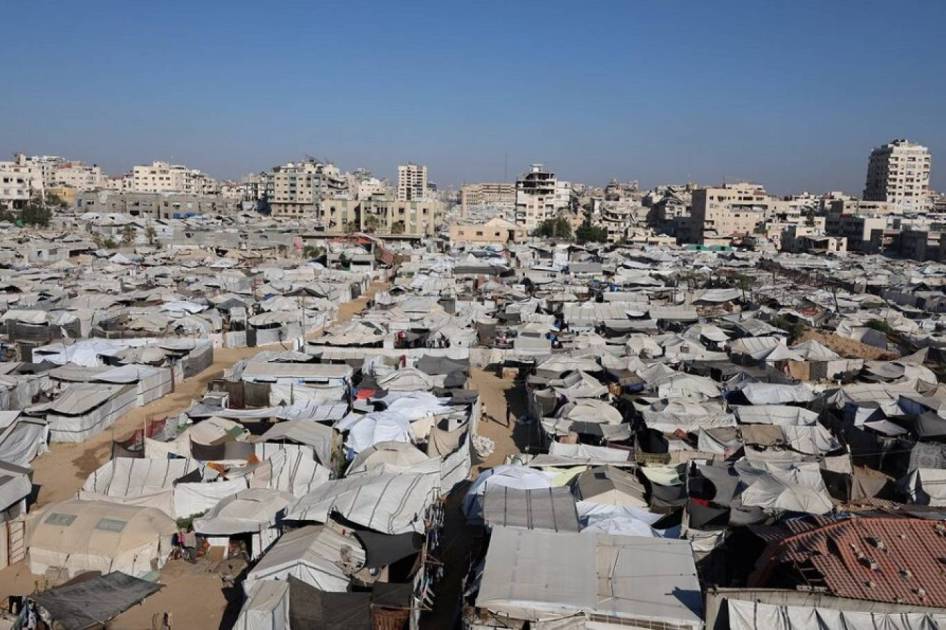
Summary: Humanitarian needs remain enormous. UN estimates indicate that reconstruction will take several years and require tens of billions of dollars, while construction materials and rubble removal equipment are insufficient, according to international organizations on the ground. Despite large pledges of donations, a significant portion of expected funding has not yet been disbursed, according to the Peace Council.
Nine months after the ceasefire in Gaza took effect, and despite the risk of renewed fighting, relevant parties are proceeding with their plans for the post-war phase in the devastated Palestinian enclave after two years of conflict.
Plans for administration, security, and humanitarian relief have begun to take shape, but remain largely theoretical as a political agreement, reliable security guarantees, and sustainable funding remain elusive.
Below are some of the main challenges facing local and international stakeholders as they seek to rebuild the devastated territory that contains more than two million Palestinians.
Security: Announced plans without actual implementation
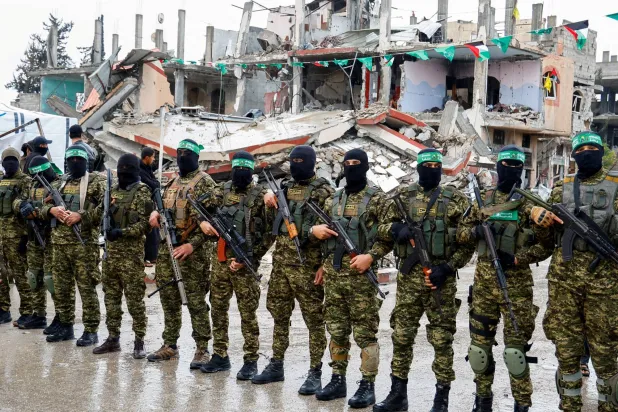
Security is a critical element in any scenario addressing the post-war phase that erupted in Gaza after Hamas's attack on Israel on October 7, 2023. Israel demands the disarmament of the movement, which it rejects unless a comprehensive solution is reached, a Palestinian Authority is established in Gaza, and the Israeli army begins to withdraw.
However, an official in the 'Peace Council' – established by US President Donald Trump after he mediated the ceasefire agreement between Hamas and Israel last October – said that disarmament is no longer a prerequisite for making progress on the ground.
While noting that the council is working to establish a pilot 'humanitarian zone,' he explained that 'the entire plan is based on the most pessimistic scenario,' namely Hamas's refusal to disarm.
The official added to AFP: 'We have not made progress in negotiations, but we are moving forward anyway.' In this context, he indicated that four countries (Morocco, Kosovo, Albania, Kazakhstan) are currently seriously committed to one of the planned projects, namely the establishment of an International Stabilization Force (ISF), a body operating under the umbrella of the Peace Council to maintain order in the sector.
One of the logistical bases on the Israeli side near the Kerem Shalom crossing between Gaza and Israel is 'near completion' and will be able to accommodate about 500 military personnel before their potential deployment, but methods for the force's intervention on the ground still need to be defined.
In parallel, preparations continue for the establishment of a Palestinian police force, with about 20,000 applications for membership registered, according to the same source.
But a diplomatic source said that training courses have not yet begun, while Israel rejects the current lists of recruits, considering that a force of 5,000 police officers would be too large.
Reconstruction: Many needs, little progress
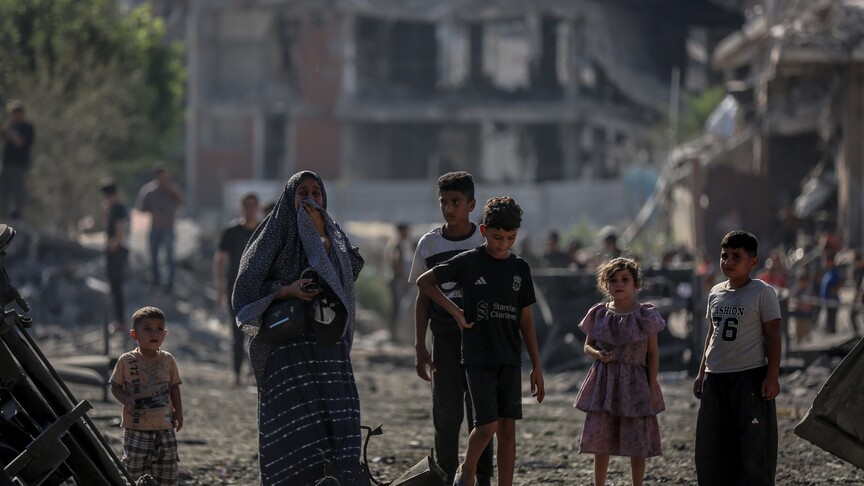
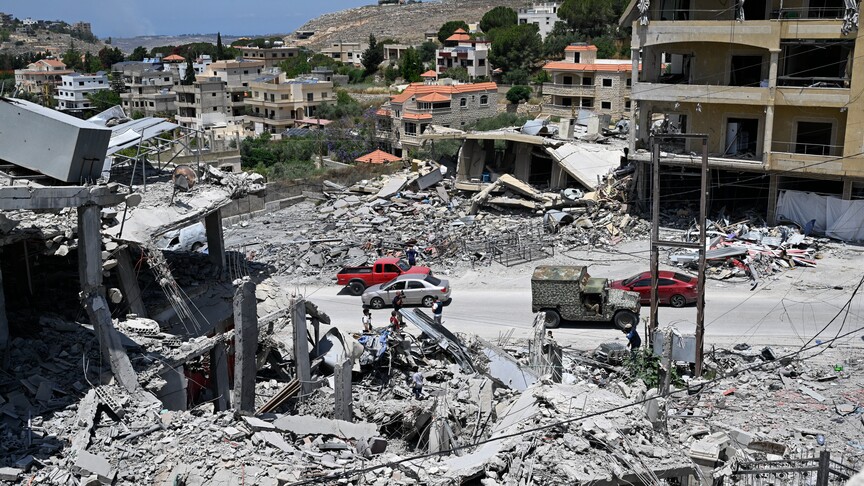
Humanitarian needs remain enormous. UN estimates indicate that reconstruction will take several years and require tens of billions of dollars, while construction materials and rubble removal equipment are insufficient, according to international organizations on the ground.
Despite large pledges of donations, a significant portion of expected funding has not yet been disbursed, according to the Peace Council.
The council official said that 'the funding we have meets our immediate needs,' adding that if other 'humanitarian zones' are planned, 'we will need more funding.'
The official had said earlier this week that the council is currently planning to establish a pilot humanitarian zone in Rafah in the southern part of the strip, aimed at accommodating tens of thousands of civilians who will undergo security screening procedures.
Government: Institutions exist... theoretically
Hamas announced the dissolution of the Governmental Work Committee that has been running Gaza since 2007 when it forcefully took control of the strip after military clashes with Fatah.
With the issuance of the decision to dissolve the government, these responsibilities were transferred to the National Committee for the Administration of Gaza (NCAG), a body comprising independent Palestinian professionals formed by the 'Peace Council,' which is supposed to manage the strip during the transitional phase.
An official in the Palestinian movement said that officials in Gaza ministries have already begun coordinating the transfer process with the committee.
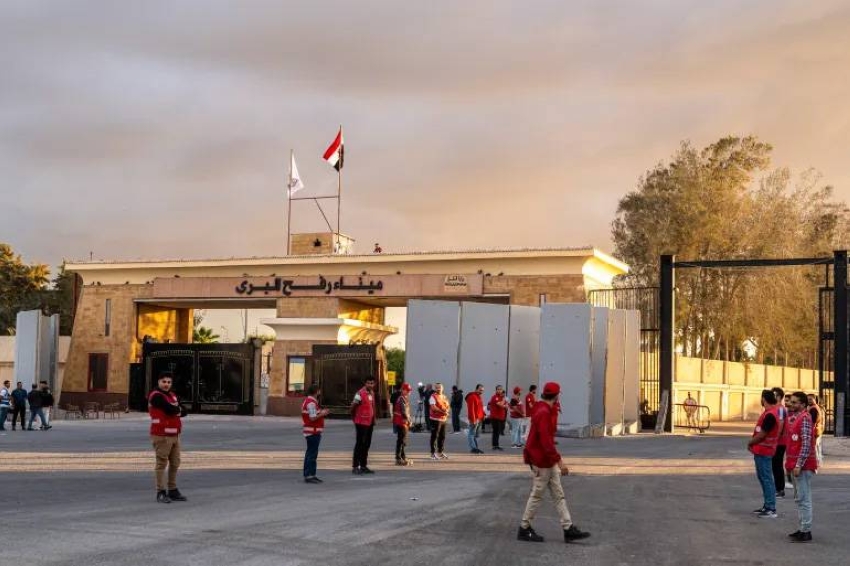
However, the National Committee for the Administration of Gaza, which is temporarily based in Cairo, has not yet been able to enter the strip. Palestinian and diplomatic sources say Israel prevents its members from entering.
While this body is presented as temporary, many European and Arab officials insist on the need for a broader political framework that includes existing Palestinian institutions.
European representatives met with the National Committee for the Administration of Gaza to discuss the resumption of public services and reconstruction, and they prefer that this be done in coordination with the Palestinian Authority.
Additionally, observers point to the risks of establishing an administration that manages public services without having authority over security agencies or control over borders, which could weaken its position vis-à-vis Hamas if it retains its weapons.
Original source: Independent Arabia

Comments (0)
Be the first to comment.