Rubio Acts Colonially with Venezuela as 'Viceroy'
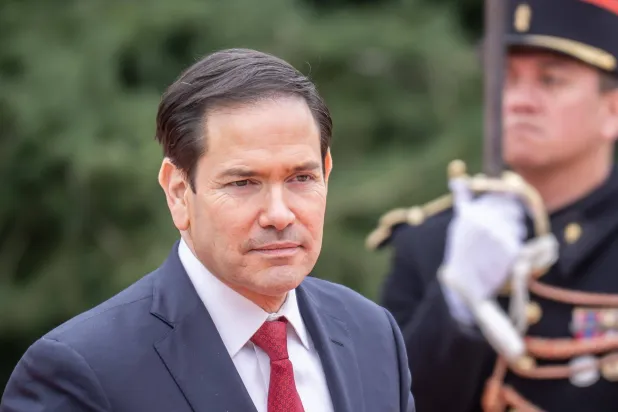
Secretary of State Marco Rubio has become a 'viceroy' effectively managing the Venezuelan government, its natural resources, and financial affairs from Washington.
A report by the New York Times revealed that Secretary of State Marco Rubio has effectively been running the Venezuelan government, its natural resources, and financial affairs from Washington, in a role described as 'viceroy'.
These revelations come amid ongoing debate over the legitimacy of the interim Venezuelan government and Washington's role in managing the country's affairs.
In a striking report based on interviews with more than 12 government officials and sources close to the Trump administration as well as interim Venezuelan President Delcy Rodríguez, Rubio—who has not visited this South American country since the U.S. forces' surprise raid that led to the arrest of former Venezuelan President Nicolás Maduro last January, bringing him in chains to a New York prison to face U.S. lawsuits on 'drug terrorism' charges—exercises control.
Nevertheless, Rubio plays an active role in managing Venezuela's daily affairs through constant communication in Spanish with President Rodríguez via WhatsApp, having built a friendly working relationship with her, granting him significant influence over her.
Rubio has repeatedly downplayed his role in Venezuela. He denies accusations that the United States is occupying this South American country. Last January, he told the Senate Foreign Relations Committee: 'There is no war against Venezuela, and we have not occupied any country. There are no U.S. troops on the ground.'
U.S. forces carried out their surprise military operation in Venezuela as President Trump expressed a desire to return to an expansionist foreign policy, floating the idea of annexing Canada, Greenland, the Panama Canal, and most importantly, Venezuela into the United States.
American helicopter flies over a Venezuelan port (AP)
Three-Step Plan
Rubio's plan includes three steps to revive Venezuela and transform it into a democratic system. He emphasized that his plan so far is to revive Venezuela's economy, stabilize the country, and transition to democracy.
Before the earthquakes that killed more than four people this month, he stated he was working to stabilize Venezuela, particularly through a set of economic and trade measures.
The U.S. Treasury Department collects revenues from most of Venezuela's exports and distributes them through private banks in the country. Rubio and the State Department directly oversee these revenues, set conditions for their spending, and determine permissible spending items for the Venezuelan government.
This system has enabled Rubio to halt massive corruption schemes in Venezuela. It has also allowed the Venezuelan government to collect revenues without being pursued by creditors seeking payment, under the protection of the Treasury Department.
Thus, Rodríguez relies on Rubio to pay government employee salaries and support the country's economy.
U.S. Secretary of State Marco Rubio stands behind President Donald Trump as he speaks to the media at the conclusion of his participation in the NATO summit in Ankara on July 8 (Reuters)
Rubio also oversees the implementation of U.S. sanctions imposed on Venezuela and decides which entities are allowed to do business in the country. He has worked to restructure the oil sector and enhanced access for U.S. companies to Venezuela.
The American newspaper reported sources saying that Rubio took the lead in efforts to open Venezuela's energy sector to foreign investment, bypassing his colleague, U.S. Energy Secretary Chris Wright.
In return, Rodríguez executes most of Rubio's orders. She manages most high-level government appointments, hands over Venezuelans who have run afoul of the U.S. Justice Department, and allows him to set foreign policy.
For example, at the start of the war with Iran, Venezuelan Foreign Minister Iván Gil issued a watered-down statement condemning the war. The Trump administration asked Rodríguez to delete the post. Indeed, the post was removed a few hours later.
In another prominent example, Venezuela took over oil projects with Russian state-owned Rosneft after Rubio warned Rodríguez against dealing with U.S. adversaries.
In another example of Rodríguez's subordination to the Trump administration, she refused to appear publicly at some events without Trump's approval. Fox News had asked Rodríguez for an interview. She responded that Trump himself must approve.
The New York Times detailed how Rubio gained this strong sway since last January, when Rubio called Rodríguez. He told her in Spanish that she had two options: either cooperate with the U.S. government or watch as the United States launched a broader attack on Venezuela. Rodríguez chose the former. Trump said Rodríguez told Rubio she was 'fully prepared to do what we see as necessary to make Venezuela great again.' Since then, U.S. officials have dubbed Rubio 'viceroy,' a title once used for colonial governors in the Spanish Empire.
This situation reveals the fragility of the interim Venezuelan government and its complete dependence on U.S. support. If this control continues, Washington may face sharp criticism from Latin American countries that reject interference in their internal affairs. It also raises questions about the future of Venezuelan sovereignty.
Original source: Asharq Al-Awsat


Comments (0)
Be the first to comment.