Iraq's Shiites between Saddam's era and Khamenei's funeral procession
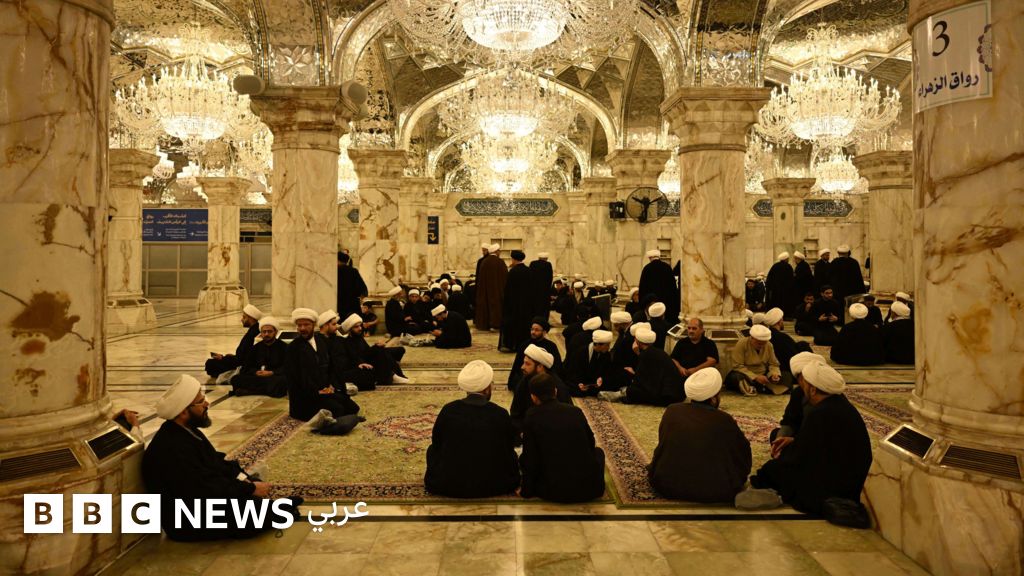
The body of Ali Khamenei was transported from Iran to Iraq to be mourned in Najaf and Karbala. What are the political and religious implications of this funeral in the history of Iran-Iraq relations?
Iraq's Shiites between Saddam's era and Khamenei's funeral procession
Image caption, During the funeral prayer for Khamenei at the shrine of Imam Ali in Najaf on Wednesday
Article Information
Author, Mohamed HamdarRole, BBC News Arabic - Beirut
Published 5 hours ago
Reading time: 6 minutes
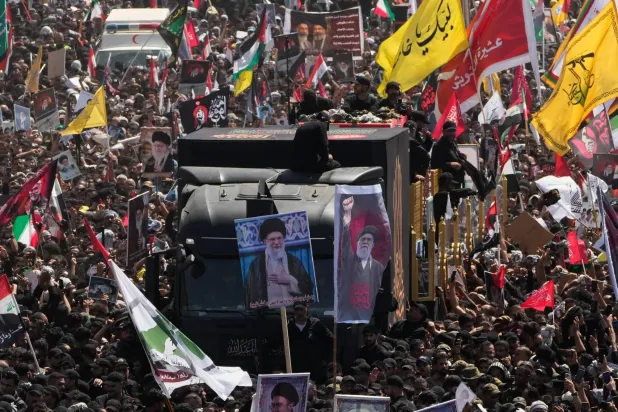
The passage of the funeral procession of former Iranian Supreme Leader Ali Khamenei in Iraq carries not only important religious connotations, especially for Shiites in both countries, but also reflects a major transformation in the political circumstances that governed Iraq-Iran relations since the late 1970s and early 1980s.
The historical religious bond between Iraqi Shiites and Iranian Shiites became a source of political suspicion for Saddam Hussein's regime after his rise to the presidency in 1979 and Khomeini's success in overthrowing the Shah's rule in Iran and establishing the Islamic Republic the same year.
Saddam Hussein: How did he rule Iraq?
The relationship between Shiite seminaries and religious authorities across the border was extremely sensitive during Saddam Hussein's era, due to his suspicion of any religious or political loyalty, with the rise of the model of Wilayat al-Faqih in Iran, which gave clerics a direct role in governance and politics.
Despite the historical rivalry between the seminaries of Najaf and Qom, and the disagreement over the powers of the Supreme Leader and the Shiite religious authority in the region, some Iraqi Shiite circles were influenced by the Islamic Revolution led by Khomeini from his exile in Najaf and then France.
The war between Iraq and Iran later broke out in 1980 and continued until 1988, increasing the difficulty of communication between the Shiites of the two countries, especially between the religious authorities.
The war and its aftermath left a deep impact on Iraqi Shiites, as Saddam Hussein's regime expanded its campaign against activists, opponents, and Shiite religious figures, fearing any political or religious connection to Iran. This policy continued after the war ended and intensified especially during the suppression of the 1991 uprising in southern Iraq.
Image caption, Mohammed Baqir Mohsen al-Hakim (second from right) alongside President Ali Khamenei (center) during the years of opposing Saddam Hussein's regime from Iran
Saddam and Shiite religious authorities
Months before the war broke out, Saddam Hussein's regime executed the religious authority Mohammed Baqir al-Sadr and his sister Bint al-Huda in April 1980, after accusations from Iraqi authorities of their connection to Iran. Al-Sadr was one of the most prominent opponents of the Iraqi Ba'ath Party regime and one of the founders and theorists of the Islamic Dawa Party.
The regime's repression continued during the war with Iran, particularly against prominent clerics and Shiite religious authorities from the Sadr, Hakim, and Khoei families, and the campaigns also extended to their supporters and family members.
Skip most read and continue reading
"Scandal" or "Sound Decisions": Refereeing controversy after Egypt's dramatic exit from the World Cup
Resignation "to relieve the government of embarrassment" raises the question: How are ministers chosen in Egypt?
Trump says the recent escalation with Iran will end "quickly"
Approval to release Fadel Shaker: How did the story begin and where has it reached?
Skip the podcast and continue reading
Worth paying attention to
In-depth explanation of the most important events and topics to help you understand the key changes around you and their impact on your life
Episodes
Podcast end
After the execution of Mohammed Baqir al-Sadr in 1980, Mohammed Baqir al-Hakim left Iraq for Iran, where he was active in opposing Saddam Hussein's regime. In 1982, he participated in founding the "Supreme Council of the Islamic Revolution in Iraq," an opposition political framework that sought to unite part of the Iraqi Shiite opposition against the regime.
In 1983, a widespread repression campaign targeted the Hakim family, with several members arrested and executed as part of the Iraqi regime's pursuit of Shiite opposition linked to Iran or accused of loyalty to it.
The campaign also targeted Grand Ayatollah Abu al-Qasim al-Khoei and his family. After the 1991 uprising, Iraqi authorities arrested al-Khoei along with several family members and close associates, before he was returned to Najaf and placed under house arrest.
The Sha'baniya uprising (in the month of Sha'ban) against Saddam Hussein's rule erupted in several areas, including predominantly Shiite cities in the south, and ended with widespread repression that included Najaf, Karbala, and other areas.
In 1999, Grand Ayatollah Mohammed Sadiq al-Sadr was killed along with two of his sons after gunfire was opened on his car in Najaf. A year earlier, Grand Ayatollah Murtadha al-Boroujerdi was also killed in the same city.
However, some close to Shiite religious authorities see that Saddam's repression was not directed only at Shiites, although they were among the most affected, but rather targeted anyone the regime considered a threat to its authority.
In a talk to the BBC program "Al-Mashhad" in 2018, Jawad al-Khoei, grandson of Grand Ayatollah Abu al-Qasim al-Khoei, used the phrase "Saddam was fair in his injustice," indicating that the regime's brutality was not limited to one sect, but included communists, Kurds, and opponents from Christian, Sunni, and Shiite backgrounds.
That was part of Saddam Hussein's effort to consolidate a one-party rule represented by the Iraqi Ba'ath Party and to exclude any political, religious, or social force that could challenge his power.
The authority of al-Sistani
Ali al-Sistani emerged as the most prominent Shiite religious authority in Najaf after the death of Abu al-Qasim al-Khoei in 1992. During Saddam Hussein's era, al-Sistani maintained his religious position away from overt political activity, at a time when Iraqi authorities imposed strict restrictions on the seminary and Shiite religious authorities.
After the fall of Saddam in 2003, al-Sistani's voice became more present in Iraqi public life. He sought to establish Najaf's position as an independent religious authority, based on an advisory role for the marja', and reserved about the model that grants the cleric direct authority in governance, as in the theory of Wilayat al-Faqih adopted in Iran.
From this position, al-Sistani's authority avoided entering into the details of daily governance, but intervened at pivotal moments related to the future of the state; from the political process after 2003 to the war against the Islamic State.
In 2014, al-Sistani issued a fatwa calling on Iraqis to volunteer to defend the country after the Islamic State took control of large areas of Iraq. In the context of this mobilization, the Popular Mobilization Forces (PMU) were formed, and several Shiite factions joined it, some of which received political and military support from Iran during the war against the organization.
In 2019, during a visit by former Iranian President Hassan Rouhani to Iraq, al-Sistani emphasized respect for Iraq's sovereignty and the exclusive possession of weapons by the state. This position was read as an affirmation of the independence of Iraqi decision-making amid ongoing debate over Iran's influence and its relationship with armed factions inside the country.
During the recent war, al-Sistani's name returned to the forefront through statements and positions addressing the war on Iran. His office condemned what it described as "military aggression" against Iranian territory and called for a halt to the war and a peaceful resolution.
After the death of Ali Khamenei, al-Sistani issued a condolence statement describing the former Iranian leader as having a "high status" and "unique role" in leading the Islamic Republic for many years.
The Anadolu Agency also reported on March 8, 2026, quoting channels linked to Shiite factions on Telegram that a fatwa attributed to al-Sistani considered popular support for Iran and solidarity with it at that time a "collective duty" (wajib kifa'i).
After Saddam
Original source: BBC Arabic



Comments (0)
Be the first to comment.