Syria Remains on Russia's 'Shadow Fleet' Map
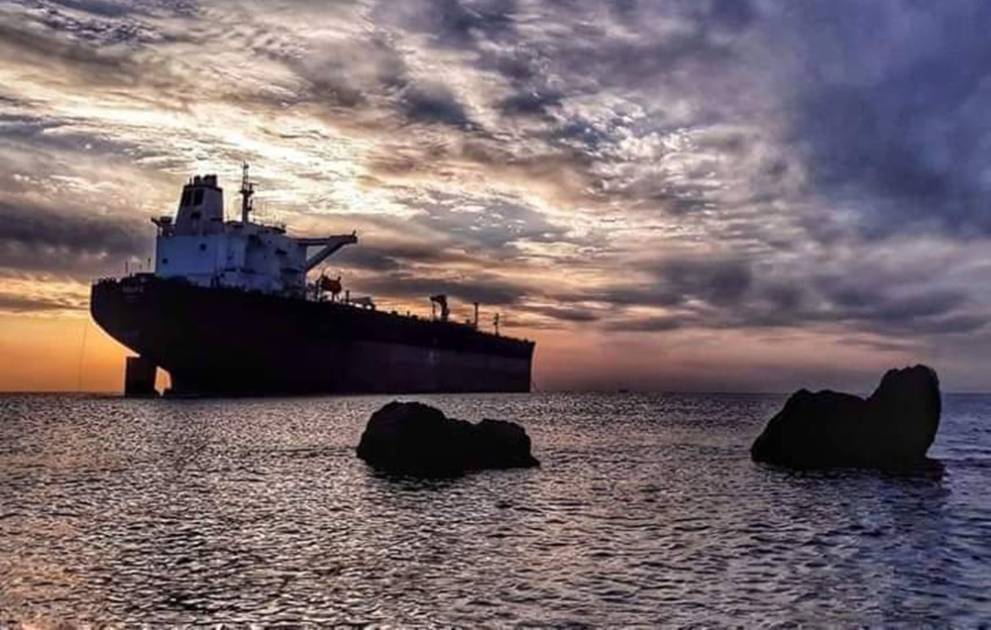
Despite EU sanctions targeting hundreds of tankers, Russia's shadow fleet continues operating, with Syria remaining a key destination. Attacks by Ukrainian drones have damaged numerous vessels, but Russia adapts by using flags of convenience, including Syria's, and maintains oil supplies to Syria, increasing by 75% in 2026. The fleet exploits loopholes in sanctions, using old ships and opaque ownership, while Europe struggles to curb its activity.
SummaryAlthough the European Union has expanded sanctions to include hundreds of tankers and imposed a ban on port entry and provision of maritime services to a large number of them, ships operating outside European ownership and insurance remain less affected by these measures. Some estimates indicate that more than 600 tankers have been placed on European sanctions lists, yet Russian flows have not stopped; rather, the network has become more diverse and complex.
It is not like any round of conventional battles, ship against ship, as in medieval naval wars. Instead, it is a heated battle raging in the Black Sea, where modern Ukrainian drone aircraft late on July 15 this year destroyed 20 vessels belonging to Russia's shadow fleet, including 17 oil tankers, two gas carriers, and one tugboat—a heavy toll on the hidden fleet.
Ukrainian forces had earlier announced on July 7 this year that their aircraft had attacked 12 tankers of the Russian fleet that were on their way to transport oil to Crimea. The Ukrainian drone weapon also targeted eight sanctioned ships in the Sea of Azov, each with a capacity of 7,000 tons, along with other scattered tankers, as part of intensifying attacks on Crimea and isolating it.
Meanwhile, the fleet is trying to circumvent these sanctions by all available means, including flying the Syrian flag in the Baltic Sea, as the Swedish capital Stockholm announced its suspicion of a ship named "Jin Hui" in early May. Swedish coast guards boarded and began an investigation into its seaworthiness, only to find that it was flying a forged flag due to several violations related to its flag status.
Geography Exam
"Every Russian ship that reaches Syrian ports says geography is stronger than sanctions," according to academic and Russian affairs specialist Dr. Samer Othman, pointing out that "Russia does not view sanctions as the end of the road, but rather as a reason to build a new road. And the world's need for energy is stronger than Western political decisions."
He added, "The United States and Europe may succeed in raising the cost of supplies or delaying some shipments, but they cannot cancel Syria's need for oil, nor can they erase Russia's position in the Eastern Mediterranean with a decision or a sanctions package. Syria can change its political direction, but it cannot change its geography or its economic needs. And Russia, unlike many Western powers, deals with Syria based on this fact, not slogans."
Othman also believes that "what the West calls the 'shadow fleet' is the maritime evidence of the failure of the isolation policy, because Russia has not disappeared from markets, but rather has moved outside the system that the West wanted to monopolize."
He asserts that "the change of power in Damascus did not remove Syria from Russian calculations, but rather redefined its position within them." In his view, "Russia does not build its international relations on ties with individuals and temporary governments, but on long-term strategic interests. For Moscow, Syria is not a passing detail, but a gateway to the Eastern Mediterranean and a key node in the regional trade, energy, and logistics system."
The academic reveals this fact with numbers, confirming "a 75% increase in Russian oil supplies to Syria during 2026, reaching about 60,000 barrels per day, making Russia the main external supplier of crude to Syria after Iranian supplies stopped. In contrast, Syrian domestic production does not exceed about 35,000 barrels per day, while the country's needs are estimated at up to 150,000 barrels per day. That is, Moscow is not providing Syria with a passing oil shipment, but is filling a major part of an energy gap that threatens the economy, services, and citizens' lives."
He continues, "In the past year 2025 alone, Russia sent to Syria about 350,000 tons of polar oil, approximately 2.6 million barrels, via tankers subject to Western sanctions, along with diesel shipments that helped restart the Banias refinery."
Although the European Union has expanded sanctions to include hundreds of tankers and imposed a ban on port entry and provision of maritime services to a large number of them, ships operating outside European ownership and insurance remain less affected by these measures (Independent Arabia)
Old Ships
Meanwhile, the "shadow fleet" operates through a network of old commercial ships and oil tankers adept at evading international oversight; these are unregistered vessels. These commercial ships are registered in a country other than that of the original owners and rely on evasion tactics to avoid revealing their routes.
Regarding the reasons for the emergence of the "shadow fleet," international relations researcher Mohammed Al-Haj Othman attributes it primarily to "the US and Europe imposing sanctions on Russia and Iran, which pushed them to bypass restrictions. These ships now operate under fictitious company names or in countries that offer complete secrecy regarding non-disclosure of ship ownership, providing an advantage for real owners to hide and conceal the true nature of their vessels, thus evading international oversight."
He said, "The oil sector for Russia is one of the important and main sources of revenue. Moscow benefited from the rise in global oil prices by pushing to increase its sales at prices above the set cap, leading to a 70% growth in the fleet in 2024. Average export revenues reached about $16.4 billion per month, giving Russia additional support to finance weapons production and the war in Ukraine."
Some estimates indicate that more than 600 tankers have been included on European sanctions lists, yet Russian flows have not stopped; rather, the network has become more diverse and complex (Independent Arabia)
Europe and Russia
Meanwhile, European countries are trying to limit the activity of the "shadow fleet" or reduce its ability to access ports, despite all the circumvention of imposed sanctions. In mid-June, the British Ministry of Defence stopped an oil tanker belonging to the same fleet called "Smertus" and towed it off the southern coast of England. British Prime Minister Keir Starmer said at the time, "This step is part of Britain and Europe's efforts to impose sanctions on the Russian shadow fleet that funds Putin's war in Ukraine."
Read more
Fire at a Russian fuel storage facility and Britain detains a vessel from the shadow fleet
European effort to issue a maritime declaration allowing inspection of the Russian 'shadow fleet'
The Russian 'shadow fleet'... a narrative of a declared breach of Western sanctions
Original source: Independent Arabia



Comments (0)
Be the first to comment.