The Artery of the Global Economy: Why Do Sea Lanes Dominate Trade?

Sea lanes and ports represent the lifeline of global trade, as the vast majority of goods pass through them. Learn about the reasons the global economy depends on these routes and their importance to Saudi Arabia.
When you look at a world map, you might see land as interconnected corridors, but in reality, the global trade network is primarily based on water. The vast majority of goods we use daily pass through giant ships sailing specific sea routes, known as straits and waterways. These routes are not just water paths; they are the arteries of the global economy that keep the wheel of trade turning.
For centuries, seas and oceans have been the main route for exchanging goods between nations, and with the development of the maritime transport industry, these routes have become more important than ever. So why do sea lanes monopolize this pivotal role? And what is the importance of straits and ports in maintaining the continuity of global supplies? This is what we will review in this article.
Maritime Straits: Strategic Chokepoints
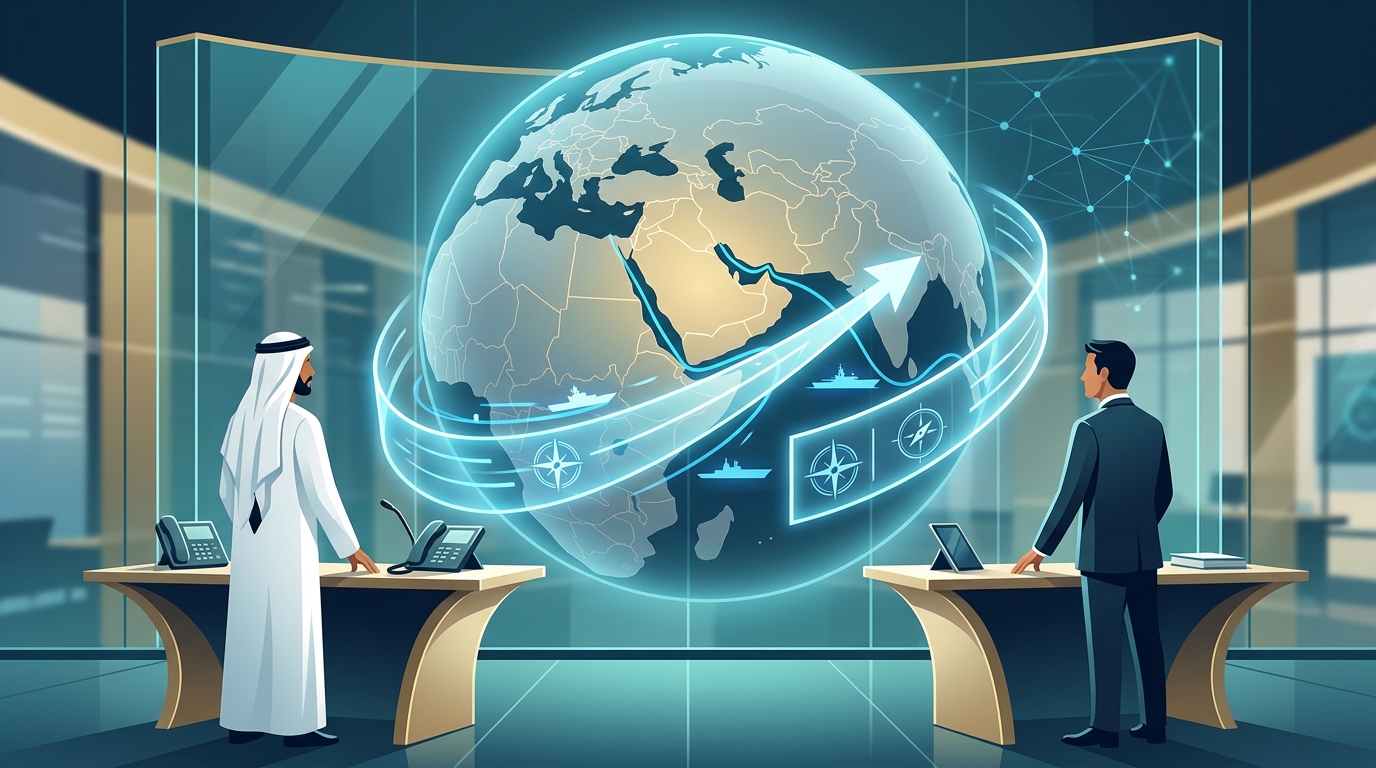
Maritime straits are narrow waterways connecting two large bodies of water, and they are mandatory transit points for ships crossing between oceans and seas. The most prominent of these straits are: the Strait of Hormuz in the Arabian Gulf, the Bab el-Mandeb Strait at the entrance to the Red Sea, and the Strait of Malacca in Southeast Asia. Vast quantities of oil, liquefied natural gas, and commercial containers pass through these points.
For example, it is estimated that about 30% of the world's oil passes through the Strait of Hormuz alone, making it a vital energy artery. Any disruption at this point, whether due to political tensions or accidents, can cause sharp fluctuations in commodity prices and disrupt global supplies. Therefore, major countries and naval powers maintain a military presence in these areas to ensure freedom of navigation.
Ports: Vital Logistics Hubs
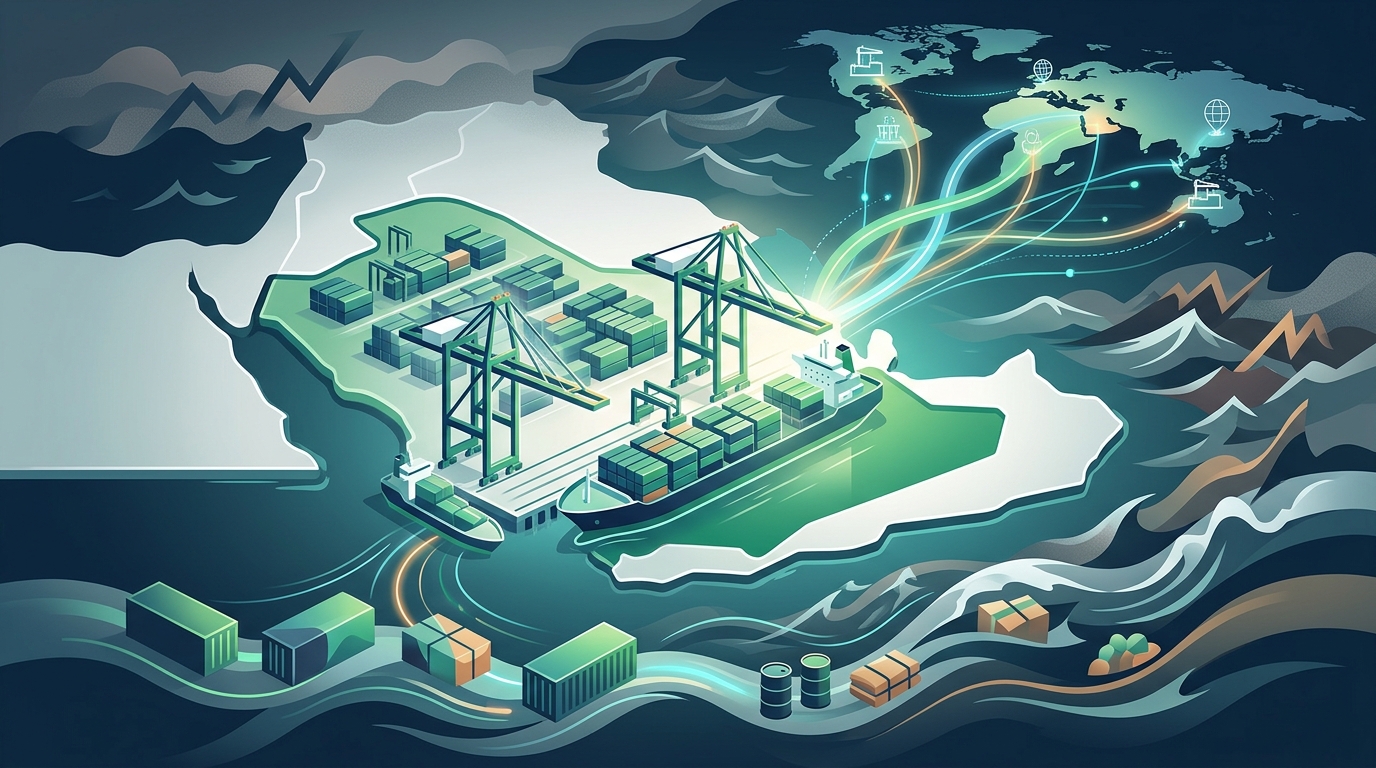
If straits are the arteries, then ports are the heart that pumps trade movement. Ports are not just docking points for ships; they are integrated centers for unloading, loading, storage, and transshipment. The Jeddah Islamic Port in the Kingdom of Saudi Arabia, King Abdullah Port, Dammam Port, and Ras Al-Khair Port are all examples of modern ports that handle millions of containers annually.
Ports have the ability to connect maritime transport with land transport through road and rail networks, allowing goods to be transported deep into continents. They also provide shipping, customs clearance, and distribution services, making them indispensable logistics hubs in global supply chains. Countries compete to develop their ports to be more efficient and faster, as this enhances their position as regional trade centers.
Why is Maritime Transport the Best Option?
Maritime transport is characterized by its ability to carry huge quantities at a low cost compared to air or land freight. A large container ship can carry the equivalent of thousands of trucks, significantly reducing the unit transport cost. This makes maritime transport the ideal option for non-perishable goods, raw materials, and manufactured products.
Moreover, the maritime transport infrastructure is global and interconnected, with networks of regular shipping lines connecting all major ports. With the emergence of giant container ships and modern information systems, shipping operations have become more efficient and can be tracked in real time. Furthermore, sea lanes do not require constant maintenance like land roads, although they are subject to weather conditions.
Challenges Facing Sea Lanes
Despite their importance, sea lanes face multiple challenges. First, geopolitical risks, as some straits witness regional conflicts or security threats such as maritime piracy in the Gulf of Aden off the coast of Somalia. Second, climate change may affect water levels in some routes like the Suez Canal or the Strait of Malacca, hindering navigation.
Additionally, congestion in some routes can cause delays, as happened in the Suez Canal when a ship ran aground in the past. Therefore, countries seek to develop alternative routes, such as the land transport project through Saudi Arabia linking the Gulf to the Red Sea, or expanding canals and passages. The biggest challenge is maintaining the security and safety of these routes to ensure the continued flow of global trade.
Sea lanes and ports have become the backbone of the global economy, as they enable the movement of goods and energy between continents at an appropriate cost and high efficiency. For the Kingdom of Saudi Arabia, which has the longest coastline on the Red Sea and the Arabian Gulf, investing in ports and securing vital routes such as Bab el-Mandeb and Hormuz is a strategic priority. Understanding the importance of these sea routes helps us appreciate the efforts of countries in maintaining their security and the importance of international cooperation to ensure the smooth flow of trade that serves all of humanity.

Comments (0)
Be the first to comment.