The US-Iran Agreement Through Gulf Eyes

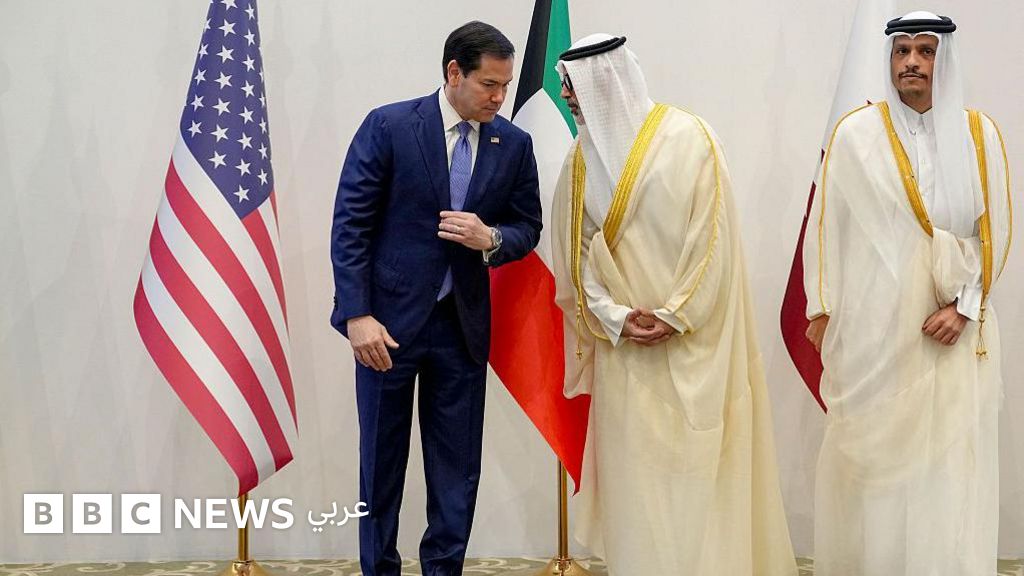
The Gulf-US ministerial meeting, held in the Bahraini capital Manama on Thursday 25 June of this year, and its discussion of the ongoing negotiations between the United States and Iran, reflects that the Gulf states do not view the memorandum of understanding as a bilateral matter between Washington and Tehran, but rather as a path whose results will directly impact the security, stability, and vital interests of the region. The preliminary understanding represents an important step towards de-escalation, ending military operations, and transitioning from a logic of confrontation to a path of negotiation, but its true value will be measured by its ability to evolve into a permanent agreement that addresses the root causes of the crisis and prevents its recurrence.
Hence, the Gulf welcome of the memorandum of understanding and support for the mediation and de-escalation efforts by Pakistan and Qatar does not mean being satisfied with stopping the war or waiting for the outcome of the negotiations. Rather, it underscores the importance of ensuring that any future arrangements take into account the interests of the Gulf states, restore freedom of navigation in the Strait of Hormuz to normal, enhance the security of the region and the world, respect the sovereignty of states and non-interference in their internal affairs, so that Gulf security is an integral part of the final agreement, not a subsequent result.
Thus, the important and essential question is not just what Washington wants from Tehran, or what Tehran seeks to extract from Washington, but what the Gulf states want from this agreement. These states, though not a direct party to the war, were at the heart of its security and economic repercussions because the region is the immediate arena where the effects of any agreement, whether success or failure, will manifest. Therefore, any sustainable settlement must view Gulf security as part of the core of the agreement, not a file postponed until after.
Therefore, the first of the Gulf demands is that the Gulf states be present in consultations related to the agreement and be informed of the negotiation tracks and developments, not as a matter of formal participation, but because any understanding between Washington and Tehran will have effects beyond the two parties, directly impacting Gulf security, freedom of navigation, energy markets, and regional stability. Regular consultation with the Gulf states and their participation in any meetings will not hinder the negotiation path but, on the contrary, will give it greater realism and ensure that future arrangements are formulated in a way that takes into account the interests of the states most affected by the repercussions of escalation. The Gulf states do not want the agreement to be a bilateral settlement that temporarily halts the war and leaves the concerns of neighbors unresolved, but rather a broader framework that places regional security at its core and makes stability a shared outcome, not an arrangement decided away from those who will bear its cost. We do not want a repeat of what happened with the nuclear agreement reached in 2015 under former President Barack Obama. Those negotiations took place between Iran and the P5+1 group, while the Gulf states were absent from the negotiating table, even though they were the closest geographically and most exposed to the repercussions of Iranian behavior in the region.
Consequently, the agreement was incomplete; it addressed one aspect of the nuclear file and left important issues more directly related to Gulf security—such as support for armed groups, regional interventions, and the development of ballistic missiles and drones—outside the scope of resolution. Hence, it was fragile and later faltered, because any agreement with Iran affects not only the international balance of power but also the security of the immediate neighborhood.
Freedom of transit through the Strait of Hormuz comes at the top of Gulf demands, as it is a vital artery for regional security and the global economy. What is required here is not just reopening the strait after its closure or threat, but ensuring that navigation remains normal, safe, and stable under all circumstances, and that it does not become a negotiating card or a tool of pressure used in every crisis.
The strait is an international passageway tied to the interests of Gulf states and the world, and its freedom must not be linked to any political talks, temporary arrangements, or exceptional restrictions. Therefore, any final agreement must clearly enshrine freedom of passage, regularity of ship, energy, and trade movement, and reject any attempt to impose unilateral control over it, or impose direct or indirect fees or financial arrangements that give Iran practical ability to control the passageway. The real danger lies not only in closing the strait once but in transforming its security from a fixed international right into a file open to bargaining and political blackmail.
There is also the threat related to Iran-linked armed groups, which remain one of the most prominent sources of concern for Gulf and regional security. We have seen how these groups can transfer tension and chaos from one arena to another, as happened in Lebanon, Syria, Iraq, Yemen, and other countries, and how missiles, drones, and military technologies have been transferred to these groups to threaten ports, vital facilities, the energy sector, and internal stability. Therefore, any serious agreement must include a clear commitment to halt the transfer of missiles, drones, and military technologies to them, and end the financial, logistical, and training support that enables them to continue as tools of pressure and threats to regional security.
The fourth demand concerns compensation for damages incurred by GCC states as a result of the recent war, a right guaranteed by principles of international law as an extension of states' rights to seek reparation for damages resulting from unlawful acts. These states were not a party to the war and did not support it, yet they were subject to Iranian targeting that caused security and economic damages, disruption of trade and energy movement, and increased risk to vital facilities. No settlement can open a new page of good neighborliness while ignoring the cost borne by Gulf states in their security, stability, and vital interests. Addressing these damages should not be seen as an obstacle to peace but as part of acknowledging harm, establishing responsibility, building trust, and preparing a more stable environment for relations based on good neighborliness and respect for sovereignty.
Finally, what the Gulf states want from any agreement with Iran is simple and clear: building a broader framework for peace and good neighborliness based on respect for sovereignty, rejection of interference, preservation of regional security, its waterways, and vital interests, and making it a genuine agreement that addresses the root causes of the crisis and opens the door to a more balanced relationship based on shared interests, economic and security cooperation, and investment in opportunities that serve the peoples of the region. Thus, Gulf security must not be a marginal issue in any settlement, but rather a foundation of its principles and a guarantee for regional stability and a transition from crisis management to building peace and prosperity.
Original source: Asharq Al-Awsat

Comments (0)
Be the first to comment.