"Three indicators show Putin's readiness to escalate confrontation with Europe"
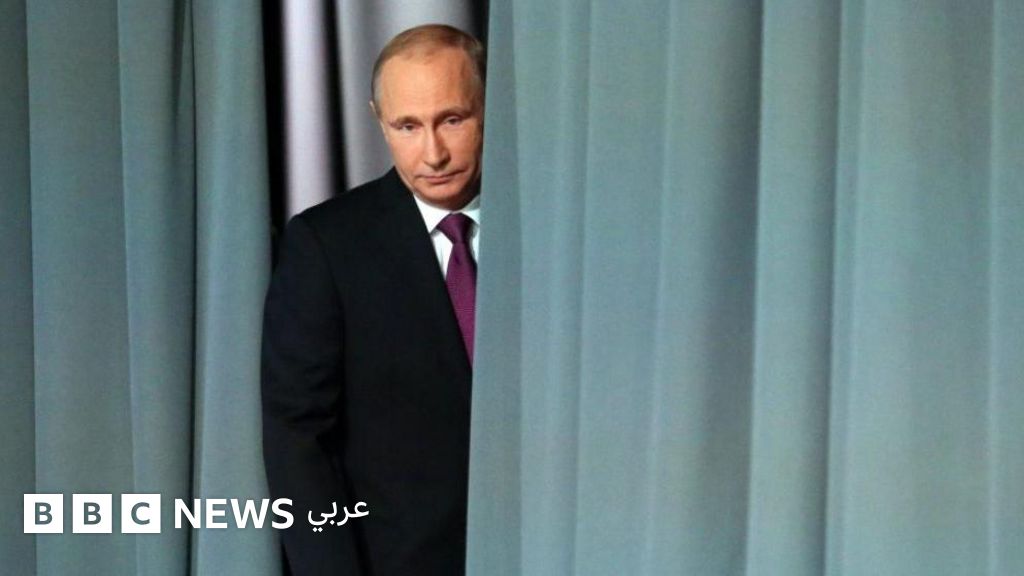
Selected British newspapers on Sunday discuss a potential escalation between Putin and Europe, the role of football in reshaping power dynamics away from politics and corruption, and the debate over reasons for the rise in diagnosis of mental disorders among young people and changing societal views on mental health.
"Three indicators show Putin's readiness to escalate confrontation with Europe" - article in The Independent
Published 2 hours ago
Reading time: 5 minutes
In Sunday's newspaper roundup, we review opinion pieces from British newspapers analyzing the extent of the Russian threat expanding to Europe, discussing the triumph of democracy over power and corruption in football, and the deterioration of mental health among young people.
We begin with an article in the British newspaper The Independent, titled "Three signs that a desperate Putin is about to launch a violent attack on Europe," by writer Robert Fox.
The writer discusses the Russian-Ukrainian war moving to a new phase, where strikes are no longer concentrated on ground fronts but rely heavily on air attacks, especially drones and missiles, including Iskander-M and Kinzhal missiles.
He warns of the danger of a shortage of Ukrainian air defense systems, including Patriot missiles, the only ones capable of shooting down this type of Russian missiles.
He points out that Russian President Vladimir Putin sees a "golden opportunity" to make gains due to "the confusion of the squabbling NATO powers, Donald Trump's distracting statements, the stalemate in the Gulf and the Middle East, and the weakness of Kyiv's air defenses."
Russian missile and drone attack on Kyiv
At the same time, the writer praises Ukrainian defensive capabilities, saying that Ukraine largely maintains its position on the front lines of the ground war and inflicts heavy human losses on Russia, according to him.
He notes that Ukraine is escalating its long-range missile strikes on Russia, having targeted three major oil refineries in Slobodka, the city of Yaroslavl, and Russia's largest refinery in Omsk.
Ukraine strikes a major oil station in the Russian city of St. Petersburg
He asserts that the Russian economy "is deteriorating noticeably," citing "gasoline queues and internet and mobile phone outages."
Skip most read and continue reading
Qatar announces death of its former Emir Sheikh Hamad bin Khalifa Al Thani
Tehran targets 'military sites' in the Gulf and Jordan, and the US military strikes about 140 'military targets' in Iran
Why do mosquitoes bite some people more than others?
Syria gives Trump a way to bypass the Strait of Hormuz – article in The Telegraph
He adds that Putin may be forced into a broader military mobilization if the war continues, "to enlist at least 500,000 new soldiers, accompanied by a declaration of martial law."
The writer warns of the Russian threat expanding to Europe, referring to Russian maneuvers in the Norwegian Sea, North Sea, Irish Sea, and English Channel, in addition to evacuation plans in the Baltic states. He says: "There is a growing sense of the war leaking from Ukraine to the entire region."
He calls on the British government and NATO countries to reconsider their defense plans and increase investment in air and naval defense, and to prepare for the possibility of greater escalation.
"Despite Trump and Infantino, the World Cup remains an inspiration"
Skip podcast and continue reading
Worth paying attention to
In-depth explanation of the most important events and topics, to help you understand the key changes around you and their impact on your life
Episodes
End of podcast
We move to an article in the British newspaper The Guardian, titled "The World Cup has turned the old world order upside down, and despite Trump and Infantino, it remains an inspiration," by writer Simon Tisdall.
The writer uses the World Cup to discuss the political situation in countries, power, and democracy.
As for Trump, the writer says that the United States losing to Belgium despite Trump's intervention to cancel a red card for American player Folarin Balogun represents "a victory for justice."
He adds that "Trump has not grasped the immense power of football, which far exceeds his personal power; in this tournament, small countries can have a voice."
He continues: "The World Cup upends traditional geopolitical power dynamics in inspiring ways, where small countries like Cape Verde and Curaçao can compete with major powers," not to mention major countries that did not even qualify for the tournament, such as China, India, Indonesia, and Nigeria.
He sees this tournament as a temporary outlet for the world's population amid unprecedented levels of military and geopolitical conflicts.
World Cup: Argentina and England struggle to the semi-finals, completing the golden square
The writer praises the ethnic and cultural diversity within the teams, considering this diversity "the best response" to the nationalist and anti-immigration rhetoric of Donald Trump, British politician Nigel Farage, and others.
He criticizes the "unjustified" exclusion, in his view, of Somali referee Omar Artan by the United States, the harassment faced by the Iranian team, and the racist remarks directed by a Paraguayan senator at French star Kylian Mbappé.
The writer attacks FIFA President Gianni Infantino and accuses him of pursuing money and power. He also accuses FIFA of "favoring" major countries and stars like Messi in the match between Argentina and Egypt, according to the article.
In conclusion, the writer uses football as a metaphor for the world and hopes the tournament leads to a greater distribution of influence and opportunities, both in sports and international politics.
"What is really happening with mental health?"
We conclude our roundup with an article in the British newspaper Financial Times by writer John Burn-Murdoch, titled "What is really happening with mental health?"
The writer discusses "the deterioration of mental health among young people," noting a rise in reported and diagnosed anxiety disorders, autism, and attention deficit hyperactivity disorder, as well as a sharp increase in the proportion of people reporting a problem.
He also links the high level of psychological distress among young people to increased hospital admission rates for self-harm among adolescent girls and young women.
However, he points out that current data does not allow for an accurate understanding of the scale of the problem or its causes, given that methods of measuring mental health, as well as ways people express their suffering, have changed.
He says some studies show a large increase in the diagnosis of mental illnesses, but the proportion of people who say a mental health problem restricts their daily performance has barely changed.
The writer offers an explanation for this rise in diagnosis: the old, inflexible frameworks in workplaces, education systems, and social welfare have forced those with any level of need to be classified into only two categories: a person with a disability or a person not so classified.
Meanwhile, he argues that young people today are more inclined to consider feelings of anxiety, frustration, and low self-confidence as part of mental disorders compared to older generations, due to the decline of "social stigma" and increased awareness of mental health.
Original source: BBC Arabic


Comments (0)
Be the first to comment.