Trump Threatens Tehran and Houthis with Military Punishment for Red Sea Attacks
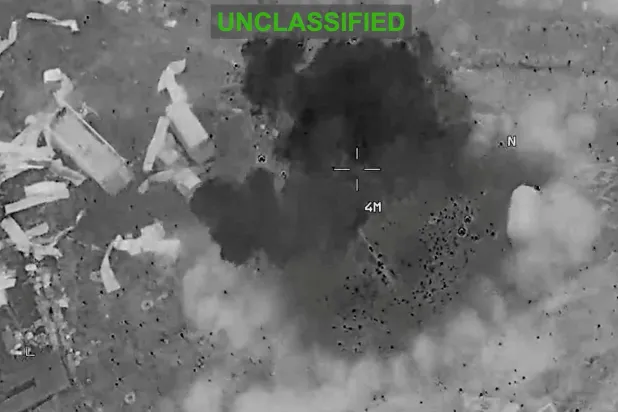
US President Donald Trump affirmed imposing a major military punishment on Iran and the Houthis, coinciding with continued US raids and regional mediation efforts.
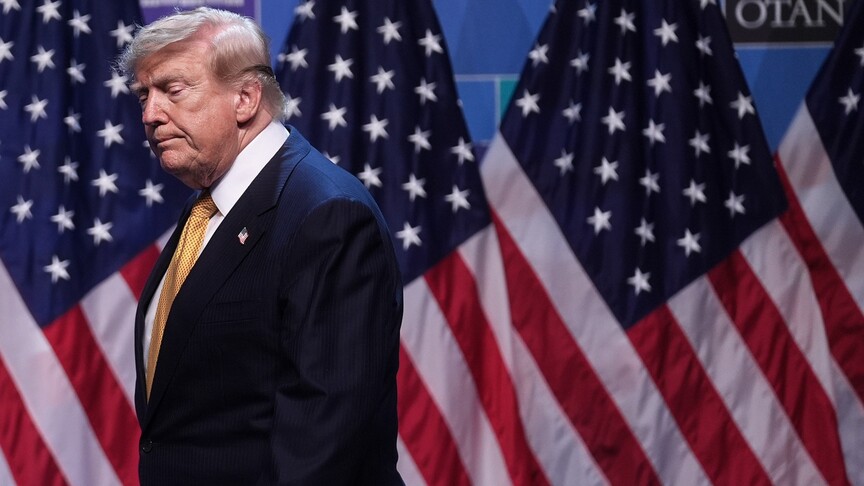
US President Donald Trump warned Iran and the Houthis in Yemen yesterday (Thursday), threatening them with 'major military punishment' over the targeting of commercial ships in the Red Sea, as US military operations continue inside Iranian territory and around the Strait of Hormuz.
These escalating field developments come amid widespread regional tensions over international shipping lanes in the Middle East.
Trump said Washington would hold Tehran responsible for Houthi attacks, while Secretary of State Marco Rubio said Iran 'deceived' the group and dragged it into war, and that the administration's policy is based on 'eye for an eye.'
In the military and political context, Iranian Foreign Minister Abbas Araghchi responded, clarifying that his country's military strategy is based on the principle of 'an eye for an eye,' and warning that any attack on Iranian infrastructure would be met with firm deterrence.
While mediation efforts to restore calm falter, Iraqi government spokesman Haider al-Aboudi told Asharq Al-Awsat that 'Prime Minister Ali al-Zaidi, during his visit to Tehran yesterday, carried an initiative aimed at achieving stability in the region, including de-escalation.'
Field reports indicated the entry of a US B-1 strategic bomber into the front line to target sites inside Iran for the first time since the confrontation renewed, accompanied by the Pentagon reinforcing its military presence in the region by sending fighters, refueling aircraft, and additional forces, in addition to keeping long-range bombers at a high state of readiness.
Iran's Revolutionary Guard threatened to target European bases, particularly those in Britain, used against Iran. It said it would no longer allow Washington to exploit a 'deceptive ceasefire' to replenish its fuel and ammunition stocks and then resume its attacks.
Britain said its armed forces are on standby to defend the country against any attack.
In Washington, the Senate blocked a resolution to restrict Trump's powers, after the House approved a $95 billion budget, most of it for war-related operations.
Read also
The region is witnessing escalating tensions that threaten to expand the confrontation between the parties involved, amid faltering diplomatic efforts and international attempts to de-escalate. Vital waterways, especially the Red Sea and the Strait of Hormuz, play a pivotal role in global trade, making any military escalation there a focus of intense attention and a source of ongoing international concern. Washington and its allies continue to assess the military and security situation to confront potential threats, while diplomatic and legislative positions within Western institutions vary regarding the management of this open conflict.
Original source: Asharq Al-Awsat

Comments (0)
Be the first to comment.