Typhoon Bavi Forces Two Million People to Evacuate Homes in China

Around two million people have been forced to evacuate their homes in China as Typhoon Bavi approaches, after sweeping through Taiwan and several Japanese islands on Saturday, leaving thousands of homes without power.
In eastern Zhejiang province, more than 1.7 million people were evacuated, according to official media, as the typhoon is expected to make landfall there on Sunday morning.
Classes, work, transportation, and outdoor activities have been suspended, and more than 400 flights and dozens of trains in the province have been canceled.
The government of Wenzhou, a city of about 10 million people in Zhejiang province, said in a statement that 'this massive mobilization... is only aimed at preparing for the worst-case scenario.'
Residents are preparing by reinforcing shop doors and windows. Typhoon Bavi is expected to bring 'very heavy rain' to the eastern provinces of Zhejiang and Fujian, according to state broadcaster CCTV.
Additionally, more than 130,000 people were evacuated in Fujian, and another 34,000 in coastal areas and high-risk zones in Shanghai.
Further north in Beijing, more than 100,000 people were forced to evacuate due to heavy rain, according to the capital's authorities.
Severe weather has caused destruction in southern and central China this week, with storms killing at least 39 people, causing dozens of rivers to overflow and destroying a dam.
In Taiwan, more than 14,000 people were forced to evacuate, and many stores closed as Typhoon Bavi approached.
Hundreds of flights canceled
Hundreds of flights were canceled and power was cut off to more than 170,000 homes on the island.
Tsai, who owns a breakfast restaurant, told AFP: 'Everyone is afraid of the bad weather and staying home. I only went out because I have orders to deliver.'
Tsai, who works in the coastal city of Keelung which has been severely affected by the bad weather, added: 'Some people have to work and have nothing to eat, so I still have to deliver food to them.'
Downgraded
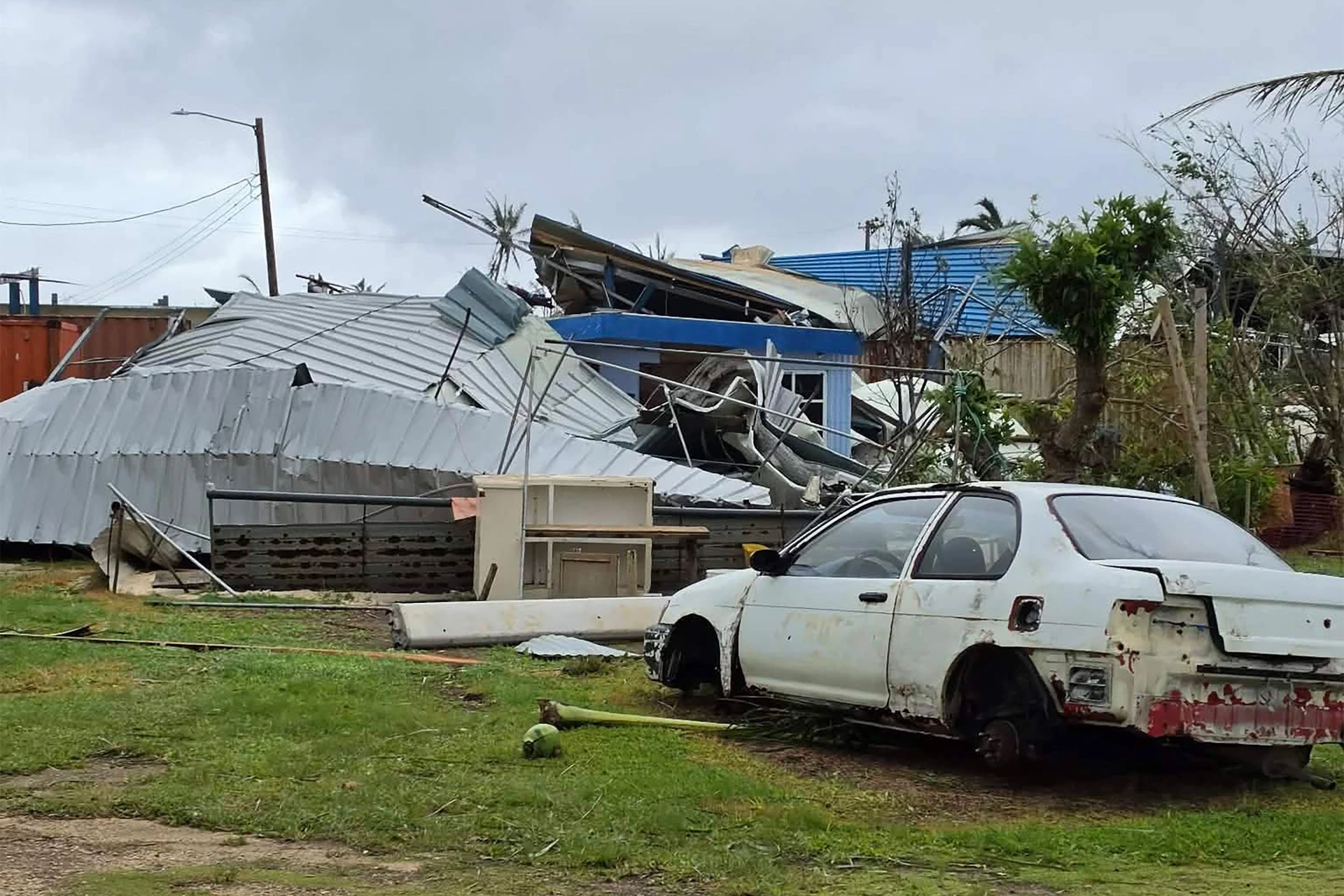
After causing massive destruction in Guam and the Northern Mariana Islands when it was classified as a super typhoon, it has been downgraded to a regular typhoon.
Taiwan's Central Weather Administration announced on Saturday that Typhoon Bavi's maximum wind speed had dropped to 137 kilometers per hour, confirming that the storm was beginning to weaken.
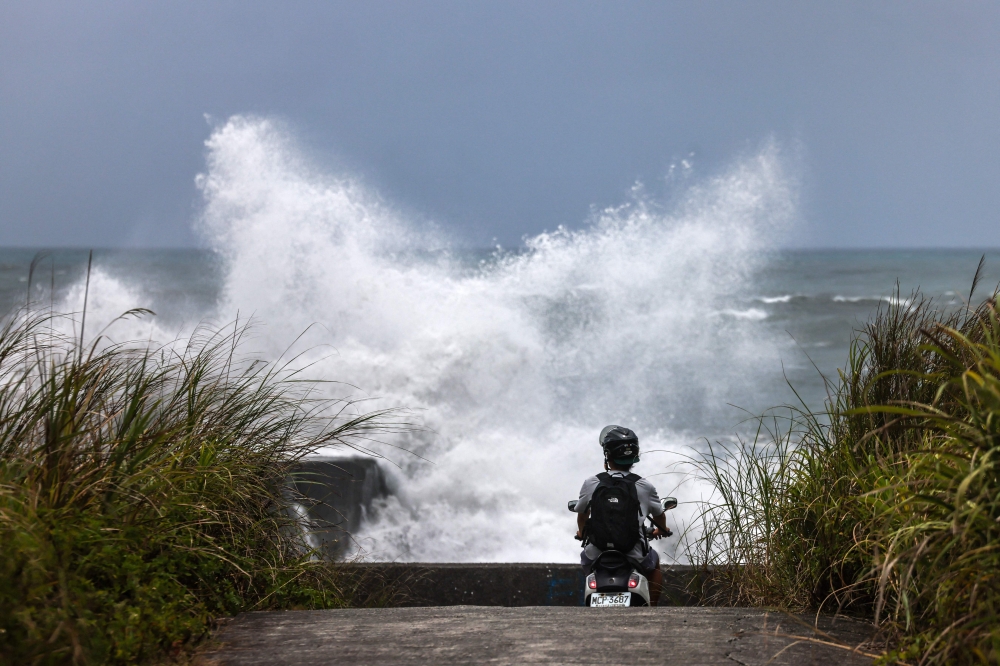
It forecast very heavy rain in the north of the island and rough waves that could reach up to 10 meters in height.
Jason Cheng, an expert at the Central Weather Administration, said the typhoon is expected to hit the island with force from 'noon until late afternoon.'
He noted that Typhoon Bavi, which had been expected to be the largest typhoon to hit Taiwan in 30 years, has seen its range of violent winds shrink.
Ocean warming causes tropical storms to become more intense and increases humidity, leading to heavy rainfall.
Death toll rises
In the Philippines, the death toll from landslides and other incidents caused by heavy rain rose from 15 to 18, with most occurring on Mindanao island.
About 11,000 people were evacuated from their homes, while dozens of ports remain closed across the archipelago.
In Japan, power was cut off to more than 18,000 homes on Okinawa island, and dozens of flights were canceled.
But in Taiwan, some residents do not hide their frustration with government warnings that forced many shops to close
their doors.
Lee, another breakfast restaurant owner in Keelung, said: 'The statements from the government make it seem terrifying, they cause panic among everyone.'
For his part, Kang Yu-chen, 19, who works at a small shop in New Taipei, said: 'It's just like a normal rainy day.'
Advertising material
Advertising material
Original source: Al Arabiya


Comments (0)
Be the first to comment.