Ukrainian Prime Minister Resigns Under Zelenskyy's Government Reshuffle
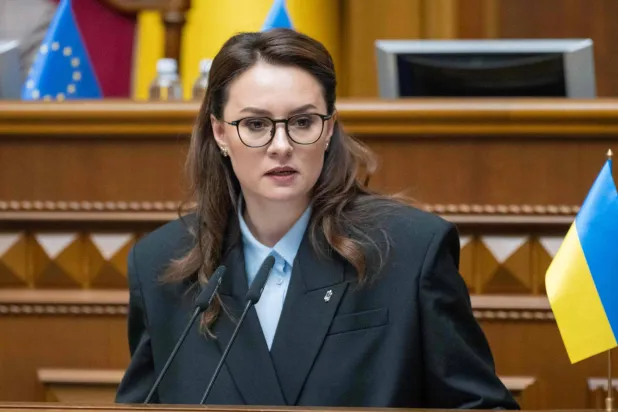
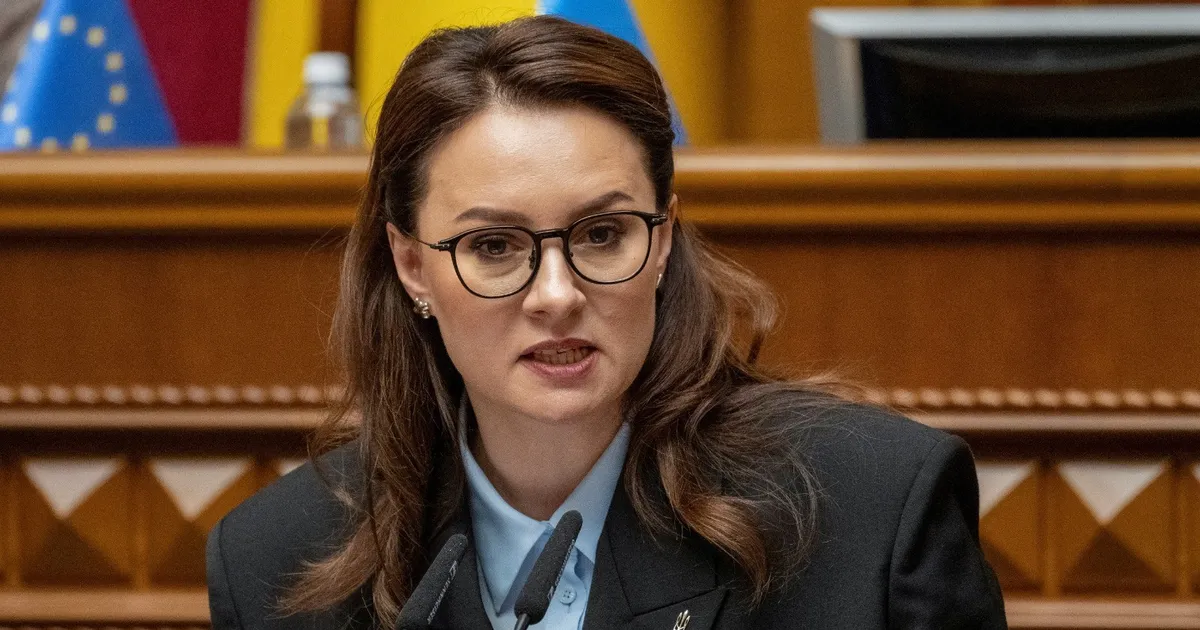
Ukrainian Prime Minister Yulia Svyrydenko resigned on Tuesday as part of a government reshuffle ordered by President Volodymyr Zelenskyy.
The Kremlin launched a strong attack on Europeans, stating that the decisions of the 'coalition of the willing' to provide security guarantees to Ukraine without Russia's participation put the European continent outside any political settlement of the conflict. Russian Presidential Spokesman Dmitry Peskov said that 'providing security guarantees to Ukraine without Russia is impossible.'
Commenting on statements by German Chancellor Friedrich Merz, who opposed Moscow's inclusion in this process, the spokesman said: 'This statement shows the depth of the impasse reached by the European position. If they insist on that, their participation in the settlement process is completely excluded.'
French President Emmanuel Macron and Ukrainian President Volodymyr Zelenskyy on the Champs-Élysées (AFP)
The Russian Foreign Ministry preceded this comment on the German position by accusing Germany of directly engaging in military operations against Russia. It summoned Ambassador Alexander Lambsdorff and informed him that 'Berlin's participation in Kyiv's attacks on Russian civilian targets is unacceptable.' It indicated that 'this is not limited to arms supplies and bilateral agreements, but also includes the production of reconnaissance and attack drones, anti-aircraft missiles, and RPG shells.' The Kremlin saw that 'in general, Germany's involvement in the conflict is increasing.'
Moscow intensified its rhetoric toward Berlin and several European capitals after the NATO summit last week and following the meeting of the 'coalition of the willing' in Paris, which approved a mechanism to strengthen security guarantees for Ukraine in the face of ongoing Russian missile attacks.
French and Ukrainian presidents before the start of the 'coalition of the willing' meeting in Paris on Monday (Reuters)
NATO adopted a declaration allocating 70 billion euros in military aid to Ukraine for this year and next. Germany expressed its readiness to make the largest individual contribution among alliance members.
At the same time, on the sidelines of the summit, Berlin and Kyiv signed an agreement on the joint production of drones. This came in the context of a tangible shift in the US position on arming Ukraine. US President Donald Trump promised his Ukrainian counterpart Volodymyr Zelenskyy during a meeting on the sidelines of the NATO summit to grant Kyiv a license to manufacture Patriot missiles, which Kyiv desperately needs. Media later reported that the assembly of these missiles will take place in Germany, not Ukraine.
In the same context, Peskov criticized Britain after it imposed a new package of sanctions against Moscow. The spokesman said that his country 'has adapted to tens of thousands of sanctions and learned how to circumvent them.'
French President and British Prime Minister during the 'coalition of the willing' summit to support Ukraine in Paris on Monday (AFP)
London announced on Monday a new wave of sanctions targeting 23 Russians, including individuals and entities accused of engaging in undesirable cyber activities. Peskov told journalists: 'We have adapted to tens of thousands of sanctions imposed on our country. We have learned how to circumvent these sanctions and how to reduce their negative effects. We will continue to do so.'
In this context, the head of the State Duma's International Affairs Committee accused the 'coalition of the willing' of inflaming the situation and taking 'a new step toward escalating the Ukrainian conflict' after the meeting announced the formation of a coalition against ballistic missiles.
Leaders of Denmark, France, Germany, Italy, the Netherlands, Norway, Spain, Sweden, the United Kingdom, and Ukraine announced the formation of the coalition as part of guarantees for the security of Ukraine and the European continent. Slutsky, head of the State Duma's International Affairs Committee, said that 'the formation of this coalition confirms the intention to undermine negotiations.'
French President Emmanuel Macron and Ukrainian President Volodymyr Zelenskyy on the Champs-Élysées (AFP)
He added: 'The Paris meeting only confirmed the intention to undermine the negotiation process and continue the proxy war to the last Ukrainian. But as President Vladimir Putin said, Russia will undoubtedly achieve final victory.' Peskov described the coalition as a 'meeting of warmongers' and said it includes a group of countries that do not want peace.
In turn, Russian Foreign Minister Sergey Lavrov said that Moscow sees 'arms supplies to Ukraine as hindering a settlement and directly involving NATO countries in the conflict,' and warned Europe again against 'playing with fire.' Lavrov noted that 'any arms shipments to Ukraine will be a legitimate target,' and accused Europe and Ukraine of 'trying to distance the United States from the understandings reached during the Russian-American summit in Alaska.'
Cars queuing for fuel at a Rosneft station in Moscow on June 30, 2026 (AFP)
He said on Tuesday during a joint press conference with his Chadian counterpart Abdallah Sabri Fadil that the European and Ukrainian sides 'are making efforts to undermine the path that began after the (Russian-American) summit and trying to change Washington's position on the understandings reached.'
Lavrov added that the European and Ukrainian sides were not party to those understandings but are trying to influence Washington's position and prevent the continuation of the path that began after the meeting, noting that Trump praised the understandings reached after the Alaska summit and said the process had begun. He pointed out that Europe and Ukraine then declared that the agreements did not concern them because they were not parties, considering that subsequent steps aim to distance the United States from implementing these understandings.
Smoke rising from an oil refinery after a Ukrainian drone attack in Moscow on June 18, 2026 (Reuters)
The European Union on Tuesday opened a second chapter of membership negotiations with Ukraine, as Kyiv continues to push to accelerate its accession efforts to the bloc. The step comes after the 27-nation bloc officially launched the first phase of membership talks with Ukraine last month after a long delay due to Hungarian opposition.
On Tuesday, EU ministers for European affairs began meetings in Brussels with their Ukrainian counterpart to launch negotiations on all six 'clusters' by the start of the summer holidays in Europe.
Smoke rising after a Ukrainian drone attack on an oil refinery in Moscow on June 18, 2026 (Reuters)
In a related context, a new spat emerged in relations between Moscow and Baku, which had experienced several shocks in recent periods. Azerbaijan's President Ilham Aliyev's announcement of his country's commitment to supporting Ukraine's unity and sovereignty caused displeasure in Moscow. The Kremlin said that 'Baku's positions on Ukraine differ from Moscow's position and are a matter of disagreement between the two sides.'
Nevertheless, the Russian presidential spokesman was keen to stress that this disagreement 'does not cast a shadow on bilateral relations between Russia and Azerbaijan.'
Peskov said: 'There are a number of countries with which we have close relations and share our positions, but this is a position we fundamentally disagree with, and it is indeed a point of contention between us.'
Original source: Asharq Al-Awsat


Comments (0)
Be the first to comment.