US, Russian astronauts launch into orbit for joint space mission

NASA chief Jared Isaacman made a rare visit to the Russia-operated Baikonur Cosmodrome to witness the launch.
This report was prepared by Berkman Center and The Associated Press.
Space cooperation between the United States and Russia has remained a rare area of collaboration despite geopolitical discord.
Published On 14 Jul 202614 Jul 2026
A collaborative US-Russian space mission launched from Kazakhstan on Tuesday, heading for the International Space Station—a testament to an enduring partnership amid strained relations over the Ukraine war.
Russia’s Soyuz MS-29 spacecraft, carrying Russian astronauts Pyotr Dubrov and Anna Kikina along with NASA colleague Anil Menon, took off Tuesday morning from the Russia-operated Baikonur spaceport in Kazakhstan.
Recommended Stories
list of 3 items
- list 1 of 3Nine dead as Russia and Ukraine trade drone and missile salvos
- list 2 of 3EU sanctions nine people over alleged Russian cyber-spying campaign
- list 3 of 3Russia-Ukraine war: What is Europe’s new ballistic missile shield plan?
end of list
The crew successfully entered orbit and are scheduled to dock at the ISS, where they will stay for eight months, at 17:56 GMT.
NASA Administrator Jared Isaacman attended the liftoff, the first visit to Baikonur by a NASA chief in eight years.
Before the launch, Isaacman met Dmitry Bakanov, the head of Russia’s state corporation for space activities, Roscosmos.
During a meeting with the crew on Monday, Isaacman thanked Roscosmos for its efforts to prepare for the mission, saying that “the integrated work performed over the past several months reflects the professionalism and dedication of everyone involved”.
The mission is Menon’s first space flight and the second for Dubrov and Kikina.

The trio will join NASA astronauts Jessica Meir, Jack Hathaway and Chris Williams, European Space Agency astronaut Sophie Adenot and Roscosmos astronauts Sergei Kud-Sverchkov, Sergei Mikaev and Andrei Fedyaev.
Once bitter rivals in the space race during the Cold War, Russia and the US cooperate on the space station and other projects. That relationship was marred by tensions after Moscow sent troops into Ukraine in 2022, but Washington and Moscow have continued to work together, with US and Russian crews flying to the orbiting outpost on each country’s spacecraft.
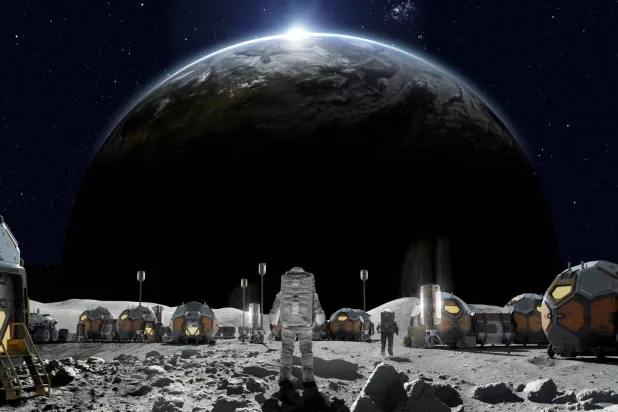
Plans for broader cooperation, including possible Russian involvement in NASA’s Artemis programme of lunar research, have fallen apart. As Russia has become increasingly reliant on China for its energy exports and imports of key technology amid Western sanctions, Roscosmos has started cooperation with China on its prospective lunar mission.
The mission underscores the continued reliance on Russian Soyuz spacecraft for crew transport to the ISS, even as NASA works with commercial partners. The presence of NASA's administrator at Baikonur signals a renewed diplomatic engagement in space. As the war in Ukraine persists, such joint missions demonstrate that scientific cooperation can transcend political divides.
Original source: Al Jazeera




Comments (0)
Be the first to comment.