US Sanctions Target Muslim Brotherhood Leaders and Entities... What Are the Repercussions for the Organization?
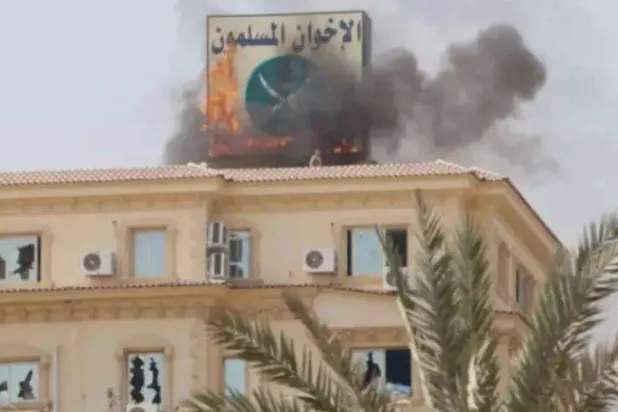
Pressure mounts on the Muslim Brotherhood organization as a new US decision imposes sanctions on a prominent leader of the group in Britain and affiliated entities.
Pressure is mounting on the Muslim Brotherhood organization with a new US decision imposing sanctions on a prominent leader of the group in Britain and affiliated entities, as part of Washington's latest efforts to tighten the noose on the group, which is classified as 'terrorist' in many countries.
A researcher in extremist group affairs, speaking to Asharq Al-Awsat, believes that these sanctions are consistent with previous US decisions that targeted the organization and some of its branches in the region, and that adding the secretary-general of the organization and the head of the financial network to the sanctions lists means more siege and confrontation, affecting the organization's movements and activities.
New Sanctions
The US Treasury Department announced sanctions on individuals, most notably the prominent leader of the international organization of the group and the head of the financial network of the Muslim Brotherhood, Mahmoud Al-Ibyari, a resident of the United Kingdom, and affiliated entities in Indonesia, Turkey, and Gaza, on charges of providing financial and logistical support to Hamas.
The department, in a statement on Thursday, accused them of 'working to raise funds and support institutions that Washington had previously sanctioned due to their links to Hamas, and diverting donations collected for civilians to military activities.'
These sanctions, according to the US Treasury, lead to 'freezing all assets and properties belonging to the listed individuals and entities within the United States or under the control of US persons, along with a ban on conducting any financial transactions with them, in addition to the possibility of imposing secondary sanctions on foreign financial institutions that deal with them.'
Trump delivers a speech in the Oval Office with Vice President JD Vance and Secretary of State Marco Rubio at the White House on April 23 (Reuters)
Researcher specializing in extremist group affairs, Munir Adib, in an interview with Asharq Al-Awsat, believes that 'the US decision is of great significance and importance, especially since Al-Ibyari holds the position of Secretary-General of the International Organization (the highest supreme body of the organization) and also manages the global financial network of the group.'
Adib suggests that 'the decision will significantly affect the situation and movements of the organization and the financial networks of the group, as money is a main nerve for activities and events,' noting that the US in its confrontation with the Brotherhood aims to weaken Hamas, which is ideologically affiliated with the group.
Adib points out that the decision is consistent with previous US decisions that targeted the organization and its branches in the region, and that adding the Secretary-General of the organization and the head of its financial network to the sanctions lists means more siege and confrontation.
Continued Sanctions
These measures come as part of a series of sanctions and Western moves, the latest in May 2026, with the administration of US President Donald Trump unveiling a new national counterterrorism strategy that focused in its core on the Muslim Brotherhood as the ideological source of modern 'jihadist terrorism.'
This was preceded in January by Washington's designation of the Muslim Brotherhood in Egypt, as well as its branches in Jordan and Lebanon, as 'terrorist organizations,' followed in March by placing its branch in Sudan on the same list.
Also, a majority in the French Parliament in January approved a call for the European Commission to add the Muslim Brotherhood and its leaders to the list of terrorist organizations, while the Dutch Parliament in March approved a proposal calling for a ban on the Muslim Brotherhood and affiliated organizations, though not yet implemented.
Adib believes that this new sanction and the previous measures represent a blow that could be painful for the organization and its organizational financial networks, noting that the continuation of sanctions marks a Western turning point, especially American, in confronting the terrorist group in Egypt.
He asserts that the Muslim Brotherhood organization is 98 years old, with only two years left until the end of its first century and perhaps the last century of the organization's life, amid Arab confrontation, whether in the country of origin Cairo or in a number of Arab countries, in addition to the United States and European countries entering the line.
"); googletag.cmd.push(function() { onDvtagReady(function () { googletag.display('div-gpt-ad-3341368-4'); }); }); }
Original source: Asharq Al-Awsat




Comments (0)
Be the first to comment.