Venezuela Earthquakes: Rescue Operations Continue, Death Toll Expected to Rise
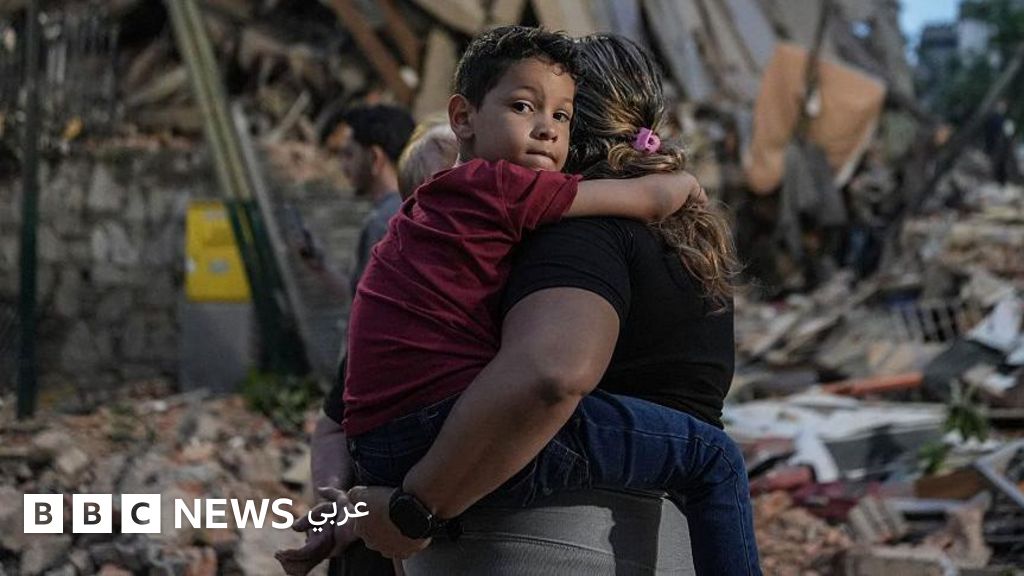
Search and rescue operations continue in Venezuela after the two devastating earthquakes, as the death toll rises to 1,450 and hopes of finding survivors dwindle.
Venezuela Earthquakes: New Aftershock Hits Caracas as Rescue Efforts Continue
Published 29 June 2026
Reading time: 4 minutes
The walls surrounding hospitals in Caracas are gradually filling with photos of the missing, as families search for any information that might lead them to their loved ones.
A BBC News correspondent in the Venezuelan capital reported that the morgue in Caracas is under severe pressure, as bodies continue to arrive without sufficient space to keep them until they are identified and returned to their families.
Search and rescue operations are ongoing in several areas, with more relief teams arriving in the country daily from different parts of the world, amid a severe shortage of equipment and manpower needed to search the rubble for survivors.
An aftershock measuring 4.6 magnitude struck the area off the coast of Caracas on Monday morning, at a depth of ten kilometers, according to the United States Geological Survey (USGS).
The quake was widely felt by residents, but acting Venezuelan President Delcy Rodríguez said there were no immediate reports of additional damage.
Hundreds of aftershocks have been recorded in Venezuela since the two earthquakes of magnitudes 7.2 and 7.5. The Venezuelan Foundation for Seismological Research said it continues to regularly detect new tremors, though many are below magnitude 3 and are not usually felt by residents.
Aftershocks occur as parts of tectonic plates readjust to changes in pressure levels after the main earthquake. The USGS says shallow earthquakes, like the two that struck Venezuela, are more likely to be followed by aftershocks, which could pose a risk to rescue teams and buildings with damaged structures.
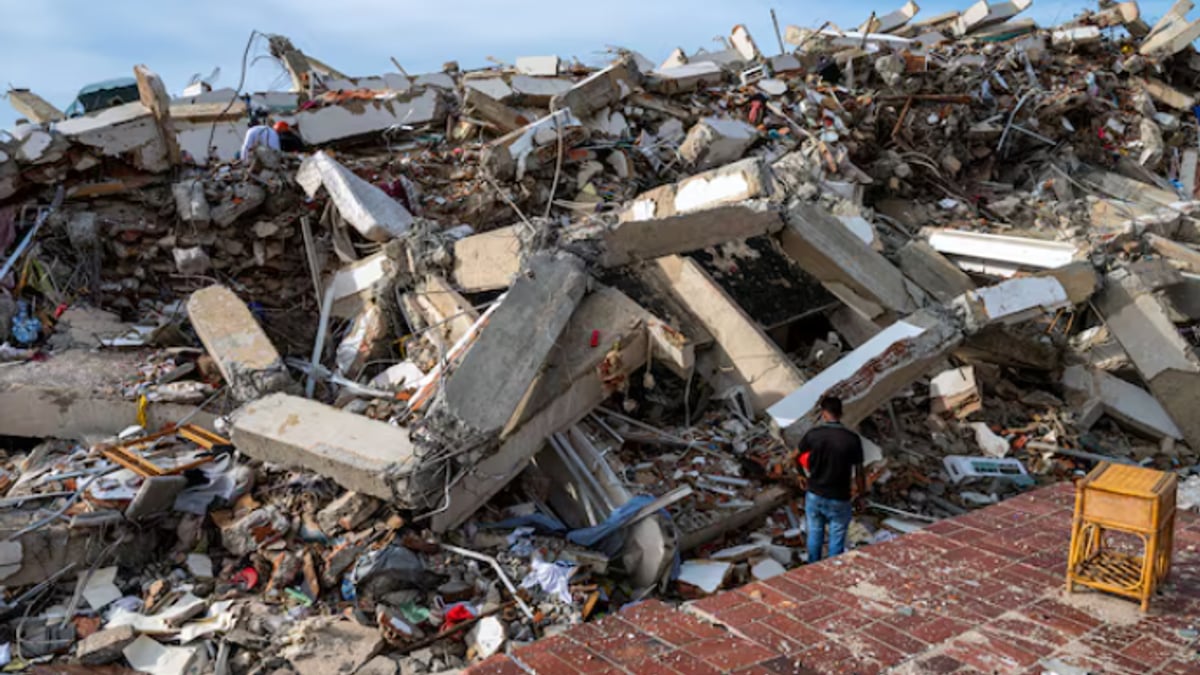
This comes four days after two powerful earthquakes hit the country, with authorities announcing the death toll had risen to at least 1,450.
Skip most read and continue reading
Do you really need to avoid gluten?
"A meal I ate during my holiday ended up infecting me with 38 parasites in my brain"
Ukraine strikes major oil depot in Russian city of Saint Petersburg
Funeral music and 'selected verses': How social media covered Khamenei's farewell ceremony?
Skip podcast and continue reading
Worth paying attention to
In-depth explanation of major events and topics, to help you understand the most important changes around you and their impact on your life
Episodes
End of podcast
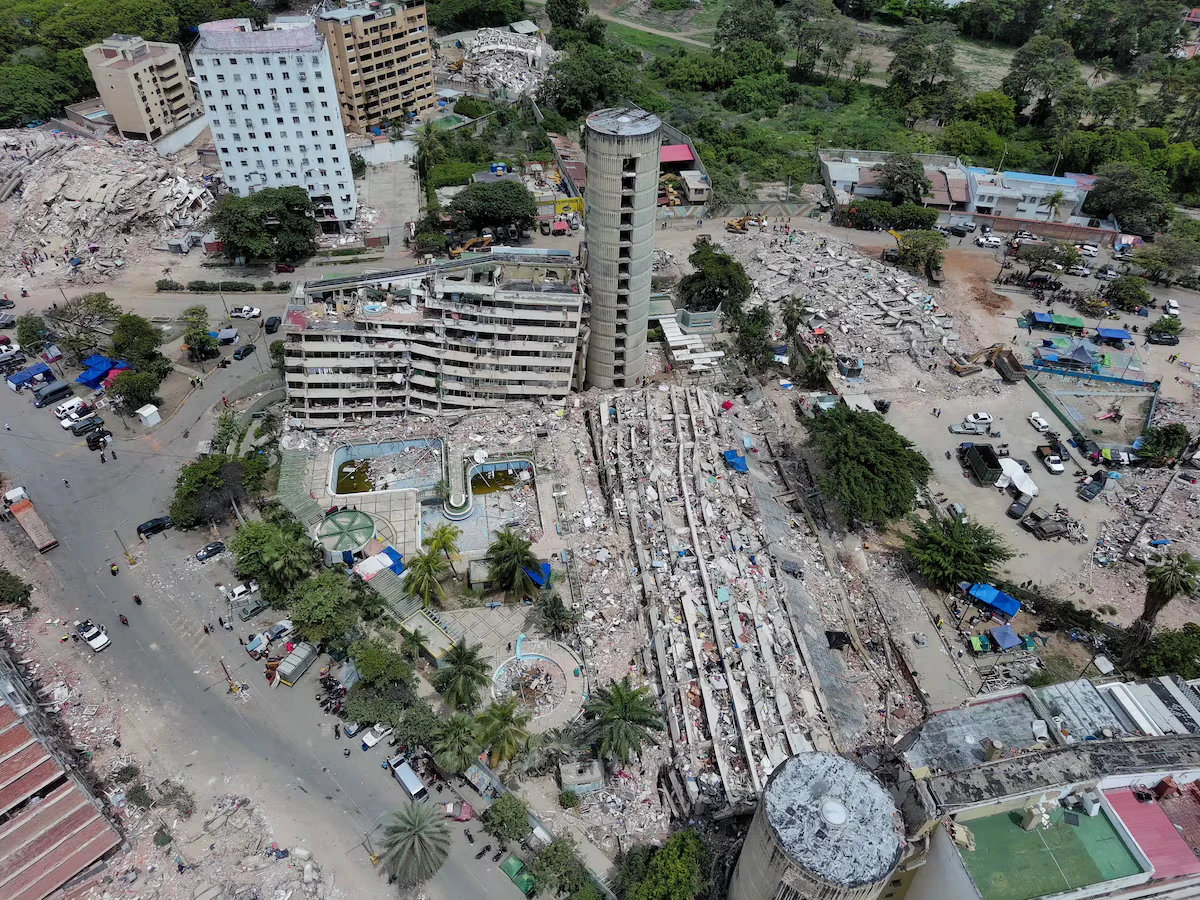
Authorities said search operations are concentrated especially in the coastal state of La Guaira, one of the hardest-hit areas, amid fears the toll could rise as large numbers remain missing and communications are down in some areas.
Chances of finding survivors are diminishing as more than 100 hours have passed since the earthquakes, with rescue experts saying the first 72 hours following disasters are typically critical for pulling survivors from the rubble.
Venezuela earthquake: The strongest in a century
In La Guaira, some residents complained about a lack of heavy machinery and slow official response, while relatives of the missing continued to search the rubble themselves.
In recent days, rescue teams managed to pull a number of children and families alive, including a baby and his mother. But teams working on the northern coast, which suffered widespread destruction, said most of their recent operations have focused on recovering victims' bodies.
The government faced criticism from residents and opposition officials over what they described as a lack of equipment and slow arrival of aid. A citizen named Wilber, who lost eight relatives, said road restrictions delayed the arrival of rescue teams and relief supplies.
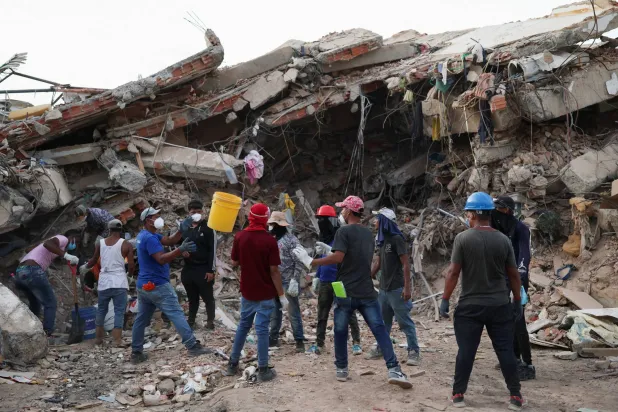
Image caption: Volunteers remove rubble while searching for bodies among the debris of collapsed buildings in Catia La Mar, La Guaira state, Venezuela
Residents search for their relatives with rudimentary tools amid equipment shortages
Rescue teams from Venezuela, Mexico, and El Salvador succeeded in pulling 21-year-old Aarón Levi Cantillo Vargas alive from the rubble in the town of Caraballeda, La Guaira state.
El Salvador's President Nayib Bukele said the young man is now receiving specialized medical care, adding that rescue teams will continue working in hopes of saving more lives.
The presence of a body between Aarón and the rescue teams had hindered access to him, according to Bukele.
Acting President Delcy Rodríguez said the rescue operation took 43 hours, after the young man had been trapped under the rubble for 106 hours.
In La Guaira, a survivor called on authorities to provide more equipment and heavy machinery, saying residents are continuing to search for their loved ones on their own. The man, who did not give his name, told Reuters that the building he was searching in housed about 300 people, and only 80 had been recovered, alive or dead.
The improvised nature of much of the search and rescue operations was evident in the tools used by residents.
A BBC correspondent said men and women were seen trying to pull their relatives and neighbors from the rubble using crowbars, hammers, and pickaxes, with little protective gear except for bicycle helmets some were wearing.
International rescue teams use more specialized equipment, including lights, search dogs, stretchers, and medical supplies.
Despite the use of heavy machinery to lift rubble in La Guaira and other areas, its deployment remains limited and uneven. The BBC correspondent said some residents worked for full days at one building site before heavy equipment arrived, too late.
He added that rescue teams need more personnel, machinery, search dogs, and support, while time remains the most urgent factor as chances of finding survivors dwindle.
The actual number of missing remains unknown. A civilian-run website says more than 46,000 people are still unable to contact their families, but these figures are unofficial and cannot be independently verified.
The USGS estimated immediately after the earthquakes that the potential death toll could range between 10,000 and 100,000. However, this number is not an actual count but an automated estimate based on the earthquakes' magnitudes and population density in the affected areas, intended to help emergency teams estimate the scale of response needed.
The government says it has deployed rescue teams and is working to coordinate the arrival of international aid, while critics say years of economic decline and weak public services have reduced the state's capacity to handle a disaster of this magnitude.
The Education Ministry also announced the closure of schools nationwide until next week, with some being converted into shelters for the displaced and collection centers for donations.
In a political development, opposition leader María Corina Machado said she intends to return to Venezuela to support the affected, considering the priority now to be saving lives and helping stricken families.
Skip short clips and continue reading
Short clips
End of short clips
Venezuela earthquake: Caracas lives its most difficult moment in the country's modern history 28 June 2026
What do we know about the victims and destruction caused by the Venezuela earthquake, considered the 'strongest' since 1900? 26 June 2026
Original source: BBC Arabic


Comments (0)
Be the first to comment.