Volcano in Antarctica Spews Gold, Winds Carry It 1,000 Kilometers
Volcano in Antarctica Spews Gold, Winds Carry It 1,000 Kilometers
July 5, 2026 - 17:53 | Last update July 5, 2026 - 17:55
Follow Okaz channel on WhatsApp
Mohammed Al-Sahi (Cairo)
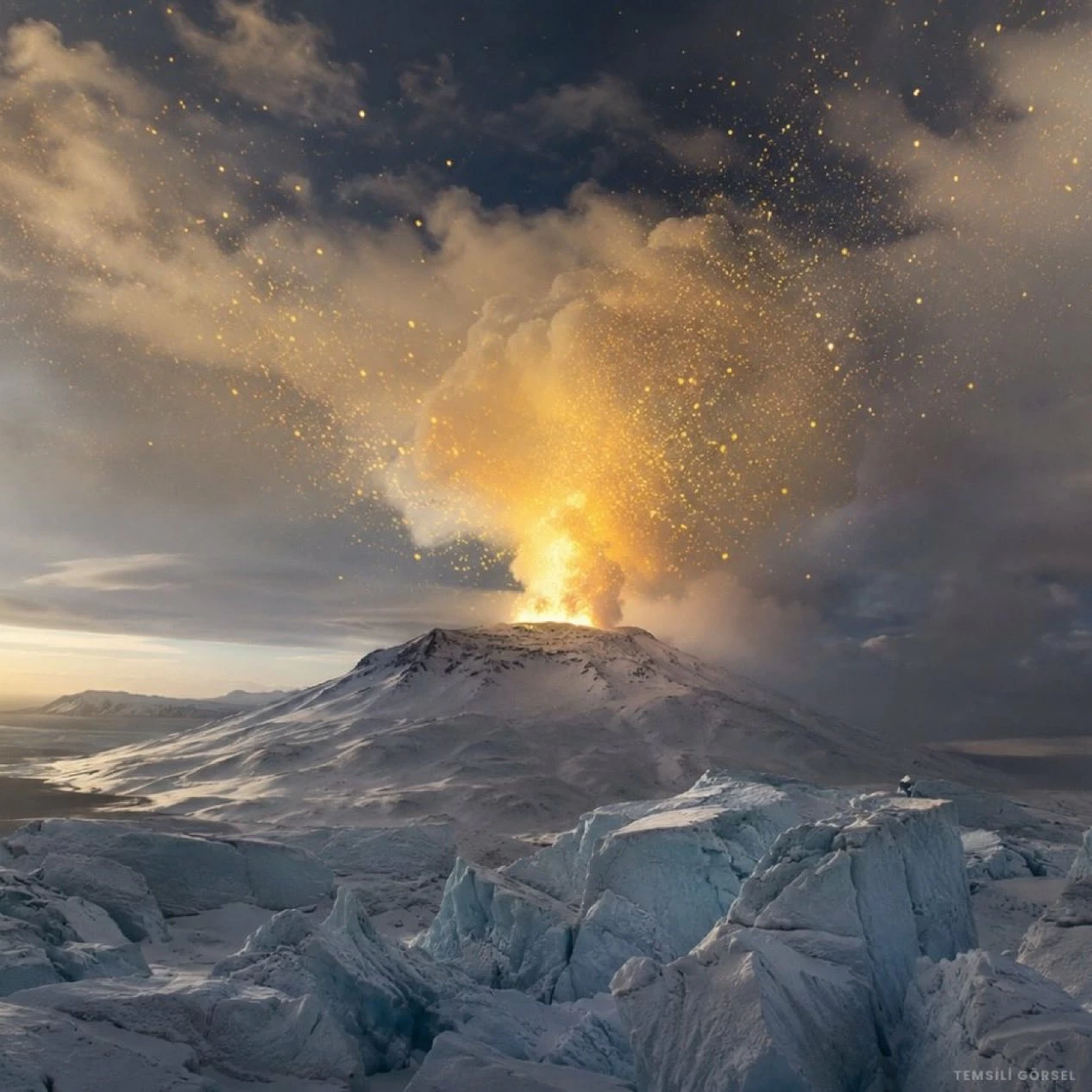
In a peculiar geological phenomenon, researchers have revealed that Mount Erebus volcano in Antarctica releases about 80 grams of microscopic gold crystals daily, which are carried by winds up to 1,000 kilometers, sparking scientific interest.
According to geological studies, the active volcano emits fine particles of pure gold along with silver and copper, which mix with water vapor, carbon dioxide, sulfur dioxide, and other compounds during volcanic activity.
The researchers explained that the gold particles are no larger than 20 micrometers, making them invisible to the naked eye.
When the hot gases exit the volcano's crater and meet the cold air of Antarctica, the metals condense and turn into small solid crystals before being carried by winds across vast distances over the white continent.
Scientific analyses have confirmed traces of these gold particles in atmospheric samples collected hundreds of kilometers away.
According to estimates, the volcano ejects about 29 kilograms of gold annually, valued at over $2 million, yet extracting it is nearly impossible due to its microscopic form in the atmosphere.
Mount Erebus is located at an altitude of 3,794 meters above sea level on Ross Island, and is among a very few volcanoes with a permanent lava lake in its crater, a globally rare geological phenomenon.
The volcano also features Strombolian eruptions, which are moderate explosions that repeatedly eject volcanic fragments and rocks to great heights.
Scientists consider Mount Erebus a natural laboratory for studying magma movement from the deep crust to the surface, as analyzing its emitted gases helps understand the chemical composition of Earth's interior, mineral formation, and the impact of volcanic activity on the polar environment and atmosphere.
These studies also provide new insights into the transport of metals through the atmosphere and the relationship between volcanic activity and environmental and climate changes in Antarctica.
Mount Erebus is the southernmost active volcano on Earth, has been continuously active for decades, and features a permanent lava lake in its crater, a rare trait among world volcanoes.
Scientists' interest in this volcano extends beyond its eruptions to its rare gas composition rich in metallic elements, making it one of the most important geological sites for studying crustal evolution, metal cycles, and the impact of volcanic activity on the atmosphere, especially in polar environments.
Original source: Okaz


Comments (0)
Be the first to comment.