Who Governs Britain During the Transitional Period?

For over a week, British Prime Minister Sir Keir Starmer has announced his intention to step down from the leadership of the majority party, and thus from the premiership. Yet he still leads the government, makes major strategic decisions, and prepares to represent his country next week at the NATO summit. Here arises a question that may seem strange to the reader: who actually governs Britain during this transitional period?
The constitutional answer seems simple. The British system stipulates that the Prime Minister continues to exercise full powers until he formally submits his resignation to the King. Until a new head of government is appointed, the work of state institutions does not stop, and the country does not enter a constitutional vacuum.
But the political reality is more complex than constitutional texts, as Britain is experiencing a political transition watched closely by allies, financial markets, and state institutions.
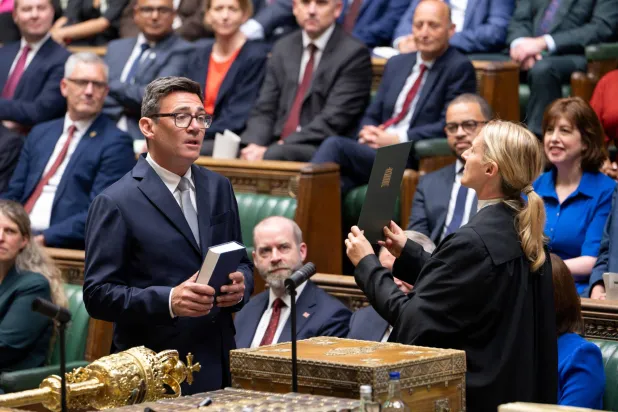
In Westminster, as in financial markets and Western capitals, attention has gradually turned to the man expected to succeed Starmer: Manchester Mayor Andy Burnham. Thus arises a familiar phenomenon in British political life: political power begins to transfer before constitutional power officially transfers.
Here the peculiarity of the British system emerges. Ministers and the head of government are political figures who change with a change of government, while state employees, from senior officials to administrative staff, are members of the permanent civil service, serving the Crown—that is, the British state—and not the ruling party or the Prime Minister. Therefore, state institutions continue their daily work... This is evident in the position of Cabinet Secretary and Head of the Civil Service, the highest permanent official in the state, currently held by Sir Simon Case, who has worked under four Prime Ministers and may work under a fifth if Burnham becomes head of government. The position does not change with a change of government, whereas ministers and their political advisors do.
However, the current phase differs from many previous power transitions.
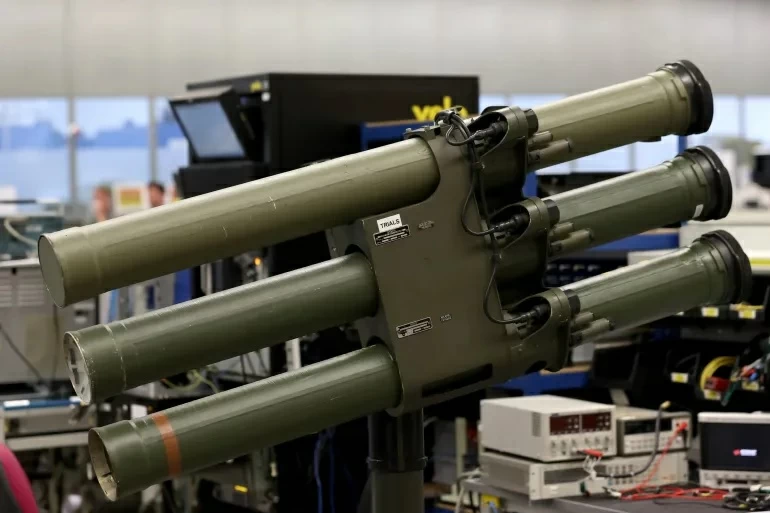
The current government does not limit itself to managing daily affairs; it is making long-term strategic decisions, foremost among them increasing defense spending in preparation for next week's NATO summit—decisions whose financial and political impacts will persist for years, possibly outlasting the current government itself.
Here, Westminster journalists have begun asking a simple but crucial question: have these commitments been discussed with Andy Burnham, whom many expect to assume the premiership within weeks?
In Prime Minister's Questions, as well as in daily press briefings at the government headquarters, Starmer and his official spokesperson avoided confirming or denying whether these decisions had been discussed with the likely next leader of the government.
That does not mean there is a constitutional crisis; the law does not oblige the Prime Minister to inform or consult his expected successor. But the question here is more political than legal, because allies, financial markets, and senior state officials want to know whether the commitments announced by the government today will remain the same after the transfer of power.
Hence, the question in Westminster remains whether the decisions taken by the current government truly reflect the direction the next government will take.
After days of speculation, Andy Burnham broke his silence on LBC radio, giving his first interview answering direct questions since announcing his intention to run for the leadership of the Labour Party. In his first speech announcing his challenge to Starmer, he simply delivered his address and left without holding a press conference or answering journalists' questions.
And because political speeches allow a leader to say what he wants, press interviews force him to answer questions posed by others.
In the LBC interview, Burnham affirmed his commitment to the general framework of the Labour Party's 2024 election manifesto, and to Britain's defense and international commitments, and stressed the importance of fiscal discipline. However, these statements, important as they are, did not resolve the debate in Westminster, because they did not answer the fundamental question: Do the strategic decisions taken by the current government also reflect the policy of the government expected to succeed it?
And another question remains: Is referring to the Labour Party's 2024 election manifesto sufficient? The manifesto was drawn up months ago under different political circumstances and was general rather than detailed, while issues such as defense, immigration, and relations with the United States have become more pressing. Therefore, adhering to it, important as it is, is not enough by itself to answer the questions posed by financial markets, Britain's allies, and decision-making circles in London.
Original source: Asharq Al-Awsat



Comments (0)
Be the first to comment.