With a Saudi Initiative... UN Resolution Adopts 'Women Empowerment in Cybersecurity'

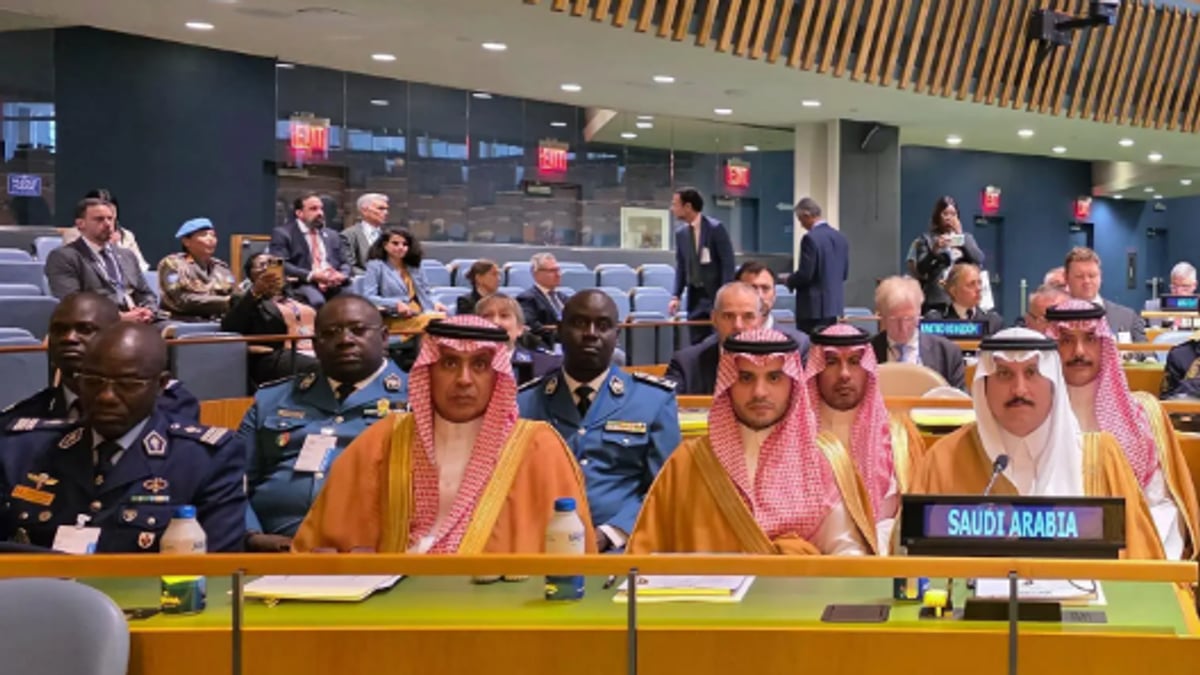
The Human Rights Council on Tuesday adopted a resolution on women's empowerment in cybersecurity, in line with the objectives of a global initiative launched by Saudi Crown Prince Mohammed bin Salman.
The Egyptian Cinema Chamber announced its rejection of actors' demands for public performance rights for their artistic works, following a meeting attended by producer Hisham Abdel Khalek, head of the chamber, and more than 40 Egyptian producers, including Esaad Younis, Tarek El-Ganaini, Gabi Khoury, Ahmed El-Sobki, Mohamed Fouad, and Safi El-Din Mahmoud, as well as some representatives of satellite channels.
The chamber affirmed in a statement on Wednesday that producers reject the drafting of uniform contracts demanded by the artistic unions, citing legal provisions that guarantee the rights of all parties involved in artistic work, stressing that only producers hold the financial entitlements.
Cinema Chamber during its meeting with producers (Egyptian Cinema Chamber)
The statement addressed four key points: the producer is the one who produces the film or bears its responsibility and provides the material and financial means to produce the work; the producer holds all rights to the film and its copies; producers are not obligated to deal with uniform contract models prepared by any entity or body; and exhibition outlets of any kind (cinemas, satellite channels, or platforms) are not obligated to pay screening fees. The statement noted that producers have always supported members of artistic unions through the payment of a statutory proportional fee (worth 2 percent) on contracts of union members participating in a film or series, as a major resource for the artistic unions.
The statement concluded by calling on everyone to take into account the challenges facing the Egyptian film and television industry amid rising production costs and inflated fees for artists and some production elements imposed by certain stars.
Ashraf Zaki, head of the Acting Professions Syndicate, said he would not allow any threat or transgression against actors' rights, calling for reason to prevail. In remarks to Asharq Al-Awsat, he added: 'A few days ago, I requested a meeting with the head of the Cinema Chamber to open a dialogue on achieving the public interest. There must be agreement on the contracts we proposed to chamber members because we are in the same boat, and we do not accept threats.'
Esaad Younis at the Cinema Chamber meeting (Egyptian Cinema Chamber)
The Egyptian artistic scene from time to time witnesses escalating movements to activate the public performance right for actors and drama writers to ensure they receive fair financial returns for the rebroadcast of their works on satellite channels and digital platforms, with major artists having sought to activate it for years.
Actor Yasser Galal, a member of the Egyptian Senate, submitted a proposal last May to the Senate's Culture and Media Committee to activate the public performance right in accordance with the Intellectual Property Protection Law (No. 82 of 2002) to ensure that performing artists—actors, singers, and musicians—receive public performance rights as neighboring rights. A meeting was held on the matter, attended by a large number of actors, including Ahmed Helmy, Elham Shahin, Mahmoud Hamida, Hani Ramzy, and Khaled Zaki, in the presence of Dr. Hisham Azmy, head of the Egyptian Council for Intellectual Property.
Actor Yasser Galal, a member of the Senate, strongly advocated for the public performance right (from his Facebook account)
Critic Tarek El-Shennawy denied that the public performance crisis would lead to a clash between the artistic unions and the Cinema Chamber. He told Asharq Al-Awsat: 'It should not happen; they should sit together and produce a legal formulation involving all parties because the laws exist and they won't invent them. We have implemented part of them, but not all.'
He added: 'In the 1960s, we began implementing the rights of authors and composers in performance, but internationally a parallel right was added for drama authors and for performers, whether singers or actors. Formally, we implement intellectual property rights, but practically, implementation is limited to poets and composers only,' noting that the matter is very complex and requires a legal entity to collect these rights in the future.
Original source: Asharq Al-Awsat


Comments (0)
Be the first to comment.