Zelenskyy replaces Ukrainian military leadership... Betting on modernization against Russia
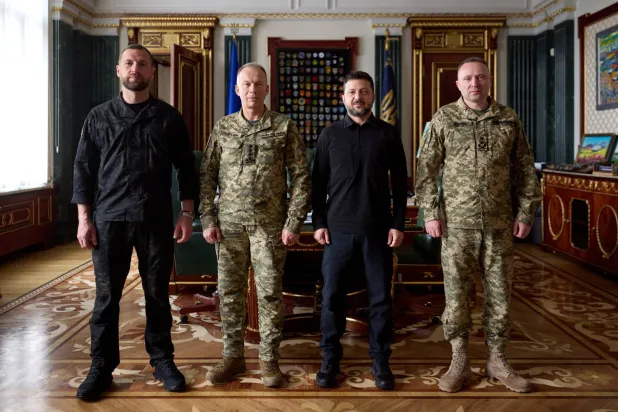
Zelenskyy dismissed the Ukrainian army commander and appointed new leadership in a move aimed at containing an internal crisis and driving military modernization as the war with Russia continues.
Ukrainian President Volodymyr Zelenskyy made the biggest change in military leadership in months, dismissing the army's commander-in-chief Oleksandr Syrskyi and appointing Major General Mykhailo Drapatyi as his successor, in a step aimed at containing an internal political crisis that sparked widespread protests and giving a new boost to the war effort against Russia.
The changes came days after mounting criticism within Ukraine of the dispute between former Defense Minister Mykhailo Fedorov and Syrskyi, a conflict many saw as a symbol of the struggle between advocates of military modernization and supporters of the traditional approach. According to the Associated Press, Zelenskyy asked the new leadership to prepare an updated defense strategy that includes accelerating the reform of the army structure, strengthening air defenses, speeding up the delivery of weapons and drones, and developing a clearer plan for military mobilization.
Commander of the Ukrainian Ground Forces at the time Mykhailo Drapatyi speaks to journalists at an undisclosed location in the Donetsk region of Ukraine on January 6, 2025, amid Russia's invasion of the country (AFP)
Clash between two military schools
The change made by Zelenskyy, according to an analysis by the French newspaper Le Figaro, reflects a confrontation between two visions of managing the war. The pro-modernization camp, represented by Fedorov, believes that Ukraine can regain the initiative through military innovation, expanding the use of drones, and intensifying long-range strikes inside Russian territory.
In contrast, the traditionalist current associated with Syrskyi tends to focus on containing Russian advances and managing the war in a more conservative manner, which drew criticism from soldiers and officers who accused him of relying on methods influenced by the Soviet military legacy and prioritizing loyalty over competence.
The newspaper notes that Zelenskyy initially tried to contain the crisis by offering Fedorov a new government position to coordinate the defense and technology industries, but that did not end the protests demanding his return to the Defense Ministry.
Commander-in-Chief of the Armed Forces of Ukraine at the time Oleksandr Syrskyi (left) attends a meeting with Ukrainian President Volodymyr Zelenskyy on February 10, 2024 (Reuters)
Attempt to contain protests
Kyiv and other Ukrainian cities saw demonstrations involving civilians, military personnel, and veterans, demanding reform of the military institution and increased transparency, while protest organizers threatened to expand the actions if their demands were not met.
Ukrainian analysts believe that by dismissing Syrskyi, Zelenskyy sought to calm the streets without appearing to completely succumb to protesters' pressure, especially since reinstating Fedorov could grant him significant political influence within state institutions.
Ukrainians gathered to denounce President Volodymyr Zelenskyy's decision to dismiss Defense Minister Mykhailo Fedorov six months after he assumed the post in the Ukrainian capital Kyiv on July 19, 2026 (AP)
New leadership and bet on innovation
Drapatyi, 43, is considered one of the most prominent leaders of the new generation in the Ukrainian army and has been known since 2014 during the first confrontations with Russian forces after Moscow's annexation of Crimea. He has also publicly called for addressing the military institution's mistakes and not remaining silent about failures.
Fedorov welcomed Drapatyi's appointment, considering him a 'new hope' in Ukraine's battle, while Syrskyi, in his first comment after his dismissal, asserted that the Ukrainian army this year recaptured 743 square kilometers of territory previously controlled by Russia, and that he is handing over to his successor an army that not only defends but continues to conduct offensive operations—a claim that could not be independently verified, according to the Associated Press.
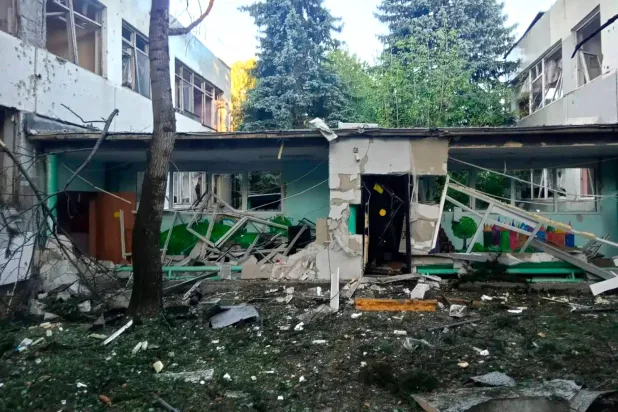
Fire at the site of a Russian airstrike on Zaporizhzhia amid Russia's invasion of Ukraine... July 21, 2026 (AFP)
Moscow: Changes will not alter war course
In contrast, Moscow downplayed the significance of the changes in Kyiv, asserting they would not affect the course of military operations. Kremlin spokesman Dmitry Peskov said the Russian leadership remains committed to its previous conditions for ending the war, which include the withdrawal of Ukrainian forces from the four regions Russia claims to have annexed, Kyiv abandoning its bid to join NATO, and reducing the size of its army.
The political changes coincided with continued long-range mutual attacks, as Ukraine announced it had targeted warehouses of the Russian company Wildberries, while Russia continued launching missile and drone strikes on Ukrainian territory, killing a woman in the Odesa region.
Also read
Original source: Asharq Al-Awsat


Comments (0)
Be the first to comment.