General Motors: Smart Safety Enhances Leadership of SUVs and Pickup Trucks
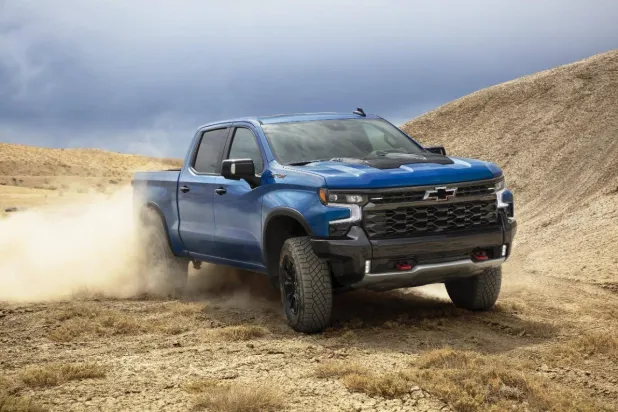
General Motors affirmed that the concept of strength in vehicles is no longer measured solely by the rigidity of the body or thickness of metals, but rather increasingly relies on smart safety technologies, advanced engineering, and driver assistance systems, at a time when SUVs and full-size pickup trucks continue to lead the company's sales in the Middle East.
The company, which is celebrating 100 years of presence in the region, said that this category of vehicles accounted for 44 percent of General Motors Middle East's total sales between 2000 and 2025, equivalent to about one million vehicles, reflecting sustained demand due to the combination of space, high capabilities, safety levels, and modern technologies.
It explained that the evolution of the automotive industry in recent decades has changed the traditional concept of durability, as priority now focuses on crash energy management, occupant protection, and accident avoidance before they occur, with road accidents continuing to claim about 1.19 million deaths annually worldwide.
Results of a study conducted by General Motors Africa and Middle East in collaboration with YouGov in Saudi Arabia, the UAE, and Egypt revealed that 89 percent of participants consider safety features the most influential factor when purchasing vehicles, ahead of price or design, reflecting growing regional awareness of the importance of protection technologies.
Jorge Plata, President and Managing Director of General Motors Operations in Africa and the Middle East, said that customers still seek the same confidence that vehicles have provided for decades, but the means have changed radically.
He added: 'Durability no longer relies on heavy metals, but has become part of advanced safety systems, smart engineering structures, and technologies that reduce the likelihood of collision before it occurs, which represents the fundamental shift in modern vehicles.'
He pointed out that current designs prioritize aerodynamics, lighter and stronger materials, along with engineering of crumple zones to reduce the transfer of crash forces to occupants, emphasizing that what may appear less rigid on the outside actually reflects higher levels of development and protection efficiency.
The company noted that this evolution is reflected in several of its models winning global safety awards, including the Chevrolet Traverse and GMC Acadia 2025 models, which received the 'Top Safety Pick' award from the Insurance Institute for Highway Safety, while the 2026 Chevrolet Traverse received a five-star rating from the National Highway Traffic Safety Administration, with more than 20 standard safety and driver assistance systems.
It added that the electric Cadillac Escalade IQ has also won several awards, including AutoTrader's Best New Car award for 2025 and MotorTrend's Best SUV of 2026 award.
General Motors pointed out that all its modern vehicles in Gulf markets are equipped with OnStar service, which provides connectivity and emergency assistance services, including automatic crash response, emergency services contact, voice support, in addition to connectivity and driver assistance services, explaining that the service is currently available in Saudi Arabia, the UAE, Kuwait, and Bahrain, with over 42,000 subscribers.
The company affirmed that its responsibility is not limited to the vehicle sale stage, but extends post-purchase through preventive recall programs and cooperation with regulatory authorities in the region, enhancing safety levels and customer confidence.
General Motors believes that demand for SUVs and full-size pickup trucks will remain strong in Middle East markets, but competition standards are increasingly relying on integrating performance, efficiency, digital connectivity, and smart safety systems, while maintaining the capabilities that this category of vehicles has been known for decades.
Original source: Asharq Al-Awsat






Comments (0)
Be the first to comment.