A New Central Bank: How Will Warsh Rebuild the Fed?

A New Central Bank: How Will Warsh Rebuild the Fed?
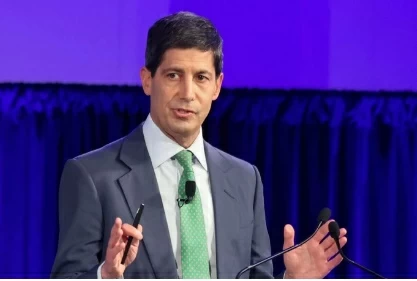
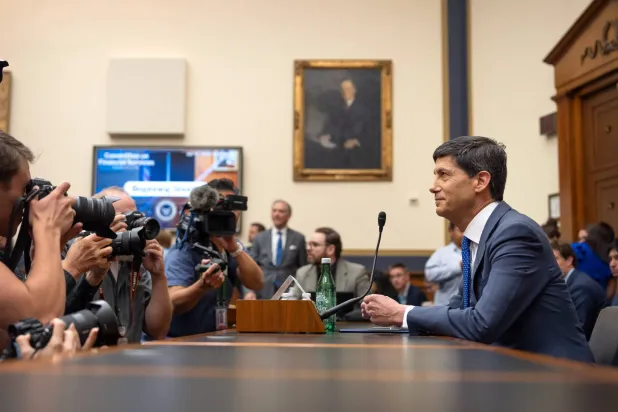
For decades, every new Federal Reserve chair has sought to leave their own mark through initiatives reflecting their vision for developing the central bank's operations. Now Kevin Warsh is attempting a new approach based on independent task forces to reassess decision-making mechanisms. What are these task forces?
Previous attempts
- Ben Bernanke, who chaired the Fed from 2006 to 2014, set an official inflation target. Janet Yellen raised interest rates after years of easing. Jerome Powell launched a comprehensive review of monetary policy frameworks in 2019.
What about Warsh?
- Warsh chose a different approach, announcing the formation of five task forces comprising economists, academics, and former central bank officials to evaluate key aspects of monetary policy and provide recommendations aimed at updating the Fed's tools and decision-making mechanisms.
Does he have precedent?
- Warsh joined the Federal Reserve Board of Governors in 2006, leaving in 2011. In 2014, he participated in a task force formed by the Bank of England to review communication policies with markets, giving him direct experience with this type of committee.
What are these task forces?
- Earlier this month, Warsh selected the members of the five task forces, with each team led by three experts from academia, banking, and business.
Federal Reserve Task Forces
Team
Goal
Key members and their expertise
Communication
- Review how the Fed communicates with markets amid uncertainty.
- Mervyn King, former Governor of the Bank of England.
- Arminio Fraga, former President of the Central Bank of Brazil.
- Peter Fisher, professor at the University of Washington.
Balance Sheet
- Evaluate the costs and benefits of the Fed's balance sheet for financial institutions.
- Karen Dynan, professor of economics at Harvard University.
- Raghuram Rajan, professor of finance at the University of Chicago.
- Jeremy Stein, professor of economics at Harvard University and former Fed governor.
Data
- Improve the quality and speed of economic data used in decision-making.
- Raj Chetty, professor of economics at Harvard University.
- Doug McMillon, former CEO of Walmart.
- Kevin Murphy, professor of economics at the University of Chicago.
Productivity and Jobs
- Assess the impact of new technologies, including artificial intelligence, on the labor market.
- Marc Andreessen, co-founder of Andreessen Horowitz.
- Charles Jones, professor of economics at Stanford University, also works at Anthropic.
- Asha Sharma, head of Xbox at Microsoft.
Inflation Frameworks
- Evaluate how the Fed understands and responds to inflation factors.
- Greg Mankiw, professor of economics at Harvard University.
- Thomas Sargent, professor of economics at New York University, Nobel laureate.
- William White, former economic adviser at the Bank for International Settlements.
Diversity of expertise
- The teams reflect a mix of academics, former bankers, and corporate leaders, aiming to combine practical experience with academic insight and broaden the range of ideas the Fed relies on in formulating monetary policy.
What are the main advantages?
- These task forces may give the Fed a more diverse perspective, help it update its tools to address challenges like AI's impact on labor and productivity, provide real-time data to policymakers, and enhance independent review of its policies.
Are there challenges?
- Differences in members' orientations may make it difficult to reach unified recommendations, especially on controversial issues like inflation targets and the balance sheet, as the teams include individuals with conflicting economic views.
How so?
- For example, the inflation frameworks team includes experts with divergent views: Sargent emphasizes the importance of an inflation target, William White criticizes this approach, while Mankiw supports the target but without strict commitment to 2%, making consensus difficult.
Another obstacle
- Even if the teams produce unified recommendations, they will not automatically become official policy; they require approval from Federal Reserve Board members, meaning building consensus will be Warsh's biggest challenge.
The real test
- While the initiative reflects Warsh's desire to leave his mark on the Fed and improve its operations, its success will be measured by the central bank chair's ability to turn it into policies that achieve internal consensus, not just advisory ideas.
Sources: Argaam – Federal Reserve – The Economist – CNBC
Federal Reserve
Miscellaneous
{{displayname}}
{{profession}}
{{followercount}}
{{aboutme}}
Original source: Argaam


Comments (0)
Be the first to comment.