AI boom puts South Korea's financial stability to the test
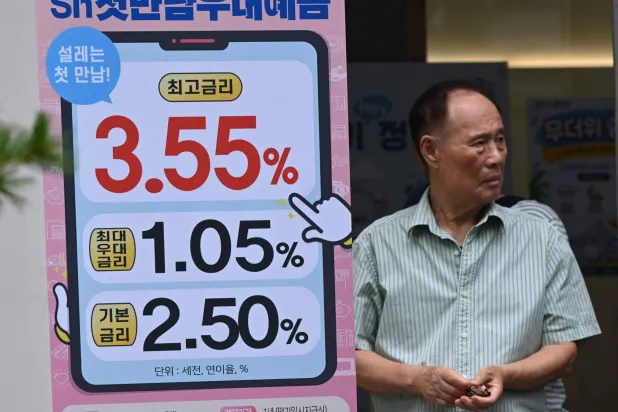
South Korea is entering a new phase of economic management, as the boom in the semiconductor and AI industries has shifted from a growth driver to a source of significant financial risks.
South Korea is entering a new phase of economic management, as the boom driven by the semiconductor and AI industries has shifted from a growth engine to a source of financial risks requiring simultaneous intervention from the central bank, regulators, and the government. In a single day, the Bank of Korea raised interest rates for the first time in three and a half years, authorities announced new restrictions on leveraged ETFs linked to tech stocks, and the National Security Council held a meeting to discuss trade and security issues with the United States, amid growing links between the economy and geopolitics.
First rate hike in three and a half years
The Bank of Korea raised its benchmark interest rate by 25 basis points to 2.75 percent, the first hike since January 2023, indicating that the tightening cycle may not be over. The bank said the Korean economy is growing faster than its previous forecasts, driven by strong global demand for semiconductors used in AI applications, and expects growth to exceed its May estimate of 2.6 percent.
People walk past the Bank of Korea headquarters in Seoul, South Korea (AP)
Central bank Governor Shin Hyun-song said the rate hike decision was based on simultaneous improvement in growth, inflation, and financial stability indicators, adding that domestic inflationary pressures are likely to rise gradually as the effects of the semiconductor boom feed into local demand.
He also noted that the bank will closely monitor second-quarter GDP data and July inflation figures before any new decision, a move analysts interpreted as paving the way for another rate hike before year-end.
Most economists expect the interest rate to rise to 3 percent by the end of 2026, with a possible increase to 3.25 percent in the first quarter of 2027.
Semiconductor boom becomes a source of volatility
Despite the strong economy, the Korean stock market came under severe pressure as semiconductor stocks led a broad sell-off. Shares of Samsung Electronics and SK Hynix fell sharply, dragging down the KOSPI index as the two stocks account for more than half of the index's weight.
Analysts say volatility is no longer tied solely to corporate performance but is also driven by the rapid growth of leveraged ETFs, which amplify investor gains and losses through derivatives.
Bank of Korea Governor Shin Hyun-song speaks during a press conference after a monetary policy meeting at the central bank headquarters (Reuters)
Why are leveraged funds causing concern?
Leveraged ETFs amplify the daily performance of a stock or index using futures and derivatives, often targeting two or three times the price movement. When stocks rise, these funds are forced to buy more shares to maintain leverage, and when they fall, they are forced to sell, creating a feedback loop that fuels volatility in both directions.
These funds have grown in importance since their launch in South Korea in May, coinciding with the boom in AI and semiconductor stocks. The listing of similar products in Hong Kong and the United States also boosted investment flows into Korean stocks, amplifying daily volatility.
New regulatory measures
In response, the Financial Services Commission announced a package of new measures aimed at curbing risks and protecting investors.
The measures include raising the minimum deposit required to invest in these funds from 10 million won to 30 million won, increasing the minimum trading unit from one share to 20 shares, requiring individual investors to complete additional risk awareness programs, and ordering brokerages to refrain from launching new funds or conducting promotional campaigns.
The commission stressed that these measures aim to curb excessive volatility and improve market stability, while leaving the door open for additional steps if conditions warrant.
An electronic board at Hana Bank's trading floor in Seoul (EPA)
Economy and geopolitics... growing ties
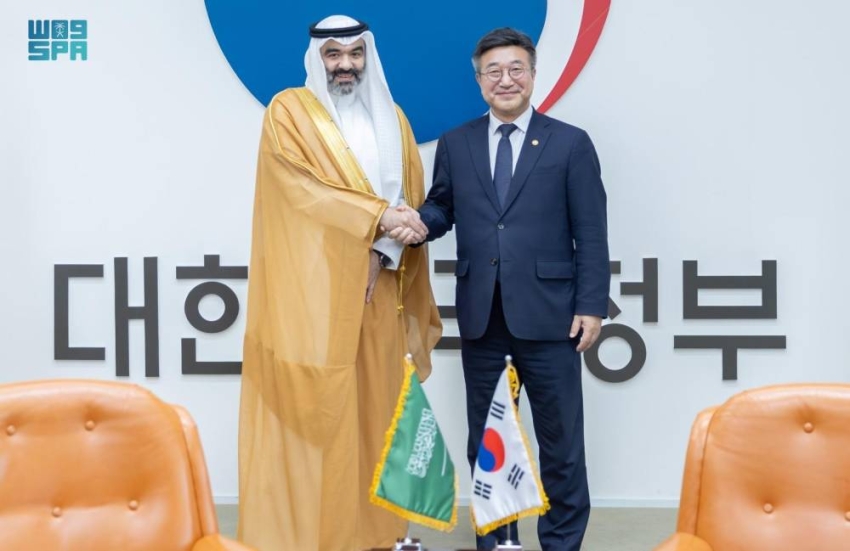
In a sign of the widening challenges facing Seoul, the National Security Council held a meeting with economic and diplomatic officials to discuss trade and security relations with the United States.
National Security Advisor Wi Sung-lac affirmed that trade and security issues have become more intertwined in relations with Washington, urging various ministries to coordinate their positions in the face of external uncertainty.
The meeting followed the return of South Korea's ambassador to the United States to Seoul for consultations on several trade issues, including e-commerce and bilateral economic relations.
Ultimately, recent developments reveal that South Korea faces a dual challenge: on one hand, the AI and semiconductor boom gives it one of the strongest growth engines among Asian economies, but on the other, this same boom is fueling inflationary pressures, increasing financial market volatility, and posing new challenges for policymakers. As the central bank moves to tighten monetary policy and regulators rush to contain market risks, Seoul also appears tasked with managing a delicate balance between maintaining growth momentum and safeguarding financial stability, at a time when geopolitical tensions are increasingly impacting the global economy.
Read also
Original source: Asharq Al-Awsat



Comments (0)
Be the first to comment.