Chinese stocks fall as oil price rise overshadows market support efforts
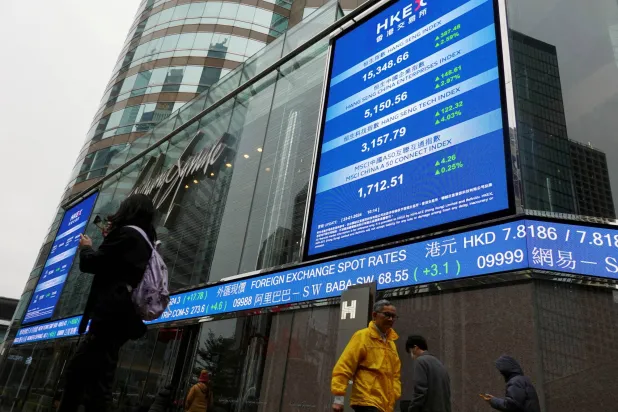
Chinese and Hong Kong stocks fell on Friday amid rising oil prices, which fueled inflation concerns and dampened investor sentiment.
The CSI300 index of leading Chinese stocks and the Shanghai Composite index both fell 1.2% by lunchtime. Hong Kong's Hang Seng index dropped 1.7%, while the Hang Seng Tech index lost the same amount.
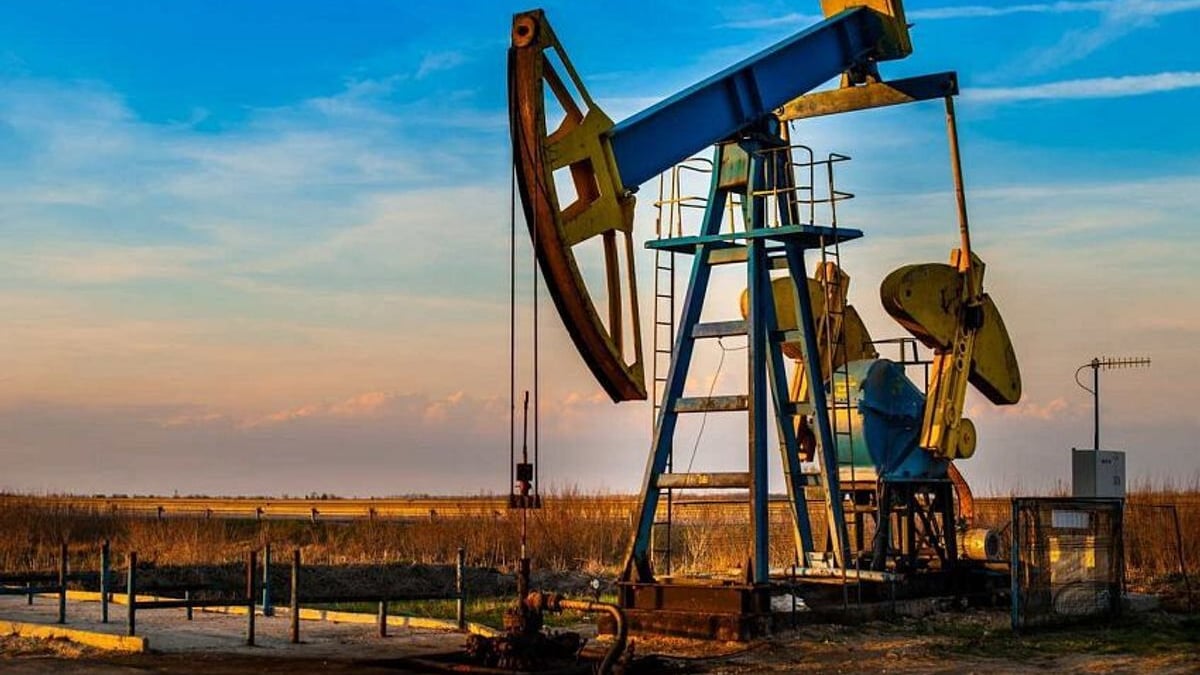
Brent crude jumped above $100 a barrel after US President Donald Trump on Thursday promised 'major military punishment' for Iran and its Houthi allies.
Geopolitical uncertainty and higher oil prices weighed on regional market performance. The upcoming listing of Chinese memory giant CXMT also dampened sentiment, as investors fear such large IPOs may drain market liquidity.
Semiconductor and aviation stocks rose by midday, while most sectors fell. Morgan Stanley analysts said in a note: 'Investors have remained cautious ahead of the Politburo meeting in July and the expected IPO of CXMT, despite the continuous efforts by the national team to stabilize the market in recent weeks.'
China's securities regulator pledged on Thursday to prevent risks in key areas and strengthen monetary policy reserves to respond to global market fluctuations and cross-border risk transmission, according to a statement from the meeting.
Analysts said the market is closely watching for any change in monetary policy stance or stimulus measures at next week's Politburo meeting. DBS analysts noted in a note that weak second-quarter data calls for support measures. The smaller Shenzhen index fell 1.96%, the ChiNext composite index for startups dropped 1.78%, while the Shanghai STAR 50 index, which focuses on tech, rose 0.27%.
• Yuan stability
Elsewhere, the yuan traded in a narrow range against the US dollar on Friday, as investors worried about renewed Middle East tensions and higher oil prices. The dollar rose, supported by US Treasury yields on Friday, after US President Donald Trump threatened Iran and its Houthi allies with 'major military punishment'. Brent crude climbed back above $100 a barrel for the first time since May.
Analysts said higher oil prices led markets to expect US interest rate hikes, which supported the dollar and slowed the yuan's rise.
The yuan was almost flat at 6.7753 per dollar by 02:41 GMT, after trading between 6.7736 and 6.7767.
The currency appeared on track for a stable week. The offshore yuan was at 6.7765 per dollar, little changed in Asian trading.
Before market open, the People's Bank of China set the midpoint rate at 6.7939 per dollar, 144 pips lower than a Reuters estimate. The yuan is allowed to trade spot 2% above or below the daily official midpoint.
Concerns over tariffs also kept traders on edge. The Trump administration from Friday imposed new tariffs of 10% and 12.5% on goods from 60 trading partners, including China, over allegations of lax enforcement of a ban on forced labor.
Wei Khun Chong, Asia-Pacific macro strategist at Bank of New York, said: 'The macroeconomic situation has become more complex... higher oil prices, continued geopolitical uncertainty, weak stock market sentiment, and renewed capital outflow pressures have all strengthened the need to protect Chinese yuan positions,' suggesting investors hedge their yuan exposure. The yuan has risen 3.2% this year, supported by strong export growth. But the pace has slowed this month as the dollar strengthens and China's economic data weakens. Domestically, investors are awaiting next week's Politburo meeting for signals on economic policy, according to a note from Nanhua Futures analysts.
"); googletag.cmd.push(function() { onDvtagReady(function () { googletag.display('div-gpt-ad-3341368-4'); }); }); }]
Original source: Asharq Al-Awsat



Comments (0)
Be the first to comment.