Oil Jumps Nearly 10% as US Tightens Blockade on Iranian Coasts

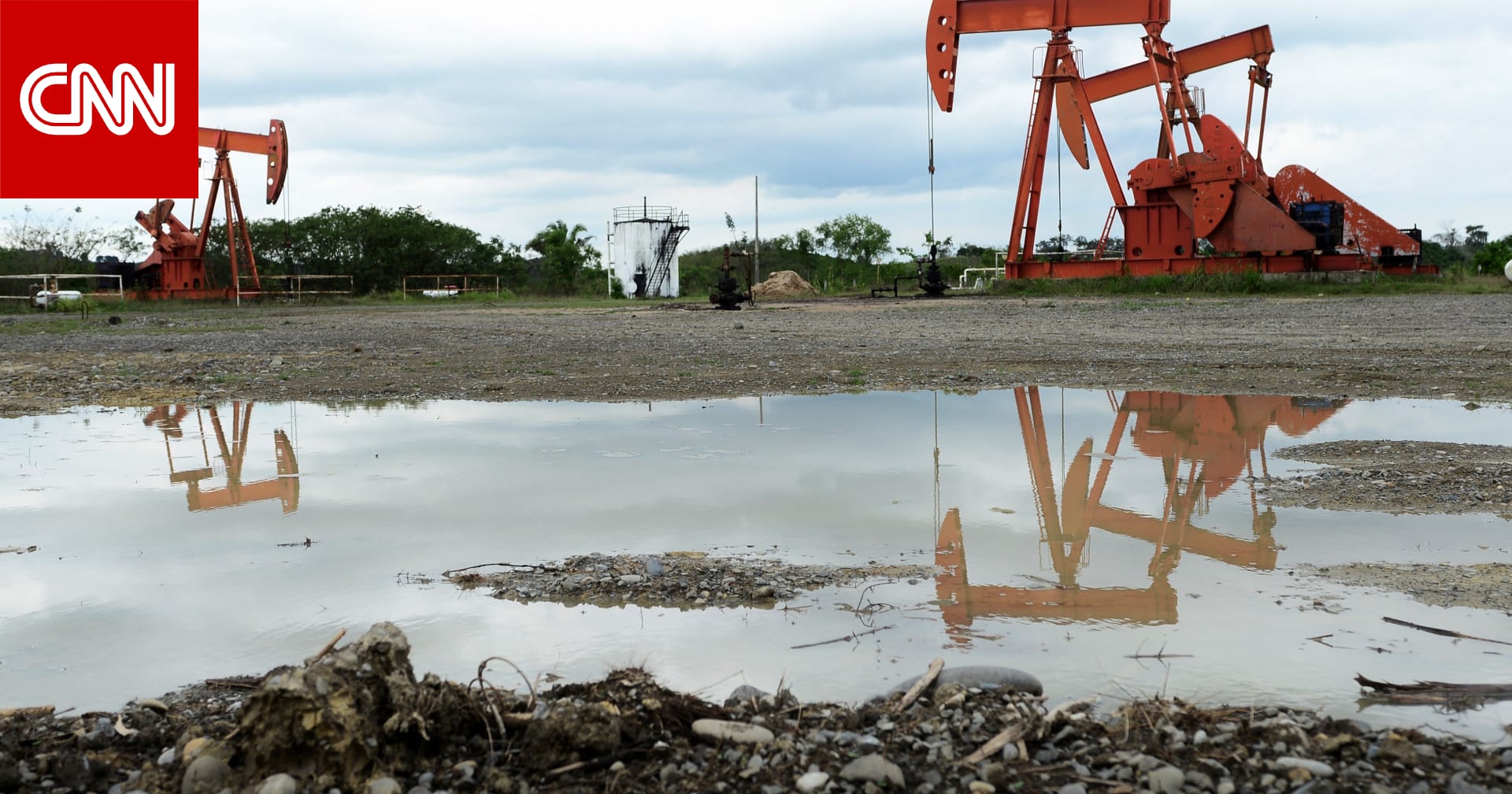
Oil prices jumped more than 9% on Monday, hitting their highest levels in a month, after the United States announced that the naval blockade was set to take effect on Tuesday.
Fluctuations in the dollar exchange rate dashed Egyptians' hopes for lower prices, after the US currency breached the 50-pound barrier on Monday.
This comes as the Egyptian economy relies heavily on imports, making it highly sensitive to any exchange rate fluctuations.
With renewed tension between Washington and Tehran, the dollar rose again; before the confrontations erupted at the end of last February, the rate was around 47 pounds, then it jumped to record levels exceeding 54 pounds as the war continued, and fell below 49 pounds after the ceasefire agreement last April.
Prices of most goods in Egypt are affected by the dollar rate, and economic expert Rashad Abdo confirms that 'there is currently no hope for a decline in commodity prices.'
Abdo told Asharq Al-Awsat that 'the dollar rate does not fluctuate but rises; its occasional declines are very small, meaning it continues to rise.'
Weakness of the Pound
Abdo attributed the pound's susceptibility to regional tensions and its continuous decline to what he described as the 'weakness of the pound.' In his view, the dollar returned to rise despite Egypt's increased inflows of hard currency—whether investments, tourism, or remittances from Egyptians abroad—due to 'Egypt's direct impact from any regional tensions because its economy relies on revenues that are quickly affected, in addition to the economy and industry depending on importing the majority of production materials and goods.'
Abdo believes that 'the wave of high prices in Egypt is limitless and its end cannot be predicted; prices of goods that rise do not fall again.'
He explains that 'the linkage of prices to the dollar causes economic and social confusion for most families.'
Dollar fluctuation dashes Egyptians' hopes for a decline in high prices (Ministry of Supply page on Facebook)
Nagwa Salem, a fifty-year-old Egyptian woman who works as an employee in a government agency and lives with her two daughters in the Sayyida Zainab district in Cairo, says that 'the fluctuation of the dollar exchange rate causes confusion in our living conditions.'
She adds: 'I had started preparing my two daughters years ago, but I stopped buying the remaining electrical appliances needed for their weddings, waiting for the dollar rate to drop, but it seems neither the dollar nor the prices of household appliances will go down.'
In contrast, thirty-year-old Ibrahim Abdel Rahman was forced to live with his laptop and mobile phone, which can no longer run several applications due to its old version. Abdel Rahman, who lives in the Imbaba district and works in a private company in the Agouza district in Giza Governorate, says: 'For more than two years, I have needed to replace my phone and laptop, but the continued rise of the dollar has caused a significant increase in the prices of devices.'
Egypt relies for its hard currency income on main sources: foreign and Arab investments, tourism, the Suez Canal—which is affected by geopolitical tensions in the region—and remittances from Egyptians abroad.
Egyptians redirect their limited budgets to cope with rising prices (Ministry of Supply page on Facebook)
The Central Bank announced last Wednesday an increase in the country's net foreign exchange reserves, rising to $55.07 billion in June compared to $53.134 billion in May. It noted that 'the increase in cash reserves over the past month amounted to about $1.9 billion, a growth rate of 3.6 percent.'
According to another statement by the Central Bank last Thursday, remittances from Egyptians working abroad continued their upward trend, 'rising during the period from July 2025 to May 2026 by 31.2 percent to reach about $43.1 billion, compared to about $32.8 billion during the same period the previous year.'
According to economic expert Karim Al-Omda, 'the return of the dollar's rise is mainly linked to regional tensions.' He told Asharq Al-Awsat that 'the region has been tense for about a week due to the resumption of strikes between the US and Iran, tensions that lead to a rise in the dollar rate, in addition to conditions related to the outflow of hot money amidst the tensions.'
Al-Omda expected the dollar to decline again if regional tensions end, but he believes that 'the decline will not be significant; rather, it may return to previous levels between 47 and 49 pounds.'
He explains that 'the impact of the dollar on prices in Egypt will continue, as commodity prices rise significantly affected by the dollar's rise, and when it falls, they decline by small percentages.' He argues that 'the pace of price increases is much higher than incomes, which have been eroded by waves of high prices, prompting families to redirect their limited budgets and adjust their purchases.'
The continued weakness of the pound increases the cost of living for Egyptian families, especially as prices are unlikely to fall after rising. Analysts are monitoring developments in regional conditions and their impact on hard currency flows, amid expectations of continued inflationary pressures in the coming period.
Original source: Asharq Al-Awsat




Comments (0)
Be the first to comment.