Anas bin Faisal Al-Hajji | The Hormuz Lesson and the Need to Establish Strategic Oil Reserves

SummaryStrategic oil reserves have become a necessity for all countries, including OPEC+ members, especially Gulf states. The Hormuz crisis highlighted the need for closer cooperation between producing and consuming countries in storage. Such cooperation ensures rapid supply, lowers prices during crises, enhances national security, and expands OPEC+ influence at low cost. No one denies there will be some obstacles, sometimes political and legal problems, but overall it is beneficial for both oil-producing and consuming countries.
In last week's article, I proposed ideas to develop the role of OPEC+ in line with the post-Hormuz world, focusing on the need for the alliance to build a system to store large quantities of oil near major markets, away from sea straits. In today's article, I expand on the topic of strategic storage because what happened in Hormuz revealed its importance more clearly than ever.
Strategic oil reserves are among the most important energy policy tools developed by major countries to protect their economies from any sudden drop or halt in supplies. Interest in this storage began after the oil embargo imposed by Arab countries on the United States and some European countries during the Ramadan War in 1973, followed by a fourfold increase in oil prices. Its importance was then reinforced by the Iranian Revolution in 1979 and the Iran-Iraq War that started in 1980 and lasted eight years.
Theoretically, these reserves represent an insurance policy against political, natural, or technical crises, as they aim to prevent sustained price increases and mitigate market volatility. However, as we will see later, practical application differs greatly from theory.
Governments typically manage these reserves, which differ from commercial reserves owned by companies. Historically, the United States held the largest declared reserve in the world, while today China has the largest total of government and commercial reserves. The problem lies in defining 'strategic reserves': in the United States, the term refers to oil owned by the state and managed by the government, whereas in countries like China and Japan, any reserve can become strategic during crises, even if privately owned, because the state can control it.
The Origin and Strategic Importance of Reserves
The U.S. reserve was created under the Energy Policy and Conservation Act of 1975, in response to the 1973 crisis to which the oil embargo contributed, although the crisis had begun earlier. The United States joined the International Energy Agency (IEA), founded in 1974, which requires its members to hold reserves equivalent to 90 days of net imports. A common mistake even among some top analysts: the IEA's requirement pertains to net imports of all petroleum liquids, not just crude oil. Since the United States has become a net exporter of petroleum liquids, including crude and petroleum products, it is currently not required to hold any quantity in the strategic reserve. In other words, the United States could sell all its strategic reserve, without keeping a single barrel, and still comply with IEA requirements.
Overall, the name of the reserve in the United States is inaccurate, because it consists entirely of crude oil, while its name suggests it includes both crude and petroleum products. Most European countries, on the other hand, hold their strategic reserves in the form of petroleum products, so some call for a name change to reflect its reality as 'Strategic Crude Oil Reserve'.
Some OPEC countries, although not members of the IEA, hold two types of reserves: strategic reserves of petroleum products as in Saudi Arabia, and reserves outside the region, as Saudi Arabia does in Egypt, Japan, and the Netherlands.
As for China, it is not a member of the IEA, but it holds about 300 million barrels as strategic reserves, and as mentioned earlier, the government can control total reserves, which exceed 1.2 billion barrels.
Main Objectives of Strategic Reserves:
Ensuring continuity of oil supplies and preventing disruption of economic activity.
Limiting sustained oil price increases, and possibly lowering them, which helps curb inflation and reduce economic slowdown.
Enhancing national security by reducing opportunities for political blackmail, especially when supply shortages result from the use of oil as a political weapon.
History of Drawdowns from the U.S. Strategic Reserve
Drawdowns from strategic reserves are ordered by the President with congressional authorization, or by Congress itself, either in emergencies, to achieve strategic objectives, or as sales to ease budget pressures.
Below are the largest drawdowns in history:
1991: Operation Desert Storm - Gulf War, 21 million barrels were drawn, the first emergency drawdown, said to have helped calm oil markets at the time.
2005: Hurricane Katrina, 20.8 million barrels were drawn to compensate for production losses due to the hurricane's destruction of platforms, pipelines, and ports.
2011: Arab Spring, especially events in Libya. 30 million barrels were drawn as part of the 60 million barrels decided by the IEA to compensate for supply shortages, particularly from Libya.
2022: Russia's invasion of Ukraine, 180 million barrels were drawn over six months under the guise of the Russian attack on Ukraine, but in fact Russia's production and exports did not decline as expected, suggesting that oil demand exceeded supply after the end of COVID lockdowns.
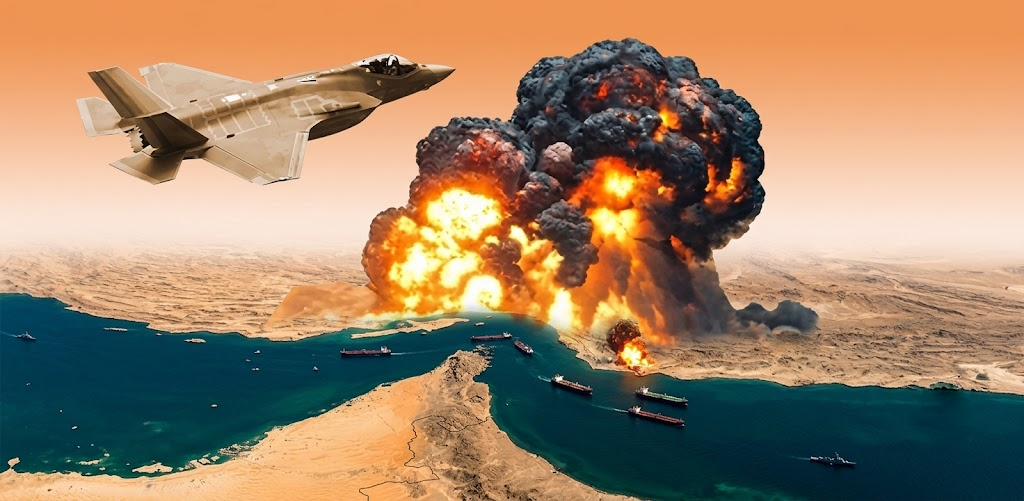
2026: Attack on Iran and closure of the Strait of Hormuz, a drawdown of 172 million barrels was announced as part of the 400 million barrels announced by the IEA. This is the largest drawdown in history for both the IEA and the United States, with U.S. drawdowns reaching over 1.7 million barrels per day in some weeks.
As for non-emergency drawdowns, they were decided by Congress to ease budget pressures. Since 2015, Congress has mandated selling specific quantities each year to fund maintenance and management of the reserve's infrastructure.
Disagreement Among Experts on the Effectiveness of These Reserves
Experts are divided into two main camps: the first supports maintaining a large strategic oil reserve because of its economic and strategic benefits during crises as an essential insurance policy. The second opposes this, arguing that the reserve represents government intervention in markets and prices, and its harms may outweigh its benefits, especially since several historical studies have shown limited impact of drawdowns. Some cost-benefit studies concluded that its cost far exceeds its benefits. Opponents also warn of its potential political use to influence elections under the pretext of 'emergency'. With the shale oil revolution about 15 years ago and the United States becoming the world's largest oil producer and one of the biggest exporters, they argue that the U.S. need for the strategic reserve has greatly diminished. At one point, there were Republican attempts to close the Department of Energy and sell the entire reserve; President Trump even announced in 2017 his desire to sell half of it.
But an analytical review of these studies over the past 35 years reveals the following:
Original source: Independent Arabia



Comments (0)
Be the first to comment.