First losses for 'Advanced' in 6 quarters, stock defies and rises

Advanced Petrochemicals, specialized in polypropylene production and listed on the Saudi main stock market, turned to losses in the second quarter of this year mainly due to higher costs, recording results below expectations.
According to the Financial Analysis Unit of Al-Eqtisadiah newspaper, 'Advanced' turned to losses after 5 quarters of profitability, recording losses of 98 million riyals, compared to profits of 82 million riyals, based on data from Tadawul and Bloomberg.
Advanced Petrochemicals was established in 2005 and listed on the Saudi stock market in 2007. Its main activity is producing propylene and polypropylene, which is its main product.
The losses mainly resulted from a 40% increase in propane prices and a 21% increase in purchased propylene prices (feedstock or raw materials), along with recording depreciation expenses, fixed costs, and financing costs in the income statement due to the start of operational activities of Advanced Polyolefins Industry Company in the third quarter of 2025, which were not present in the second quarter of 2025.
Sun, 12 2026
Depreciation expenses reached 20 million riyals due to bringing forward part of the scheduled periodic maintenance works for 2027 during the period of low propane supplies in April and May. This will contribute to reducing 50% of the scheduled maintenance for the next year, increasing production in the second half of 2026 and 2027 and lowering costs during those periods.
The company's losses came despite an 18% rise in revenues to 827 million riyals, driven by a 34% increase in net selling prices. However, revenue growth was the slowest in 4 quarters, with a decline in sales volumes due to regional tensions.
Sun, 12 2026
The revenue increase comes despite a 12% decline in sales volumes due to a 27% drop in production volumes as a result of reduced propane (feedstock) supplies during April and May 2026.
Cost of sales increased by about 34% due to higher feedstock prices on one hand, and likely higher shipping and transportation costs on the other, especially since the company mainly relies on exporting its products abroad at a time coinciding with the closure of the Strait of Hormuz, forcing it to transport its products from Jubail to the western coast on the Red Sea (King Abdullah Port and Jeddah Port) for export, significantly increasing costs.
Under these factors, the cost of sales as a percentage of sales rose to 91%, the highest in 6 quarters, which in turn led to a 45% decline in gross income.
With higher consumption related to the brought-forward maintenance, operating profit declined 82% to 17 million riyals.
Sun, 01 2026
Where does Advanced sell its products?
Advanced sells its products in several geographical regions. India accounts for a quarter, followed by a fifth each for Turkey and Africa, together representing two-thirds of revenues.
Behind them comes Europe with less than 15%, Saudi Arabia 10%, and China less than 0.5%, according to the company's 2025 financial data.
Sun, 15 2026
Sharp decline in profit margins on an annual and quarterly basis
With the rise in costs, the company's profit margins declined sharply year-on-year and quarter-on-quarter, with gross profit margin falling by almost half to 9% and operating profit margin to less than a fifth at around 2%.
Why did Advanced's stock rise despite losses and results below expectations?
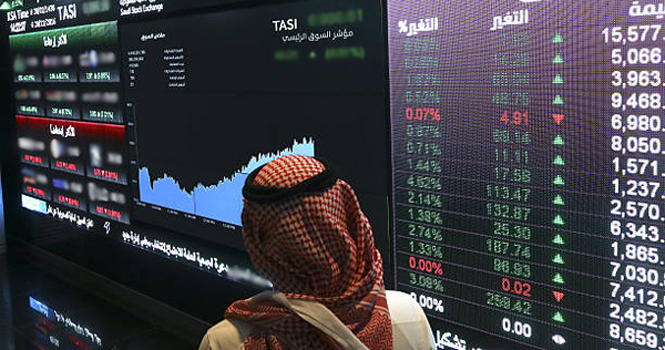
Despite Advanced turning to losses and recording results below expectations, the company's stock ended the trading session up nearly 1% at 22.8 riyals, after recording larger gains during the session.
The stock's resilience can be explained by 4 main factors: first, the company's confirmation that it will consider resuming dividend distribution to shareholders if the market stabilizes; second, expectations of higher production rates in the second half of 2026 and throughout 2027, with 50% of early maintenance that was scheduled for 2027 already carried out.
As for the third factor, the company confirmed that propane supplies returned to normal levels starting from June after declining in April and May, meaning production has returned to full capacity at the company's plants. Fourth, Advanced Polyolefins Company has started producing value-added polypropylene using advanced industrial technologies, which enhances product diversification, expands market reach, and enters new sectors.
The company has started marketing specialized applications in higher-return markets, including the European market, which is expected to contribute to net returns starting from the second half of this year.
Advanced and most petrochemical companies have faced profit pressures recently, amid declining product prices and lower sales volumes due to increased supply in the markets.
Financial Analysis Unit
Original source: Aleqtisadiah



Comments (0)
Be the first to comment.