'Mad Cow' Crisis Sparked Trade Dispute Between Britain and Jordan
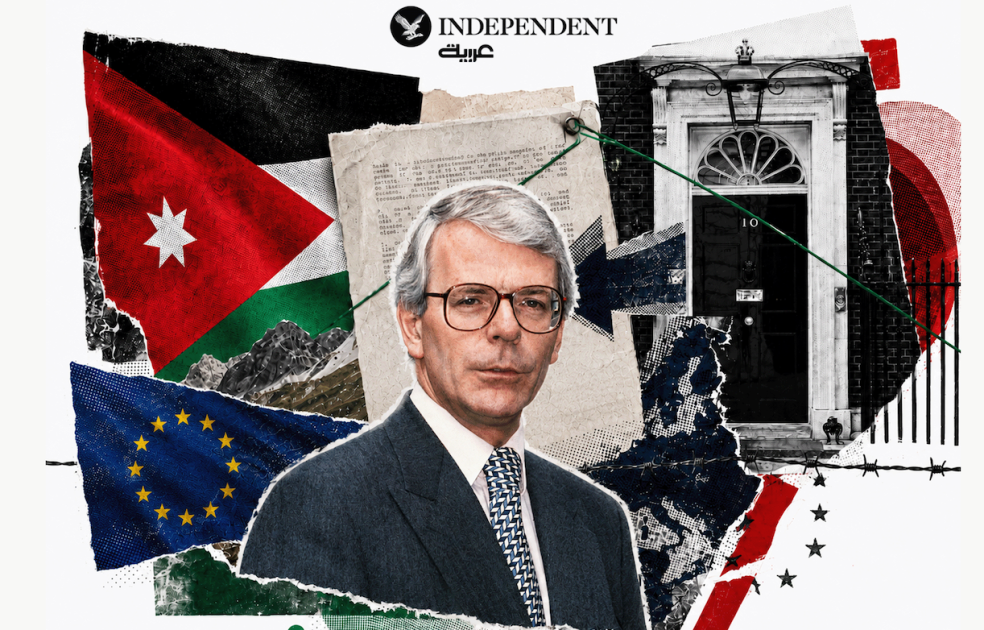
Summary: British documents reveal how negotiations for the EU-Jordan Association Agreement were used as a political pressure tool to achieve a purely commercial goal, thus providing a clear model of the overlap between foreign policy and economic interests, and the role played by EU institutions in supporting member states' priorities during trade crises.
In the spring of 1996, Europe was experiencing one of the biggest health crises that shook consumer confidence in food products, after the issue of Bovine Spongiform Encephalopathy (BSE), known in the media as 'mad cow disease,' turned from a veterinary crisis into a political, commercial, and diplomatic crisis with international dimensions. Its repercussions were not limited to European countries but extended to dozens of states that rushed to impose restrictions on imports of British products, fearing the transmission of the disease to humans.
In the midst of that crisis, Jordan was no exception. The Jordanian authorities decided to ban imports of British dairy products, based on the prevailing health concerns at the time. However, this decision, which appeared on the surface to be a precautionary measure, quickly turned into a political issue that occupied a large space in the secret correspondence of the British government, which regarded the continuation of the ban as a threat to its commercial interests and the reputation of its exports.
British official telegrams and memoranda issued during 1996 reveal that London did not treat the Jordanian decision merely as a technical dispute over food safety, but as a diplomatic file requiring the mobilization of the Foreign Office, the European Commission, and British missions abroad, with the aim of exerting organized pressure on the Jordanian government to lift the ban.
These documents are of particular importance because they reveal, from within British decision-making circles, how negotiations for the EU-Jordan Association Agreement were used as a political pressure tool to achieve a purely commercial goal, thus providing a clear model of the overlap between foreign policy and economic interests, and the role played by EU institutions in supporting member states' priorities during trade crises.
Health Crisis Turns into Diplomatic Crisis
With the announcement of a possibility that mad cow disease could be transmitted to humans, Britain faced unprecedented commercial isolation. Many countries rushed to halt imports of British products, especially meat and meat derivatives, while some governments expanded the ban to include dairy products and milk-based confectionery, despite the lack of scientific consensus at that time on the necessity of these measures.
From the diplomatic file, it appears that the British government considered this expansion of the ban exaggerated and launched a wide campaign to convince countries that dairy products posed no risk to public health. The campaign was not limited to bilateral contacts but was coordinated through the European Commission, which in turn adopted a supportive stance for British demands.
In this context, Jordan gained special importance for British policy. The ban imposed by Amman was not merely a sovereign decision related to public health; it came at a time when negotiations between Jordan and the European Union on the Association Agreement were in an advanced stage, providing Britain with an opportunity to use this negotiating track as a pressure card.
Jordan at the Heart of British Attention
One of the telegrams from the British mission in Brussels indicates that British officials monitored Jordan's stance on the dairy product ban on a daily basis. The monitoring was not limited to the British Foreign Office but also included Britain's representatives to the EU, the Ministry of Agriculture, the Department of Trade and Industry, as well as the European Commission itself.
The telegram explains that British contacts focused particularly on two officials within the European Commission: 'Stadler' from DG VI and 'Ryan' from DG I, with the aim of ensuring that the Jordanian ban file was present in all meetings with Jordanian officials.
The content of the telegram shows that London saw EU institutions as a more effective tool than direct bilateral contacts, since Jordan was keen to finalize the Association Agreement with the EU, which gave Brussels greater negotiating leverage than Britain alone.
Association Agreement Becomes a Means of Pressure
Among the most prominent revelations of the British telegrams is that the European Commission did not merely express its displeasure over the continuation of the Jordanian ban, but directly linked the lifting of the ban to the future of the Association Agreement negotiations.
One of the telegrams states that European official 'Stadler' informed the British side that the Commission had made it clear to Jordanian officials in Brussels that the Association Agreement negotiations could not be concluded unless the ban on dairy products from EU countries was lifted.
This statement, contained in an internal diplomatic report, reveals that the issue went beyond the scope of health debate, becoming part of a broader political and economic negotiation process, as one of the most important agreements that Jordan was seeking to achieve was used as a means to pressure it on a specific trade file.
However, the same telegram points to a divergence within the European Commission. While 'Stadler' adopted a tough stance, the other European official 'Ryan' appeared more cautious, arguing that the issue should be addressed based on scientific evidence, and did not show enthusiasm for linking it directly to the partnership negotiations.
This divergence reflects a difference in crisis management methods within European institutions, but it does not change the fact that the general trend leaned toward using political negotiation tools to support the British position.
Coordinated Campaign Within British State Institutions
The correspondence reveals that the British move was not a solitary effort by the Foreign Office; rather, several government institutions participated in a coordinated manner.
A meeting was held involving the Foreign Office, the Department of Trade and Industry, and the Ministry of Agriculture, after which the British mission to the EU was tasked with raising the issue during meetings of the Maghreb-Mashreq group. Communication with the European Commission was also undertaken to ensure continued pressure on Jordan.
The telegrams highlight that London was not content with just monitoring the situation from the British capital; it issued direct instructions to its embassy in Amman to coordinate with the European Commission office there, and to ensure that European official 'Ryan' would raise the ban issue during his visit to Jordan on May 2 and 3, 1996.
Through these details, it becomes clear that Britain was running a comprehensive diplomatic campaign, combining bilateral contacts and collective action within EU institutions, while ensuring that every visit or official meeting was used to raise the issue again with the Jordanian side.
From Dialogue to Political Pressure
After the British government succeeded in persuading the European Commission to adopt its position, attention turned to how to use this position against Jordan.
Original source: Independent Arabia






Comments (0)
Be the first to comment.